 Rooslawn's Unmapped Worlds
Losing is fun, and I keep forgetting
I’m very good at ruining my own fun.
Take this week. I’ve been playing Total Warhammer III (as I always do), as Greasus Goldtooth (I promise this is not yet another Warhammer essay). Big fat ogre. It’s pretty fun watching a bunch of massive Golden-Horde-inspired men smash through imperial infantry with ease. Ogres are cool. They feel impactful, they feel fun to play. They’re surrounded by little gnoblars, who are almost certainly just sillier looking goblins - and it’s fun mixing up chaff and elite infantry. It works well.
But 20-30 turns in I got in my way. As always, I played optimally - there’s a strategy where I could narrowly scrape by with a really basic army, leaning into the economics 100%. It worked. Every fight was a nailbiter. And I was stressed out about it. And I was stuck with boring, obsolete basic units as I saw my coffers grow.
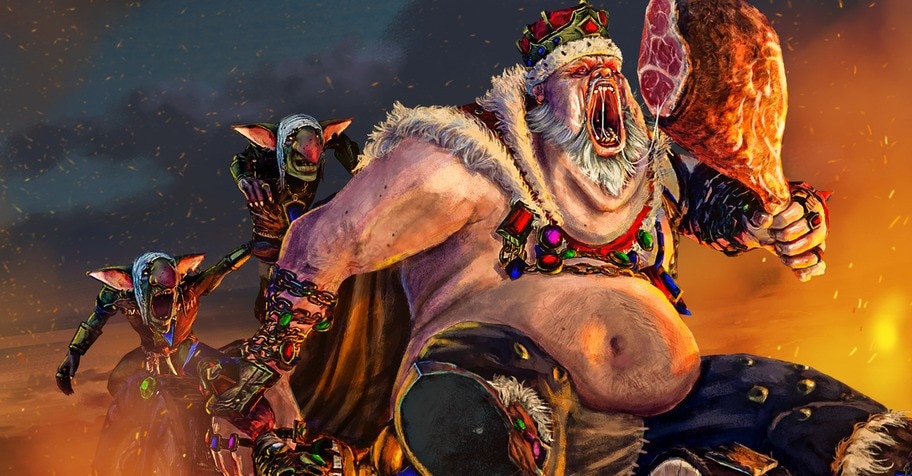 This is Greasus Goldtooth. You don’t need to know anything else about Greasus.
When I’m playing Greasus, I already know what my next X turns are. I know how to move efficiently, what my build order is, how to defeat enemies with chaff without losing momentum. That’s how I end up with 12 settlements by turn 20 - aggressive, calculated expansion. But that’s not particularly fun. The best case scenario is that Grimgor Ironhide (who is a big angry orc) comes from the North too early and ruins my plans, forcing me to give up some territory before modernizing my army or pushing back. I already know about this. It’s a little annoying, if anything.
At this point I wasn’t really playing - just going through the motions, executing a plan. And when the plan starts to wobble, I know what I do. I restart. Fresh save, fresh Greasus, try again, do it cleaner this time.
Executing a plan is what I’m good at. It’s what I reach for. And when I reach for it in a game, I have a worse time.
Here’s the thing: I do this everywhere.
I got to the airport almost an hour before my flight because missing a flight - or even rushing for one - would be a failure. I’m writing this between sessions at a summit for my day job, and last night I stayed up late with colleagues hashing out project plans because I don’t want the project to fail. And more than that - I want it to succeed and be great. That’s how this works. That’s how I work.
There’s a desire for control somewhere in there. But there’s also the need for optimization. I love optimization - optimization is awesome. Most of the time I prefer focusing on the process more than on the outcome. Processes are awesome. Optimized processes are the best. There’s nothing like having a well-thought-out plan succeed.
Failure, on the other hand, sucks in real life. It isn’t fun. It hurts. So I spend a lot of energy preventing it. I get to the airport early. I stay up late on project plans. I rehearse conversations, I double-check calendars. And in games - I reload the save, I restart the campaign, I begin again from a cleaner starting point.
Which is the problem. Because in games, failure is where the memories are. Every time I optimize a game into submission, I’m doing the thing I’m best at - and getting the thing I want least out of the hobby I love most.
Let me introduce RimWorld. A story generator. Not a strategy game - and it’s very explicit about that. Despite the fact that you effectively have to build and defend a small colony of survivors, despite the fact that you have to navigate a tech tree and trade deals and all of the strategy shebang, RimWorld is most fun when things don’t go as planned.
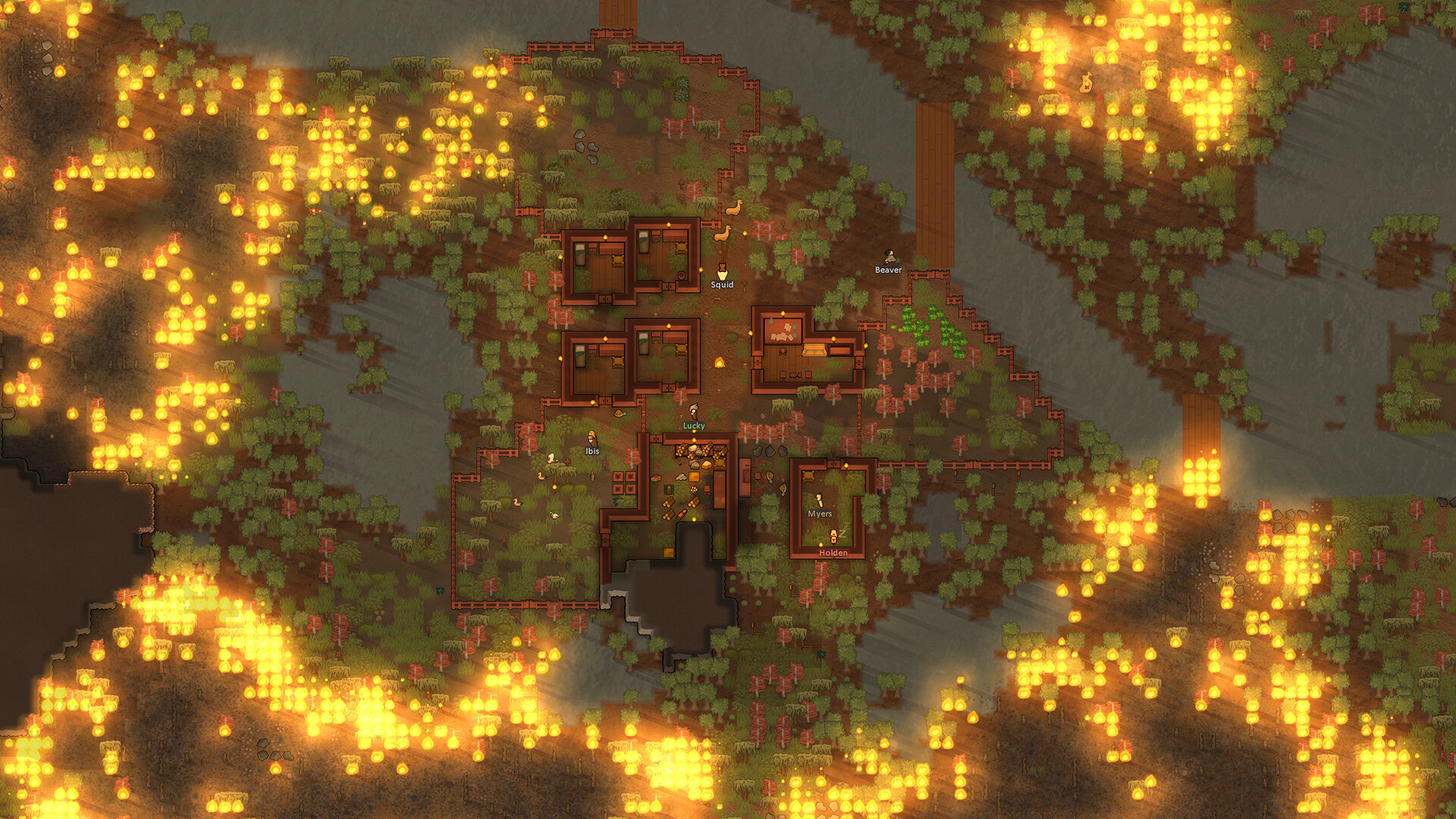 Colonies in RimWorld have a tendency to consistently go up in flames (Ron’s isn’t in this picture - I’m traveling and don’t have access to my screenshots).
Meet Ron. A pawn - that’s what the little colonists are called - who decides he’s had enough. He just barely survived a raid, soaking wet from the rain, the gunshot from earlier is probably getting infected. And then he gets to eat. Without a table. On the ground. Like an animal.
All hell breaks loose. Ron starts a firestarting spree. Another colonist gets caught in the crossfire - Purple. Ron’s her nemesis. Instead of firefighting, Purple starts fistfighting Ron. Inside a burning building. They both go down with the building. Third colonist, Kate, is pushed to the brink, runs into the freezer and starts binging on food. The freezer burns down too. There are no more colonists left.
That sounds terrible, right? No. The best part is that it makes a story. A story I still remember. And I remember every time my Dwarf Fortress got flooded by lava, and every futile struggle for survival after getting bit in Project Zomboid.
That’s why I play games. To have great memories to think back to.
I wouldn’t remember Ron if I’d played well. If I’d caught the mood debuff in time, built the dining table earlier, treated the infection before it got bad - Ron would be just another pawn. One of dozens I’ve had over the years. He’s only Ron because everything went wrong. The catastrophe made him a character. The catastrophe made it a story.
Instead of yet another save file, the disaster gave me Ron.
The games I love most are the ones that refuse to let me optimize.
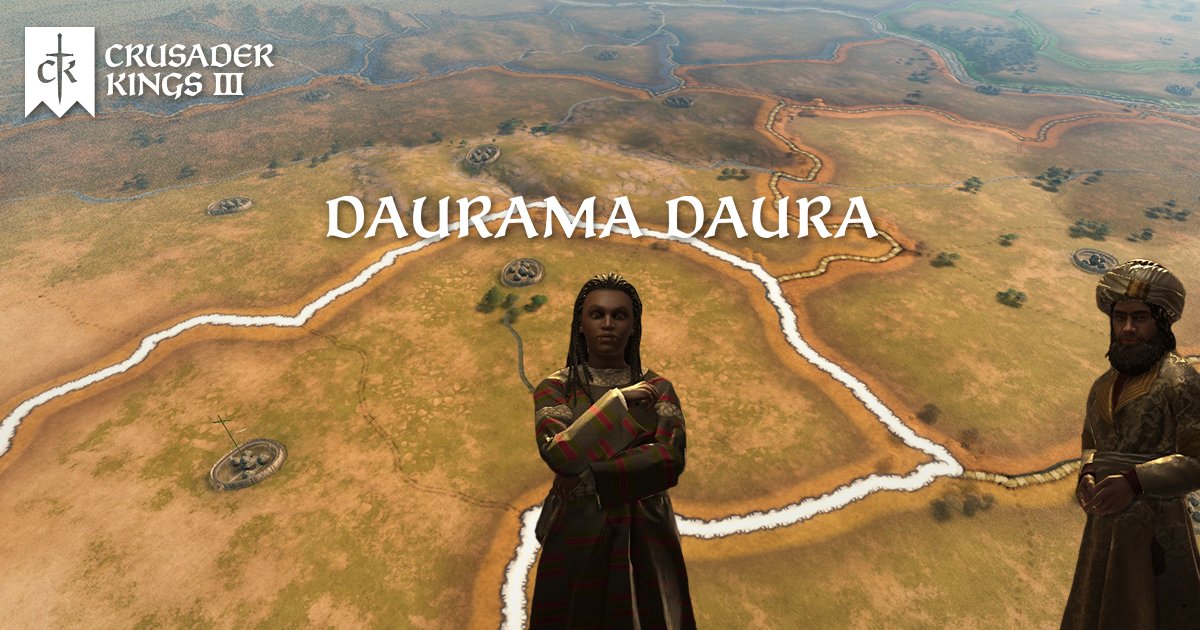 Daurama Daura is definitely among more challenging and rewarding starts in Crusader Kings 3 – the last matriarch in a rapidly changing world.
Crusader Kings rewards letting your dynasty collapse into chaos - your careful plans ruined by a bad heir, a peasant revolt, a cousin with a better claim. One of my favorite starts is Daurama Daura, the last matriarch of the West African Hausa. She’s an extremely skilled diplomat, able to expand quickly, and she’s great at managing internal affairs to stay in power. You start strong. You can feel the empire forming.
So of course I play her the way I play everything. I carefully build up the empire, marry into the right neighbors, pick my wars. I groom the oldest daughter for the throne from age zero - tutors, the right guardians, the right education focus, all of it. And then, right as Daurama dies of old age, the perfect successor gets assassinated. The empire passes to the good-for-nothing sadistic, greedy, petty middle child. A lifetime of alliances crumbling, replaced by fighting arenas and secret torture chambers. The empire fell apart, and I still think about what a wild ride that was.
Dwarf Fortress literally has “losing is fun” as its motto. These games aren’t built to be solved. They’re built to make stories, and stories need things to go wrong.
I didn’t notice the pattern for a long time. I thought I just liked strategy games, or simulation games, or whatever you want to call the genre. But looking back at what I actually remember - the stories I tell friends about, the sessions that stuck - it’s never the clean runs. It’s the Rons. It’s when the dwarfs betrayed me that one time. It’s the Crusader Kings heir who turned out to be a lunatic and ruined three generations of careful marriage planning.
Which is a weird thing to realize about yourself when you spend most of your waking life avoiding failure.
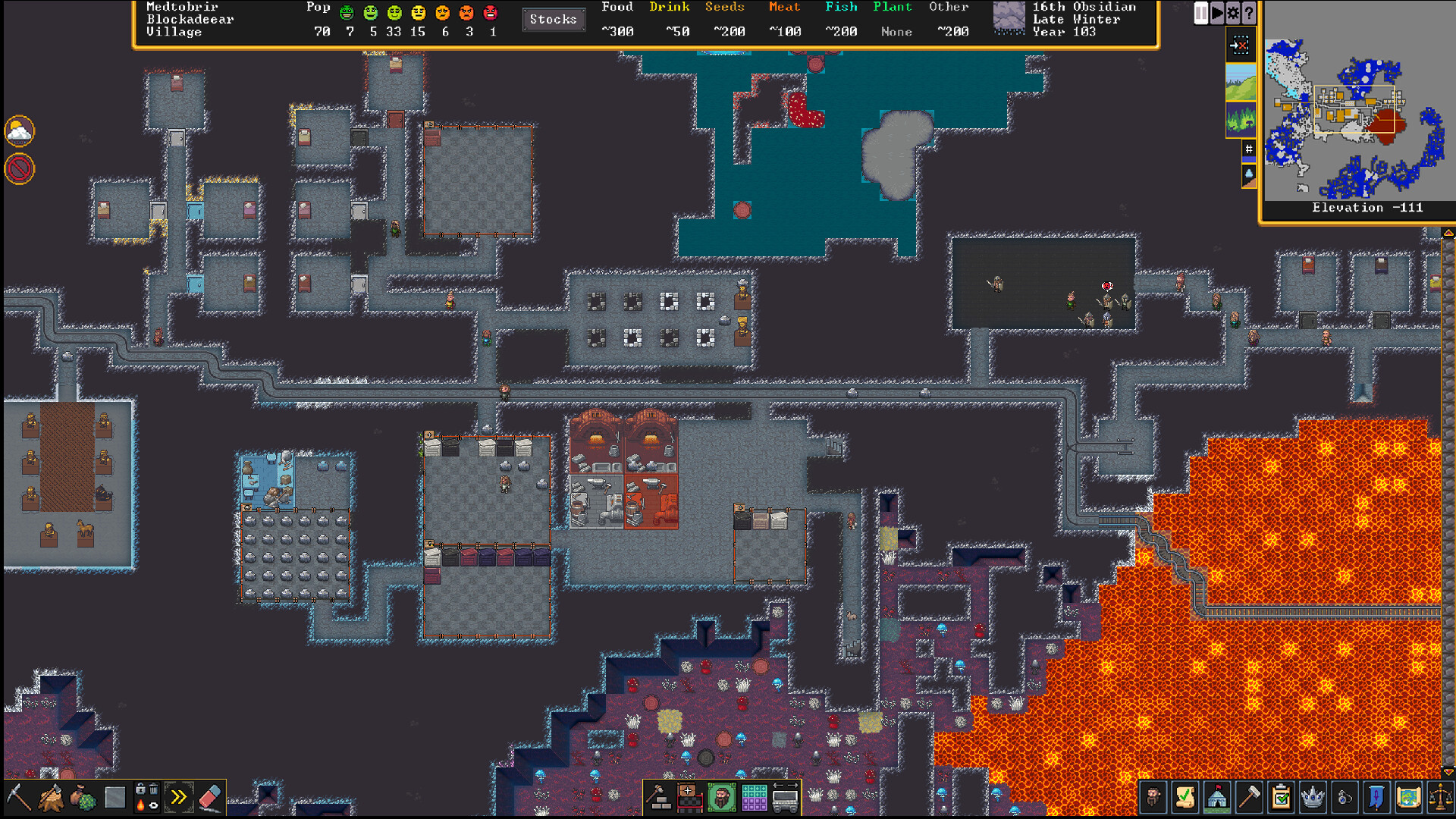 Building next to lava in Dwarf Fortress has many benefits: heat, steampower, magma forges. And spectacular ways for the colony to go up in flames.
I’ve changed how I play. I’m more okay with failure now - spectacular failure, spectacular outcomes. I don’t mind if Grimgor takes out half my empire. That’s part of the fun. It makes a story, even if I could’ve predicted it. In fact, he did invade early, and it was genuinely great to have a minor dwarf faction act like treacherous rats and refuse to back me up in a war with Grimgor - right after I came to their help when the Chaos Dwarfs attacked them. Bastards.
As I play games these days, I let things happen more often. I don’t reload saves as much. I don’t replay the turn when I realize I made a bad trade. I sit with the bad trade and see where that decision takes me.
I don’t know if any of this has crossed over into real life. I’d like to say yes - that I’ve learned to let the bad trade happen there too, that I’m softer on my own mistakes. I don’t think I have, really. I still got to the airport an hour early. I’m still going to stay up late tonight working on the project plan. Last weekend I caught myself timing snacks and tracking energy levels during what was supposed to be play with my toddler, running the session like a build order so we’d hit bedtime clean. She didn’t notice. I did.
But the next time I boot it up, I’m not starting over. The Greasus save is still there. Grimgor is already in my territory. My army is still obsolete. My dwarf allies are still treacherous rats. Normally this is where I’d scrap it and roll a fresh campaign with everything I’ve learned - cleaner build order, better neighbors, no Grimgor surprises this time.
Not this time. I’m going to log back in and see what happens.
Comments
Respond directly on Medium (view comments there).