 Rooslawn's Unmapped Worlds
Why Valheim's food feels good (and Fallout 4's doesn't)
I’m standing at my little Viking campfire, about to fight Eikthyr. He’s the game’s first boss - an enormous glowing stag with electrified antlers, chains wrapped around him like some Norse fever dream. I’ve got my crude bow, a handful of wooden arrows, and a flint spear that I’m not confident about.
I’m thinking about food.
Not anxiously. Not “oh god I need to eat or I’ll die.” I’m thinking about it the way you think about gear loadouts. Do I want the cooked meat for the health boost? The grilled Neck tail for the stamina? Maybe some mushrooms to round things out? I have three food slots to fill, and each one is a choice about how I want to approach this fight.
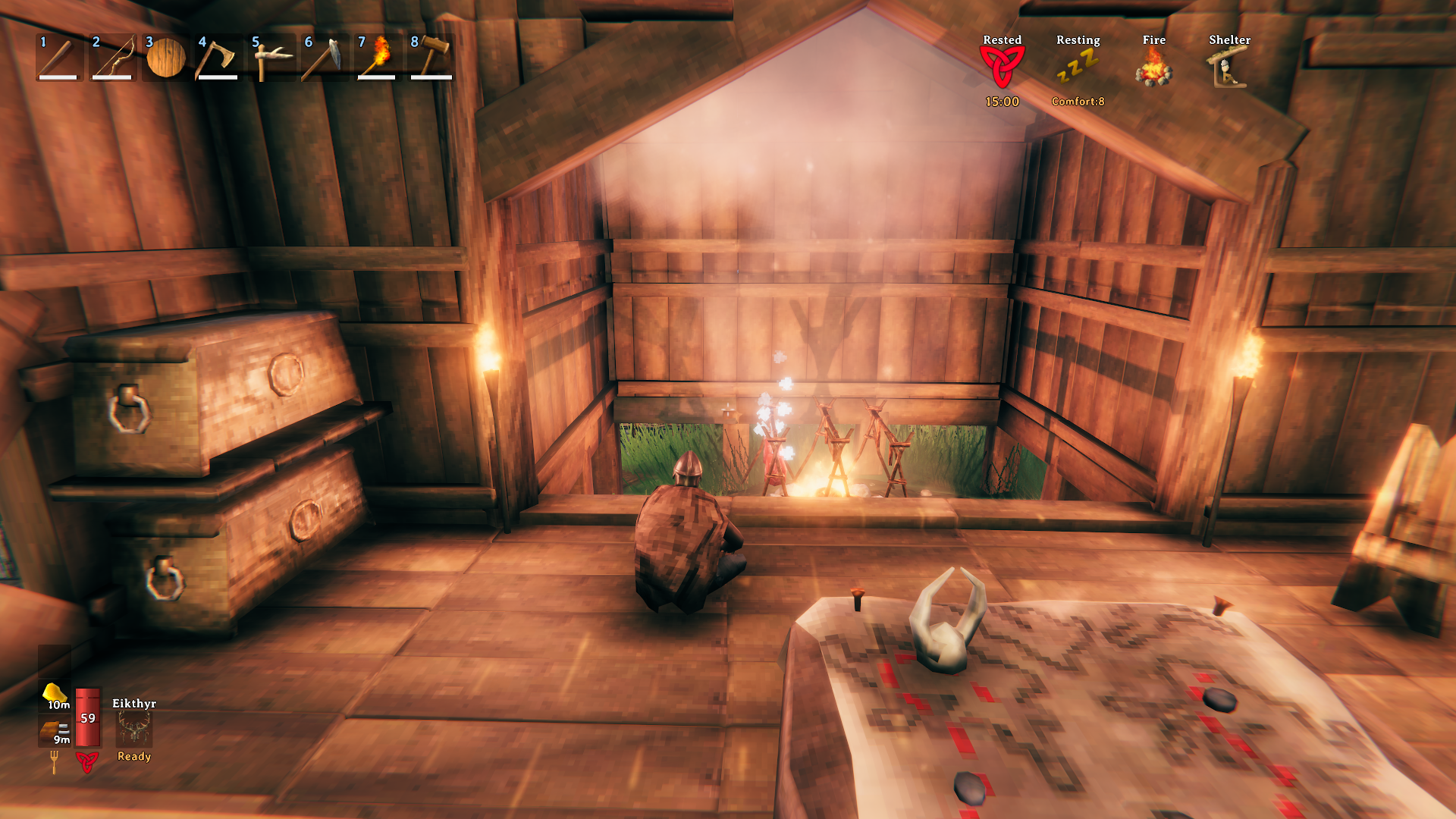 Valheim: Here I am, roasting some meat in my Viking longhouse. It’s oh-so-cozy here.
I eat my little Viking meal. My health and stamina bars grow far beyond their base values. I feel prepared. I feel buffed. And then I go fight the electric deer god.
This is fundamentally different from how food works in most survival games, and it took me way too long to figure out why it felt so good.
The great reframe
There’s a famous story from World of Warcraft’s beta, back in 2004.
Blizzard implemented a fatigue system. Play too long and your XP gains would drop - first to half, then to a quarter. The idea was to discourage unhealthy binge sessions, to nudge players toward logging off occasionally. You’d rest at an inn, recover your energy, and come back refreshed.
Players absolutely hated it.
The backlash was immediate. Nobody wanted to be punished for playing the game they paid for. The system felt oppressive, patronizing, like the game was slapping your hand for having too much fun.
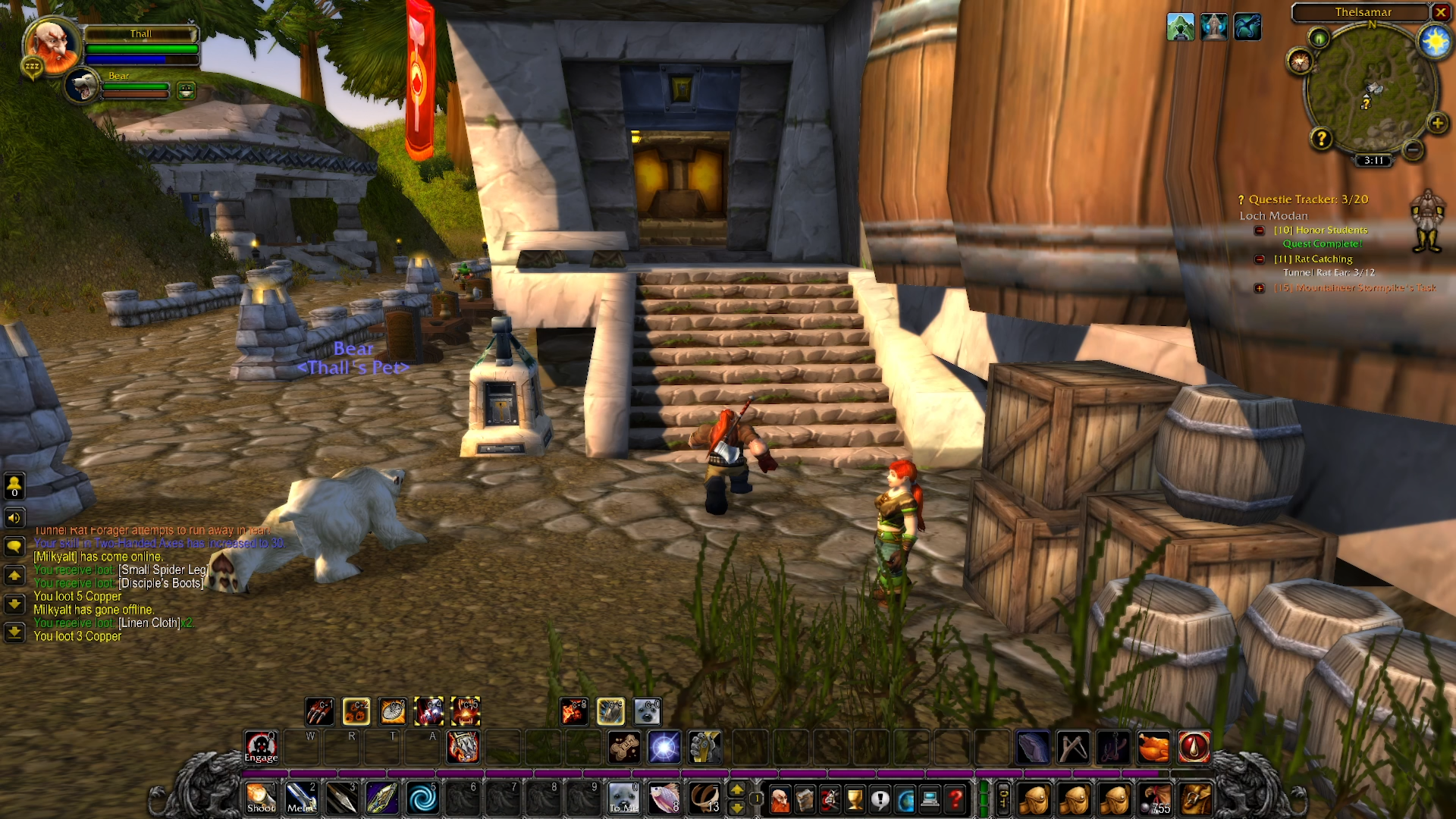 Heading towards a tavern or a big city to turn in quests, sell loot, and log out for the day - for that sweet rested experience buff - is an established part of gaming routine.
So Blizzard did something clever. They didn’t remove the system - they reframed it. The exact same math, the exact same numbers, but now it was presented differently. Instead of starting at “normal” and dropping to “fatigued”, “fatigued” became “normal”, and you could get a “rested” status if you logged off in the city or at a tavern for a certain number of hours. The XP you got while rested was positioned as a bonus for logging off, not a penalty for staying on.
Same system. Completely different player response.
We feel losses more sharply than equivalent gains. Losing something hurts more than gaining the same thing feels good. A $10 parking ticket ruins your morning in a way that finding $10 on the sidewalk doesn’t quite fix.
And food in survival games almost always frames eating as loss prevention. You’re not gaining anything by eating - you’re just maintaining baseline.
The maintenance tax
I love survival games. I love the fantasy of scrounging, building, making something from nothing. But there’s a pattern that drives me up the wall.
It goes like this: Early game, food is tense and meaningful. You’re desperately hunting deer (or a local equivalent), scrounging berries, rationing your supplies. Every meal feels earned. Finding a can of beans in an abandoned house is a genuine moment of relief.
Then you figure out farming. Or you find a reliable hunting ground. Or you just stockpile enough that scarcity stops being a concern. And suddenly the hunger system transforms from “engaging survival mechanic” into “annoying reminder to press the eat button every few minutes.”
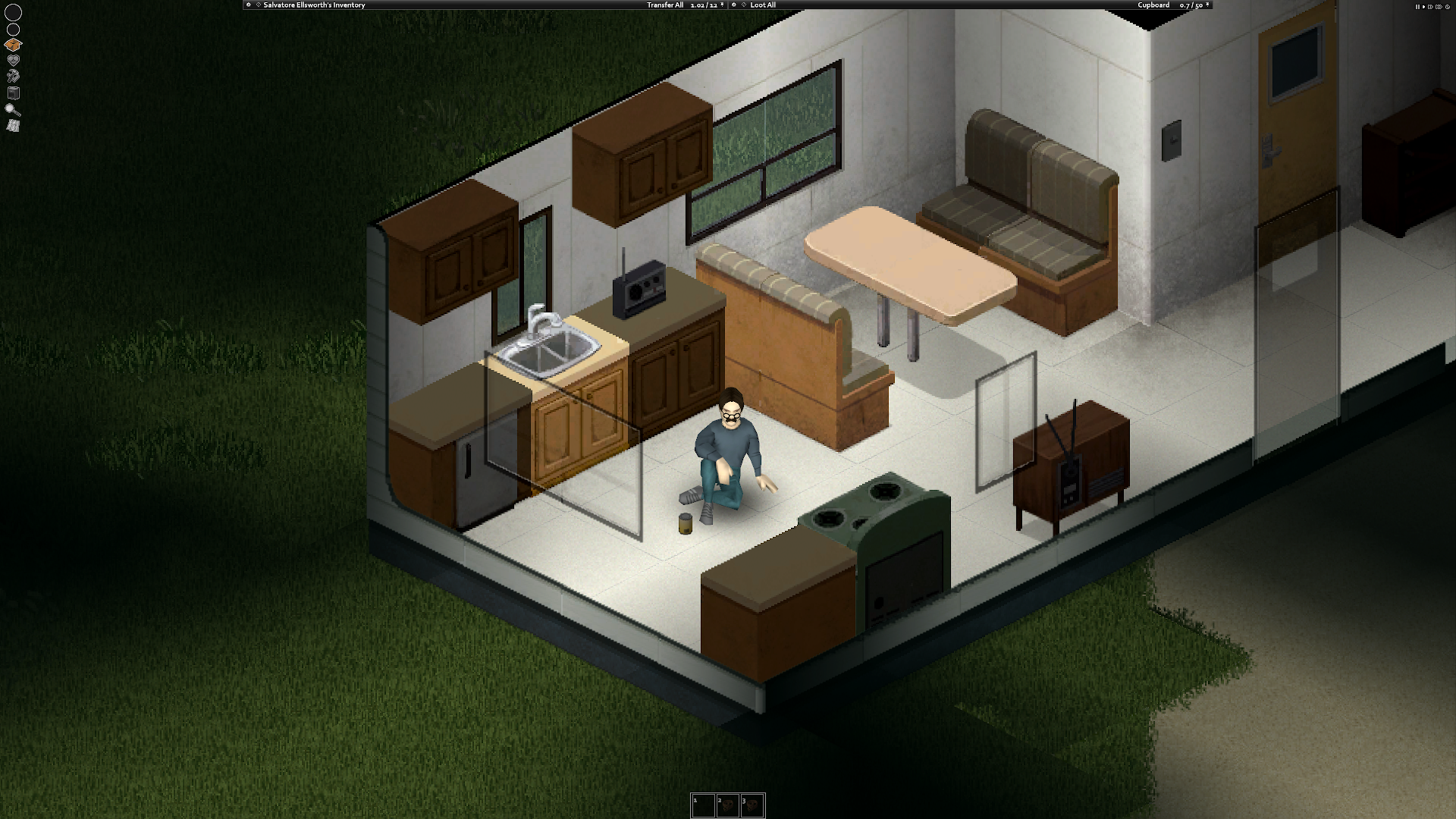 Project Zomboid: Just me and my can of dog food. If only I had a can opener.
Project Zomboid does this to me. The early days are genuinely stressful - you’re cut off from your base, your supplies are dwindling, every house you loot might have what you need. Hunger matters. And then you establish a farm, maybe secure a water source, and suddenly you’re sitting on more food than you could ever eat. But you still have to eat it. The bar still depletes. The mechanic that was once about survival becomes busywork.
The Long Dark handles this differently because scarcity never quite goes away. On higher difficulties, calories remain precious throughout. Finding a candy bar in an abandoned cabin feels meaningful a hundred hours in. But that’s because The Long Dark is a game specifically about scarcity - the whole game is a meditation on slowly depleting resources in a world that wants you dead. When gathering food is the core loop, punitive hunger makes sense.
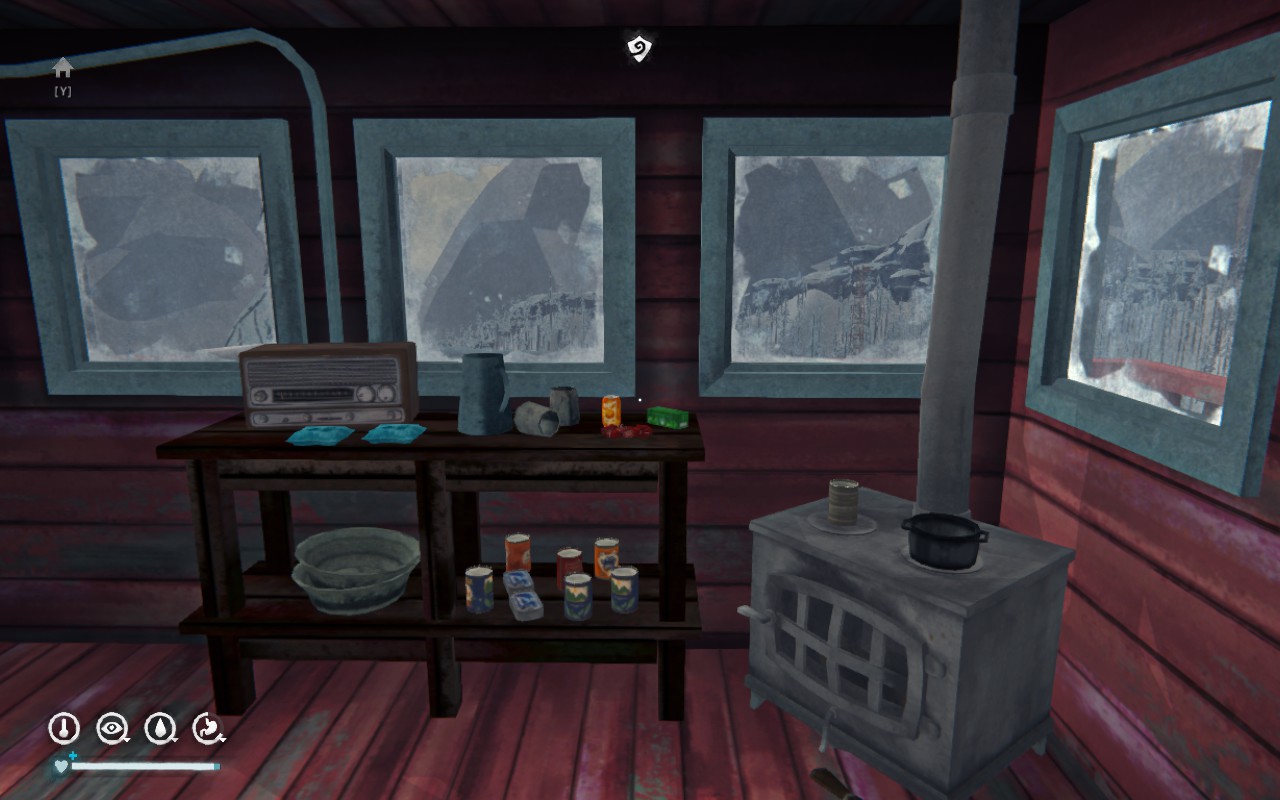 You’re looking at a treasure trove of food in The Long Dark - this took lots of effort to collect, and it won’t last particularly long. Yet, I’m oh-so-proud of it.
Fallout 4’s survival mode, though? Hated it. Fallout 4 is not about scarcity. It’s about exploring, shooting, looting, building settlements. And survival mode grafted hunger and thirst onto a game where food is literally everywhere. Every container has purified water. Every enemy drops meat. I was never actually in danger of starving - I was just interrupted every few minutes to open my inventory and click on some InstaMash. The mechanic added nothing except friction between me and the actual gameplay.
This is the survival game trap: punitive food systems that make sense early game become maintenance taxes late game. And in games that aren’t about survival, they’re maintenance taxes from the start.
The Valheim solution
Valheim is built different.
You can’t starve in Valheim. There’s no hunger meter ticking toward death. If you don’t eat, you’re just at your base health and stamina - which is functional, if somewhat underwhelming. The game is absolutely playable without food.
But food makes you better, much better. Each food item provides buffs to your maximum health, maximum stamina, and regeneration rates. Better food provides bigger buffs. And you can have three different foods active simultaneously, which means you’re effectively building a loadout.
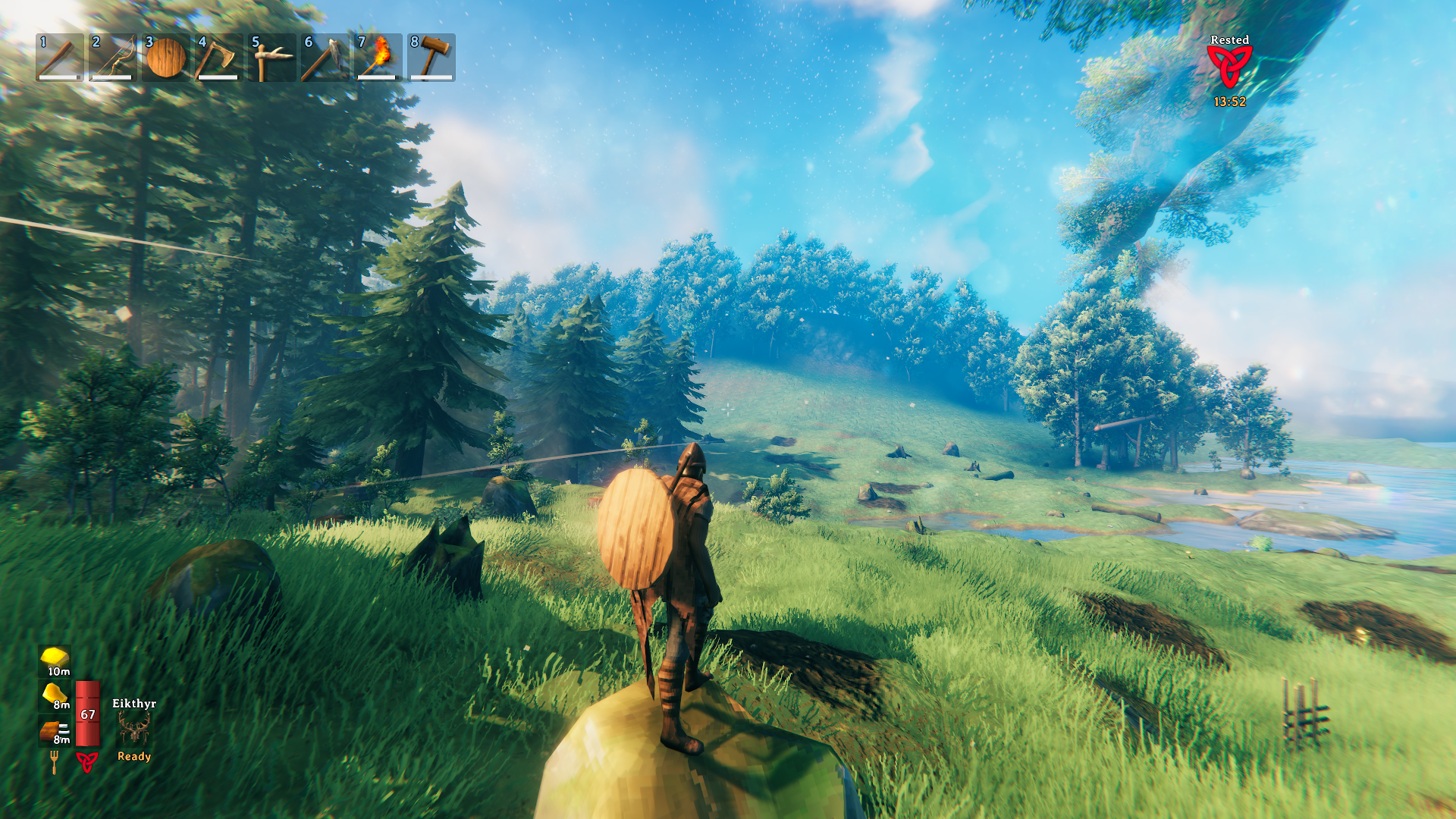 Valheim: well fed and rested, I’m now ready to set out upon my next expedition.
I’m not managing a resource drain. I’m making strategic choices about how I want to approach gameplay.
Going exploring? Load up on stamina food - you’ll be running a lot. Heading into a dungeon? Prioritize health and regeneration. Fighting a boss? Think carefully about the balance based on your combat style - shields scale with max health, dodge builds need stamina, and so on. Some foods favor health, some favor stamina, some are balanced. You mix and match.
When my food buffs expire, there’s no crisis. I’m not suddenly dying. I’m just back to baseline, and I could eat more, or I could keep doing what I’m doing. The choice is mine.
The ritual of preparation
Monster Hunter does something similar with its pre-hunt meals.
Before every hunt, you visit the canteen. You choose ingredients. You watch a cute little cooking animation - the Palico chefs going absolutely ham on a comically oversized piece of meat. You get buffs to health, stamina, attack, defense, elemental resistance - whatever combination you’ve selected. And then you go fight a dragon or whatever.
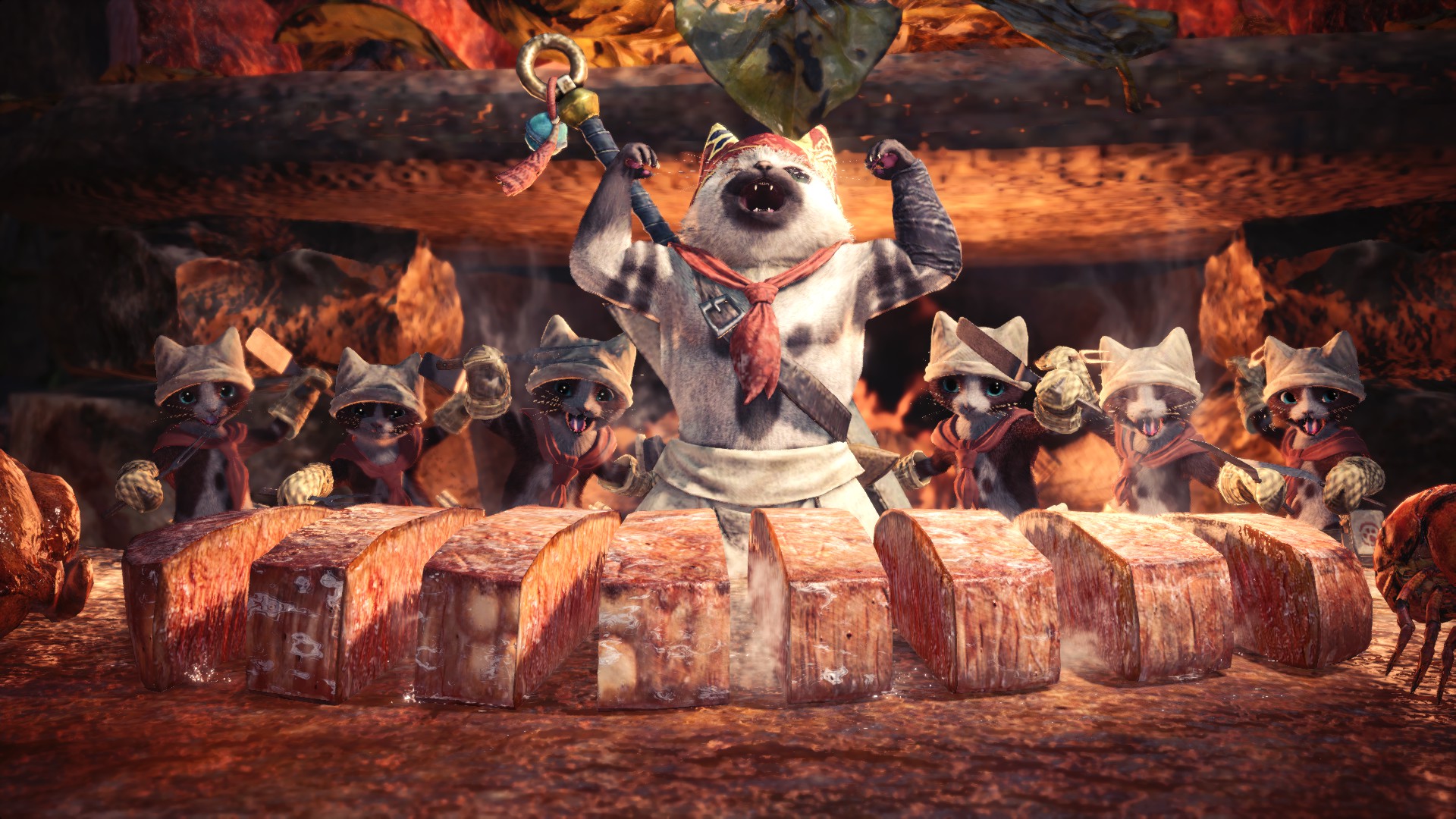 Monster Hunter: World has some amazing food preparation cut scenes. It’s like watching a cooking video, but with cats.
It’s a fun ritual. It’s the same energy as checking your gear, sharpening your weapon, doing a little warmup. The meal is part of the pre-hunt routine, a moment to get your head in the game. I look forward to it. I never once looked forward to eating in Fallout 4 survival mode.
Death Stranding does its own weird thing with this. Sam carries a canteen, sure, and you can drink from it. But here’s the thing - drinking doesn’t just prevent dehydration. It overcharges your stamina beyond its normal maximum. Hot springs work the same way, restoring you and then pushing past your baseline.
Breath of the Wild turns the whole thing into a crafting minigame. Base Link is perfectly functional - you can absolutely beat the game without cooking a single thing. But cooking gives you extra hearts, temporary stamina wheels, resistance to heat or cold or electricity. The system is a puzzle: what ingredients create what effects? How do I prepare for this environment, this boss, this shrine? I spent hours just messing with recipes, not because the game punished me for not cooking, but because cooking was a fun and meaningful part of the gameplay.
What these all share: a functional baseline, and food that pushes you above it. You’re not preventing bad things. You’re enabling good things.
When oppression is the point
Punitive food systems work too, you just have to build your game around them.
Don’t Starve puts it right there in the title. The whole game is about managing your hunger, your sanity, your survival against a hostile world. Hunger isn’t a tax on gameplay - hunger is gameplay. Removing the constant pressure of starvation would fundamentally break what the game is trying to do.
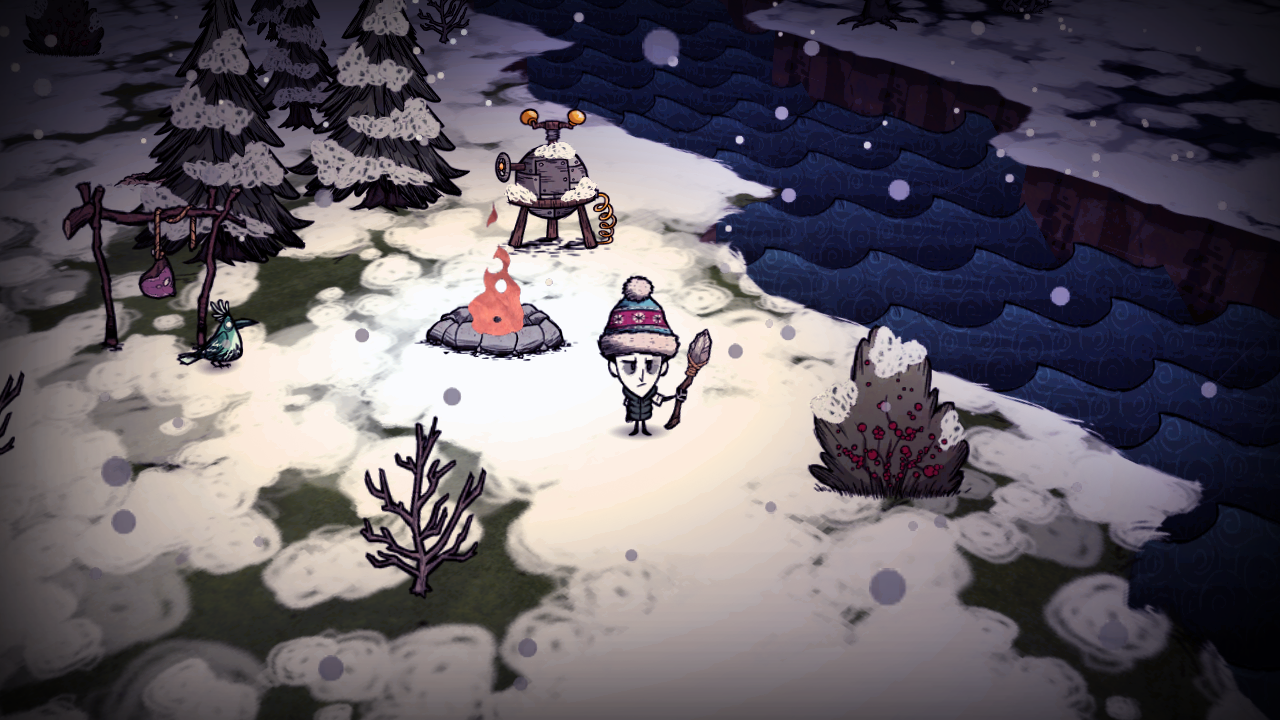 Don’t Starve: It’s in the name. Trying to not starve is a major gameplay loop.
The Long Dark, on sufficient difficulty, keeps you constantly thinking about calories. Every decision factors in energy expenditure. Do I risk the blizzard to check that cabin? How much will it cost me in body heat? Can I afford to spend the calories? That’s the core gameplay loop.
Project Zomboid wants you to feel desperate, hunted, precarious. Early game Zomboid absolutely nails this. You’re cut off from supplies, your character is hungry and tired and terrified, and scrounging a meal feels like genuine survival. The punitive food system serves that fantasy perfectly.
These games work because gathering resources is the core gameplay loop. When finding your next meal is the point, making that meal necessary creates tension and meaning. The problem comes when food systems exist as a tax on whatever the game actually cares about.
Match the mechanic to the game
Here’s what it comes down to: food systems should match what the game is trying to be.
If your game is about survival - real survival, where scarcity is the point - punitive hunger works. The Long Dark, Don’t Starve, early-game Zomboid. The hunger meter creates stakes. Finding food feels like triumph.
If your game is about combat, exploration, building, or anything else that isn’t primarily about scrounging resources to stay alive, consider the bonus model. Valheim wants you exploring crypts and fighting bosses and sailing to new continents. The food system supports those activities by making you stronger when you engage with it, not by punishing you when you don’t.
Fallout 4’s survival mode failed because it grafted a survival mechanic onto a game that wasn’t about survival. The food was everywhere. The thirst was trivial. You don’t even have to drink from the toilets. The system added interruption without adding meaning.
And if your game starts punitive and becomes trivial - if early-game scarcity transforms into late-game abundance while the hunger meter keeps ticking - you’ve built a system that undermines itself. The tension evaporates, but the busywork remains.
Valheim understood what kind of game it was. You’re a Viking in the afterlife, fighting monsters and building mead halls and preparing to challenge the gods. We’re not staving off death here - we’re preparing for glory.
Comments
Respond directly on Bluesky (threads shown below) or Medium (view comments there).