 Rooslawn's Unmapped Worlds
The blacksmith I didn't mean to befriend
Meet Osbryht, a blacksmith in Kamelot’s military outpost. He’s the first merchant I’ve met in Tainted Grail: Fall of Avalon, and he’s been a reliable source of armor, weapons, and crafting materials. I often stop by Osbryht’s forge to make arrows, upgrade my armor, and sell off my hard-earned loot. Sometimes he’d tutor me through crafting armor, complain about fellow keepers, or ask me to make a simple delivery. Once he told me that those relics I picked up from a shady salesman don’t really do anything - an observation for which said merchant paid in blood. More on that later.
I remember dozens of small interactions with Osbryht as I kept stopping by his shop - whether as part of another quest, during a supply run, or just to say hi to a friendly face. Osbryht is one of dozens of characters in Tainted Grail: Fall of Avalon I remember fondly - and just like all of them, he feels like a real human being. Living his life rather than being a set piece in my epic quest to save Avalon.
One time Osbryht watched me craft a piece of armor from a book I found. The armor was terrible - I knew it was terrible - but Osbryht took it personally. He posted a bounty on the book author’s head.
I thought this was an overreaction. But he’s a friend, so I entertained the idea longer than I should have. I made the long trek to track down the author. He didn’t die. Osbryht felt bad about the whole thing afterward.
This is such a human moment. Osbryht’s a simple man - ready to help, craft above all else. I’ve worked with people like this. I’m friends with people like this. I know an Osbryht in real life, and now that I think about it, I should be very careful publishing anything in their area of expertise.
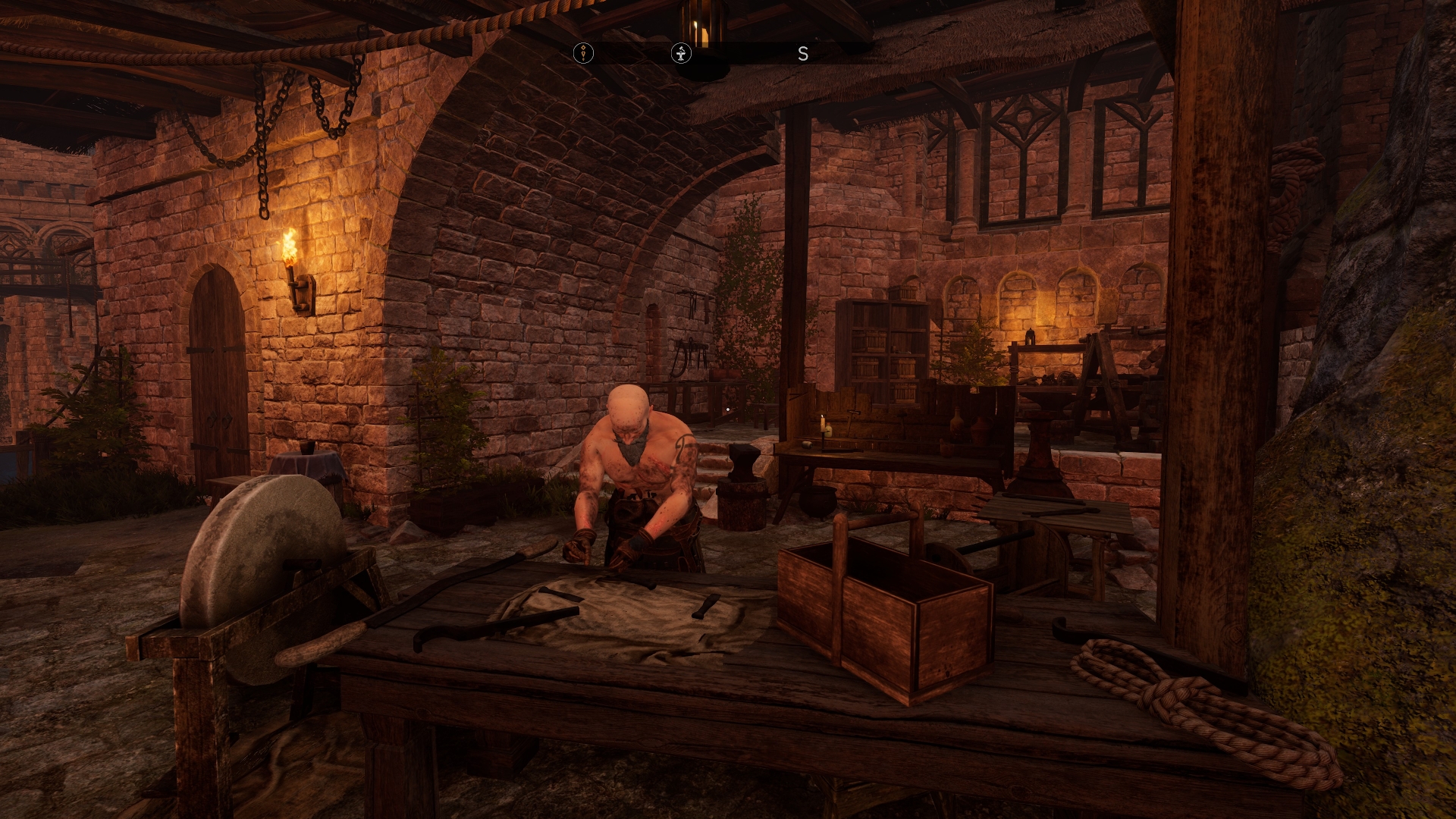 Osbryht, one of dozens of memorable NPCs I’ve met throughout my journey in Tainted Grail: Fall of Avalon. He’s a great guy.
Almost every NPC in Tainted Grail is eager to give you a quest - or often a few. Check in on a relative, deliver a letter, delve into a cave, resolve a squabble. By all measures, this should be busywork. There are well over a hundred NPCs in the game, and all of them are excited to pull you into their affairs.
I should be drowning in quest fatigue. This really shouldn’t work.
And yet - I find myself coming back to NPCs and eagerly anticipating what’s next. Yes, I’ve found the shipwreck you mentioned, what now? Will you recontextualize what I saw? Share a personal story? Gossip about someone I know? I’m completing quests, but as I do, I’m checking in on people I know.
There’s a concept in sociology called Dunbar’s number - the idea that our brains can only maintain about 150 meaningful relationships. Beyond that, people become faces in a crowd. Mind you, that’s 150 total, so a game probably has room for ten or so relationships to remember - if you’re lucky.
Most open-world games ignore Dunbar’s number completely. Skyrim throws hundreds of NPCs at you across a dozen holds, and I couldn’t tell you a single shopkeeper’s name (except for Belethor of course, he’d sell you his sister if he had one). They’re mostly anonymous vending machines with voice lines. They might have a quest attached if you’re lucky. They don’t really connect with their neighbors next door. The New York City of video games.
Tainted Grail: Fall of Avalon builds a village instead.
The cast is large but bounded. You meet NPCs in clusters - a military outpost here, a village there, a tribal camp. And you keep seeing the same people. Need a necklace repaired? Maybe I should ask Osbryht. His hands aren’t delicate enough for the work, but he heard one of the refugees might be a silversmith. Now I’m off to the camp - where I already know a few faces, and where I’ll probably get tangled in someone else’s problems while I’m there.
The quests are interconnected not because there’s some grand conspiracy, but because that’s how small communities work. Everyone knows everyone. Instead of being a hero passing through town at a hundred miles a minute, you become a regular.
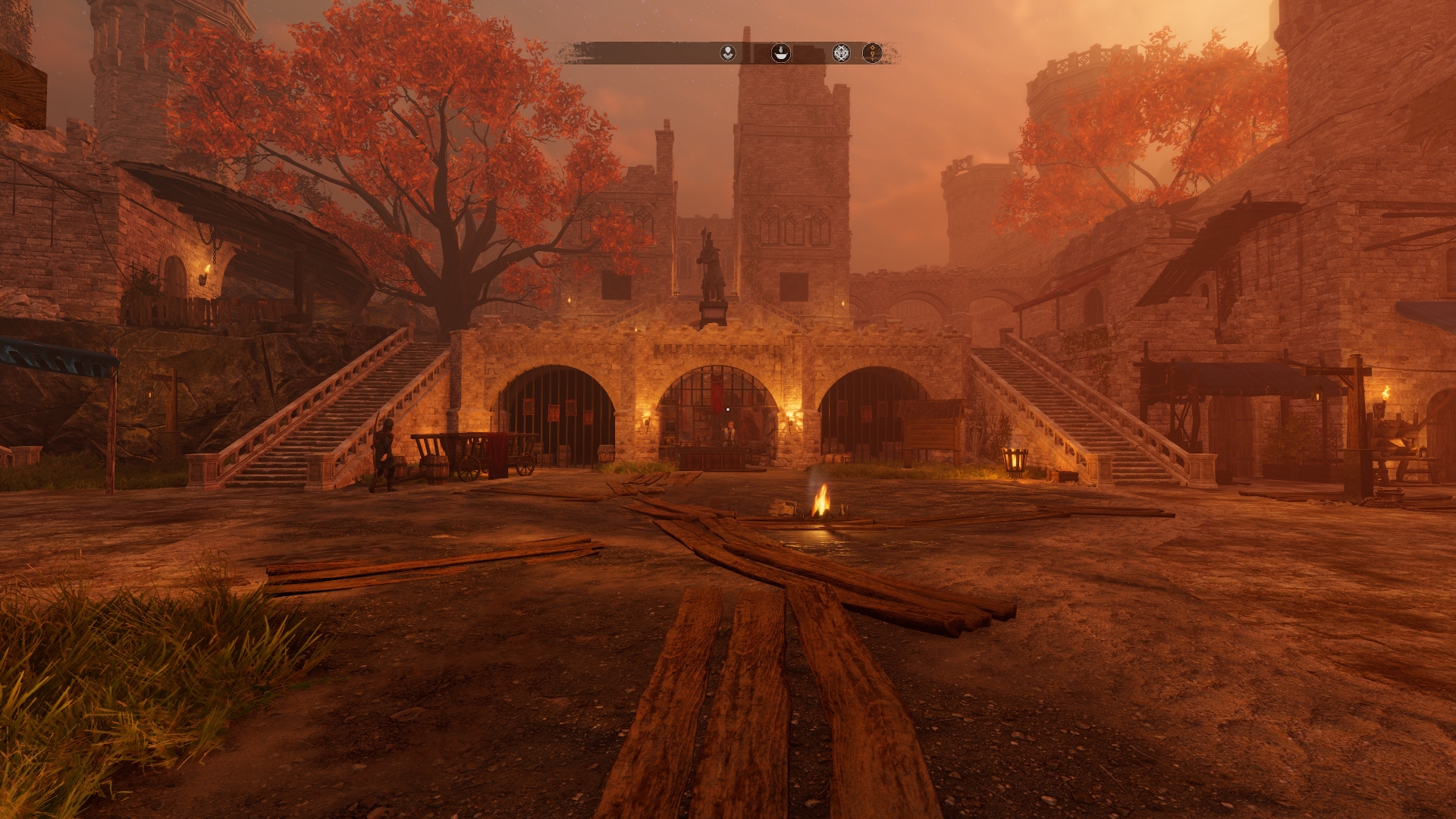 Horns of the South: the game’s first major hub and home to twenty or thirty NPCs, all of whom are excited to give you a task or five. Tainted Grail: Fall of Avalon loves quest chains.
Third places
The sociologist Ray Oldenburg had this concept of “third places” - spaces that aren’t home or work. The pub. The barbershop. The coffee shop. Where you see the same people, learn their rhythms, build familiarity without intimacy. A low-stakes social environment - you don’t have to be good friends, you just see these people once in a while.
These spaces are disappearing in real life, and I feel it.
I don’t really have a third place. Maybe my gym, where I talk to the regulars, where I enjoy the occasional social interaction - but we’re all usually busy doing the thing. I don’t go to the same bar every night (for which my liver thanks me). I don’t just randomly hang out somewhere.
If I want to socialize, I schedule time with a friend. And that’s nice, but it comes with different pressure. Expectations. You’re engaging in an activity together. A third place is lower stakes - you show up, maybe a conversation happens, maybe not. Nobody’s offended if you just nod and move on.
I don’t know if I prefer low-stakes social encounters to more intense, meaningful social experiences, but I enjoy them very much. And I think I miss them.
The hubs in Tainted Grail are third places.
The military outpost. The inn. The refugee camp. I return to them constantly - not because the game forces me to, but because that’s where the people (and the merchants) are. I stop by to sell loot and end up in a conversation. I check in on a quest and discover someone’s having a rough week. Social interactions occur mid-transaction.
This is why the busywork doesn’t feel like busywork. Two things make it work mechanically.
One - the interconnection. NPCs reference each other, send you to each other, gossip about each other. It’s how you actually get to know someone in real life - through repeated interactions and shared social context.
Two - the ambiguity. There are so many quests and so much personality baked into each character that you can’t tell what’s a quest hook and what’s just a person being a person. That colorful detail might matter later. Or it might not. The moment you can clock “this is quest-relevant dialogue,” NPCs become systems. But when everything could matter (or nothing could matter), characters stop feeling like quest dispensers.
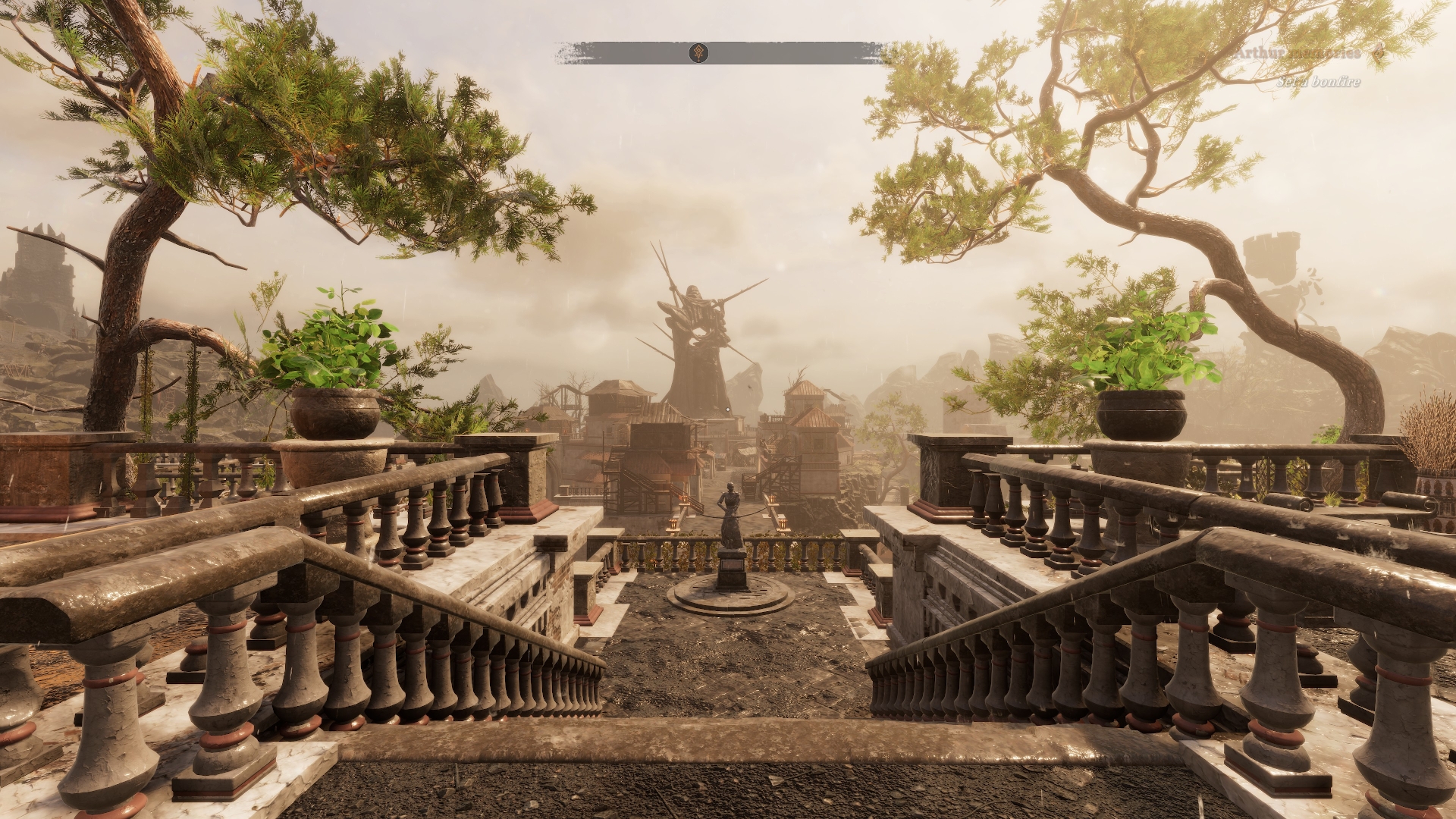 Another one of Tainted Grail’s major cities: Cuanacht. Just like with the Horns of the South, there’s a great number of people to talk to, all with their own agendas, all of whom somewhat know each other.
The merchant I killed
Remember the shady salesman from earlier? The one Osbryht warned me about?
His name was Malachy. Sleazy bastard. He sold me counterfeit relics - good luck charms that did nothing. When I confronted him, he offered me a discount on more counterfeit relics as recompense for selling me junk in the first place.
So I killed him.
I felt a sense of agency, like he deserved it. But I felt bad too. Even sleazy, even in a video game, even Malachy felt a bit human. Others had met him. Throughout the game, long after I’d almost forgotten about being judge, jury, and executioner, I’d meet someone mentioning Malachy - another traveling saleswoman, a good one, who was proudly displaying one of his good luck relics.
I didn’t have the heart to tell her he was a fraud. Or that he was dead.
This is the thing about Tainted Grail. Your choices ripple outward into a social fabric that actually exists. You’re not making decisions in a vacuum. You’re making them in a community where people know each other, talk about each other, carry little pieces of each other’s lives around. Kill a man and his ghost shows up in someone else’s inventory.
Old friends
I have strong opinions about these people now. A knight I find exhausting. A refugee I’m rooting for. And Osbryht - still, after all this time - a reliable presence I’m happy to see.
At some point I got him a pen pal. Later, I connected him with an apprentice - that silversmith boy from the refugee camp, actually. The one he pointed me toward when his hands were too clumsy for delicate work. Now the kid’s learning the blacksmithing trade.
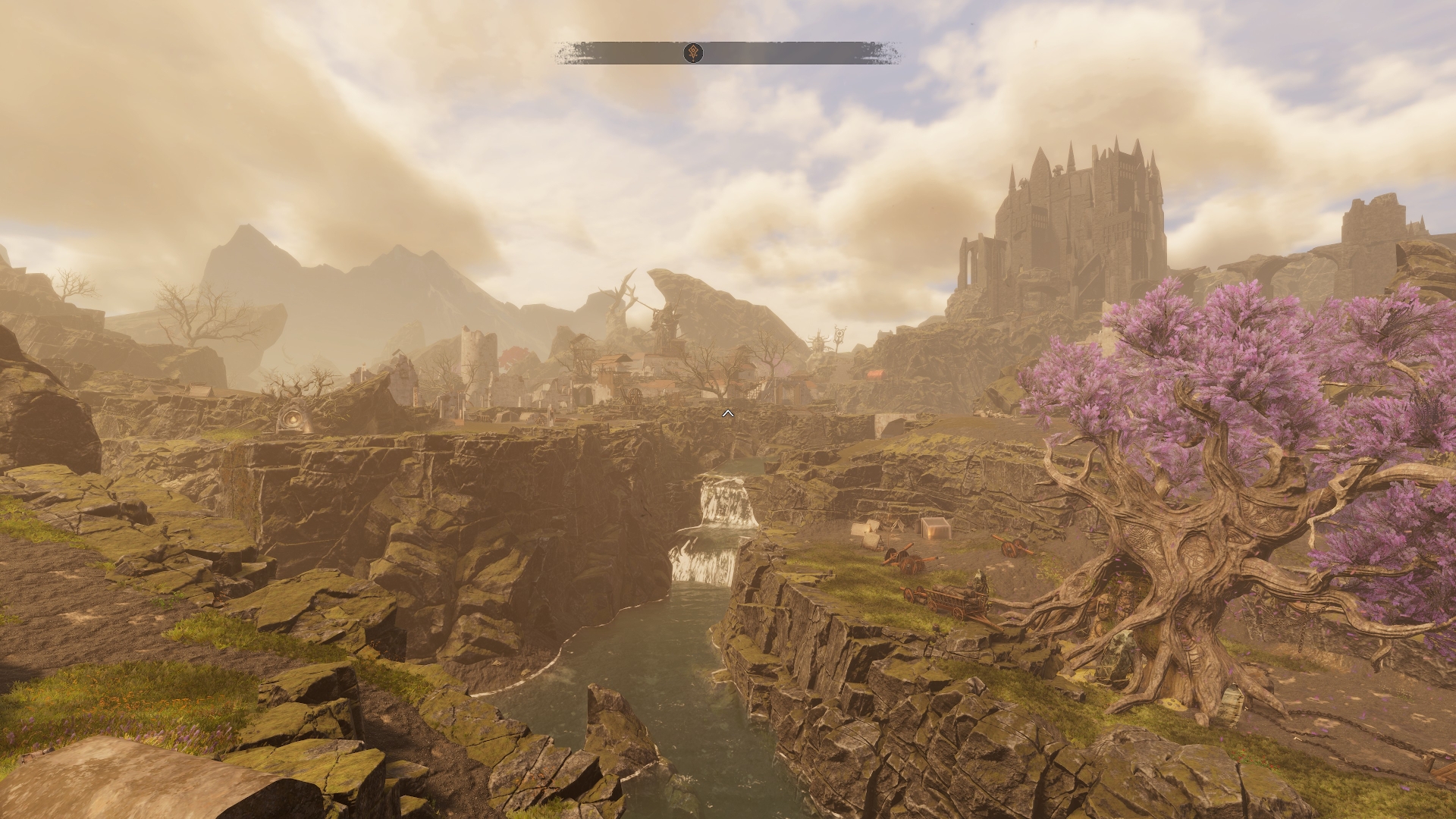 Screenshots like this one make me compare Tainted Grail: Fall of Avalon with Avowed - the world I found to be frozen, static, and lifeless.
I didn’t plan any of this. There was no “Osbryht questline” I was checking off. It just happened - small interactions accumulating into something that feels like a relationship. He’s got a pen pal now. He’s teaching someone. His life moved forward and I was part of it.
Games are pretty good at making me care about companions (hello, Mass Effect) and characters the narrative explicitly asks me to care about. It’s rarer to have something like a relationship with each shopkeeper.
Tainted Grail doesn’t make me care about a few characters deeply. It makes me care about a lot of people a little.
Maybe that’s what I miss about third places. Not deep friendship - I have that, I’m lucky. But the texture of familiar faces. The bartender who remembers your order. The gym regular you nod at. The blacksmith who gets mad about bad craftsmanship on your behalf.
A lot of people, a little. It adds up to something.
Comments
Respond directly on Bluesky (threads shown below) or Medium (view comments there).