 Rooslawn's Unmapped Worlds
Start screen is the best part of the game
Earlier today I stopped by local Costco. I don’t normally shop at Costco - we live in a small house, have a relatively small kitchen, and most important of all - I have a terrible track record of using up bulk goods. Yet, walking through the aisles felt great as every aisle held new possibilities. I could slow roast this massive cut of beef! I could meal prep for the week! I could buy a massive box of snacks and have it last more than a day this time!
Oh wait, I know this feeling! Just last night I was sitting at my computer, as my toddler’s asleep in another room and my wife’s working on an art project next to me. I booted up my trusty Total Warhammer III. Spent good ten minutes clicking through every faction and legendary lord, imagining what would the playthrough look like, what it would make me feel - the possibilities!
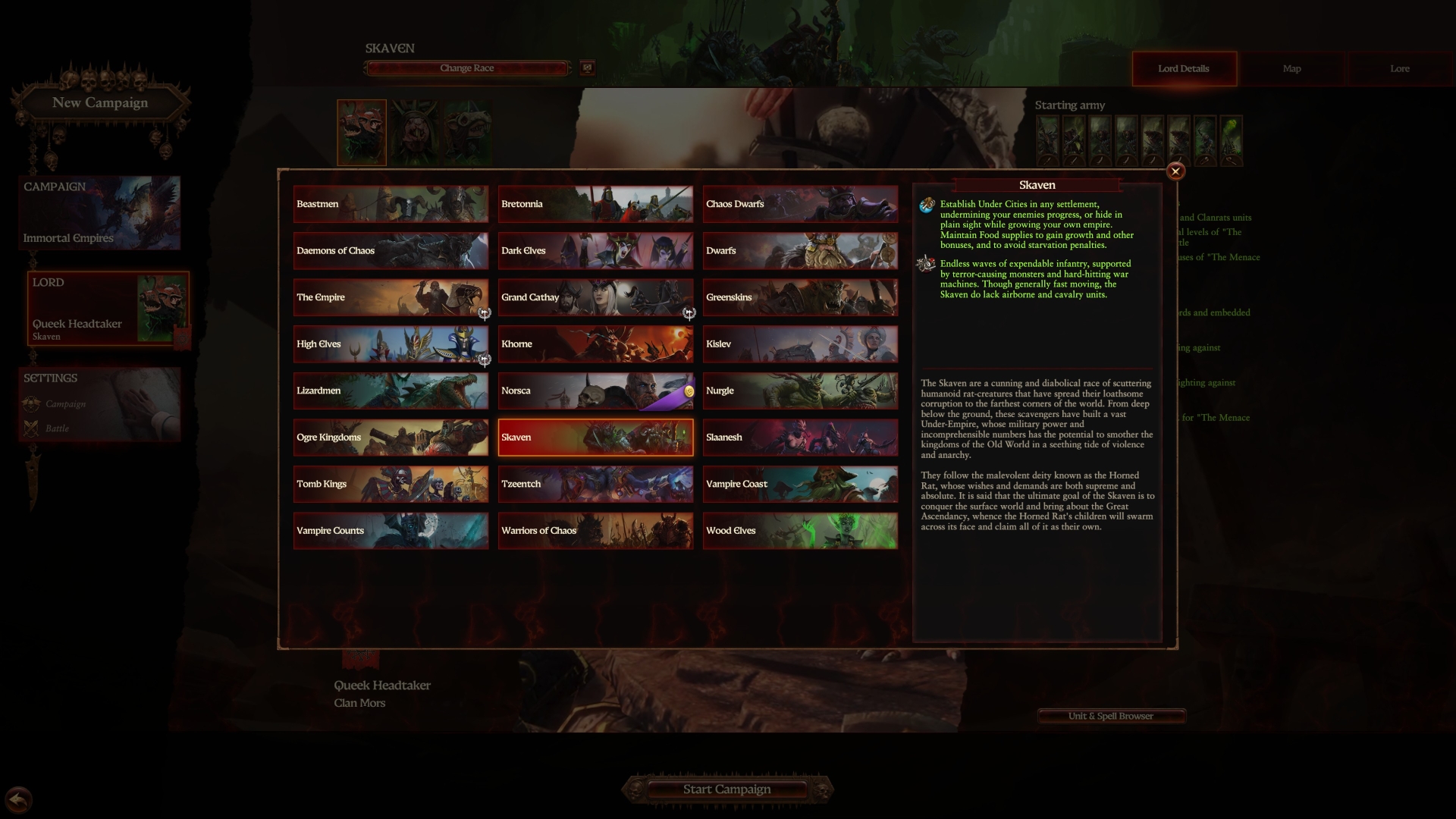 Faction selection screen in Total Warhammer III - I spend way too much time here.
I’d start a new game, play through a few turns, get my fill - and go back to the main course - the starting screen.
I’m at a point in life where I need my comfort titles and I want to feel specific things when I play games. We’ve already established that when I wasted my gaming day chasing a feeling last month, and when games asked too much of me only last week. Staring at a start screen as I fantasise about playing a game (instead of, you know, playing it) is yet another symptom of the same problem.
I’ve been circling around this for weeks, and I think I know what it is: I find it more fun to engage with the potential of games rather than their execution. At least today, or at least I hope it’s just today. Really hoping this is a phase I’ll grow out of, please let it be that. I miss just playing games.
There are probably a dozen reasons for this - comfort, fatigue, age, having played too many games - but I’m less interested in why it happens than in how deep it goes.
It’s the same reason I have no plans to replay the incredible Baldur’s Gate III any time soon, but I do love fiddling with the character creator - imagining what kind of story I could create, what would go differently, and how unique the playthrough would be.
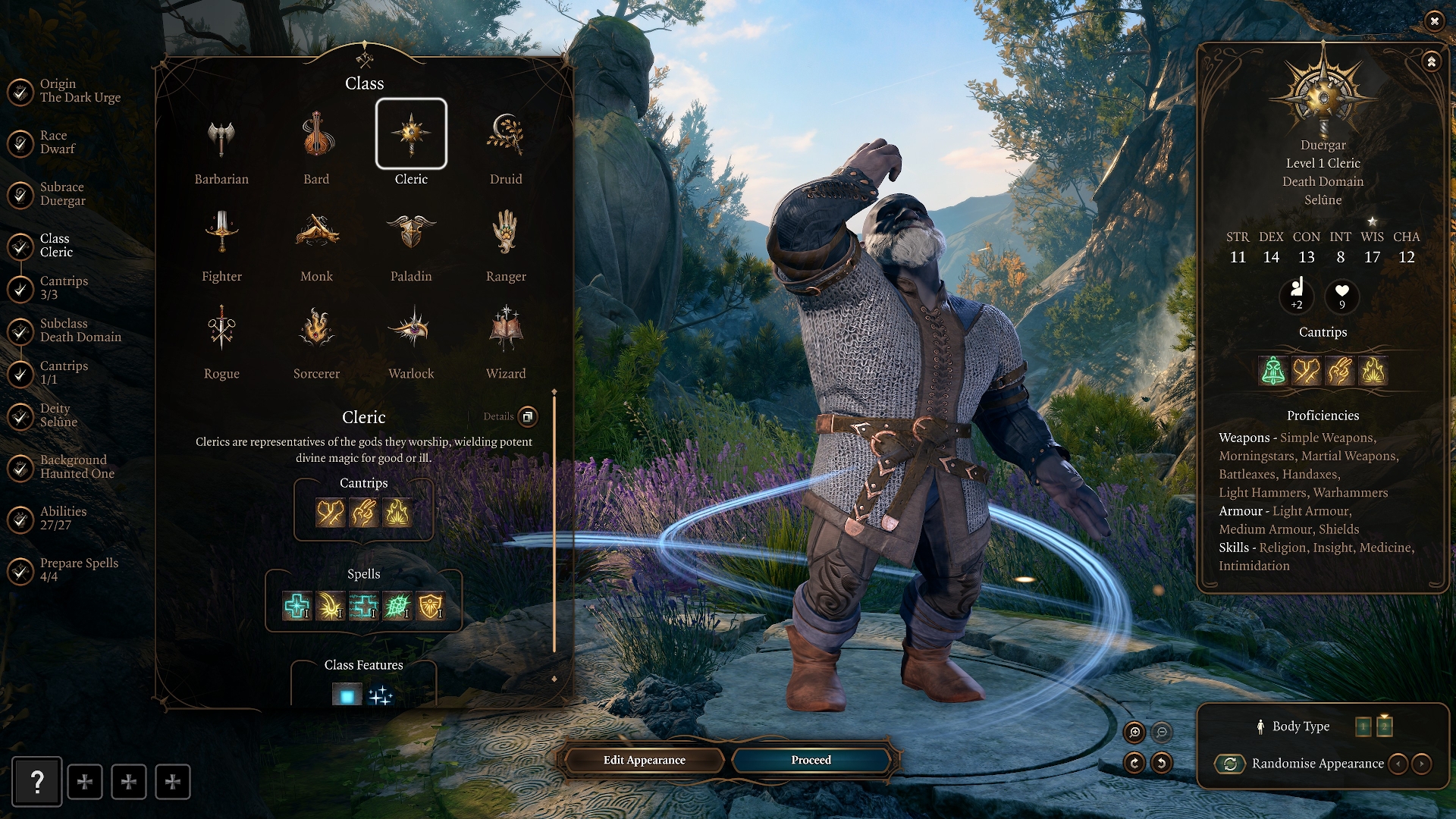 Okay, I’m not the only one guilty of idling in the character selection screen, am I? And I don’t just mean giving my character the perfect nose.
Do I want to replay Baldur’s Gate III? No. Do I want to experience the way it felt to replay it? Yes, and the character creator lets me do that with a fresh coat of daydreaming paint on top. I’ve played these games before, I remember how it felt. Because of my history with these games, character customization in Baldur’s Gate III or faction selection in Total Warhammer III is a form of play on their own - a play-pretend or a what-if.
And I think I know the exact moment the what-if dies.
In Total Warhammer III, it usually happens around Turn 3 or 4. On the start screen, the campaign is an epic saga. The intro cinematic of Karl Franz - the near-god-king of mankind - parading through the streets followed by a column of steam tanks (you didn’t know Total Warhammer has tanks, did you?). I imagine the heroic defense of the Empire, the shifting alliances, the final climactic battle in the Chaos Wastes. In theory, the campaign is clean. It’s this sweeping narrative arc I can see from end to end, and it’s beautiful.
Then I click “start.” I move my first army. I fight the first trivial battle against a rebel faction. I look at my province capital and realize I need to wait four turns for a tier-two building just so I can recruit slightly better archers. Maybe I put in another turn or two and complete my starting province. Set up a few alliances and stumble into a new war. But I’ve been here before, I’ve done this. It’s no longer an epic saga but a series of little, sometimes mundane steps toward the long victory.
All the possibilities collapsed into a single, narrow path.
That’s the moment. That exact moment. The campaign goes from everything it could be to everything it actually is, and “actually is” can’t compete. On the faction select screen, I’m holding every possible version of this campaign in my head at once. Karl Franz could unite the Empire through diplomacy. He could burn it all down fighting Chaos. He could lose everything and make a desperate last stand at Altdorf. Every version exists simultaneously, and they’re all perfect because none of them have had to survive contact with the game’s actual systems.
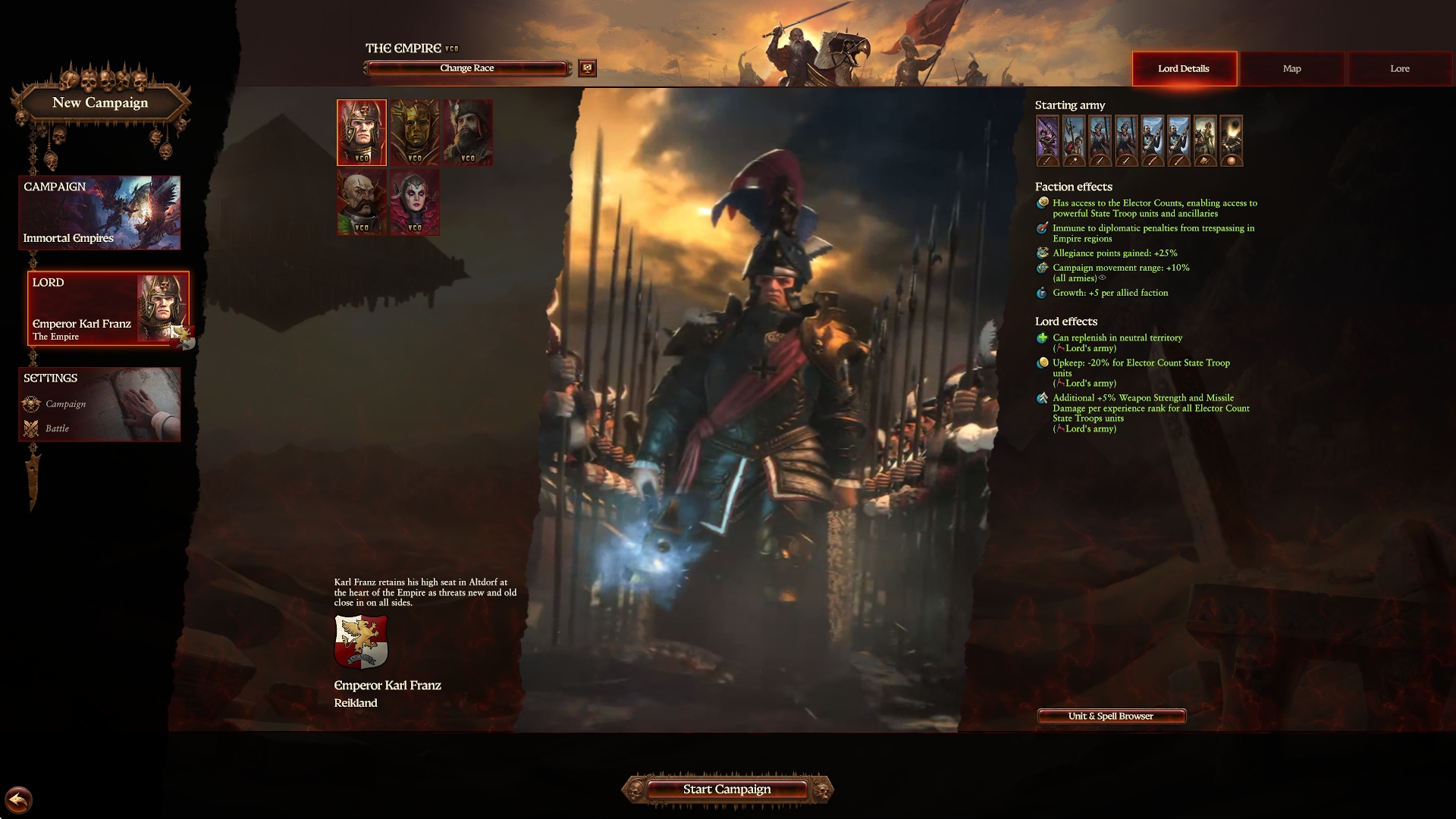 That’s Karl Franz. He’s an all-around decent emperor. He’s kind of a big deal - spoiler alert - he eventually ascends into godhood.
The moment I click “start,” all of those campaigns die except one. And that one has to deal with building timers, limited recruitment pools, and the fact that the Elector Counts are going to declare war on me for no reason around Turn 15 no matter what I do.
It’s the same thing at Costco, right? Standing in the meat aisle, I’m holding every possible version of the week ahead. I’m the guy who slow roasts a brisket on Sunday, who has beautifully portioned meals in the fridge by Monday. I’m also, in a different possibility branch, the guy who makes an incredible stir-fry from scratch using that massive bag of vegetables. Both of those guys exist while I’m standing in the aisle. The moment I put the brisket in the cart, one of them dies, and the other one has to actually go home and figure out how to use the oven’s timer again.
So I just… keep standing in the aisle. Keep browsing. Keep the possibilities alive a little longer.
I think there’s something going on here that’s bigger than indecision, though. I’ve been thinking about why the start screen feels better than playing, and part of it is that I might be losing my tolerance for boredom. And that scares me more than anything else in this piece.
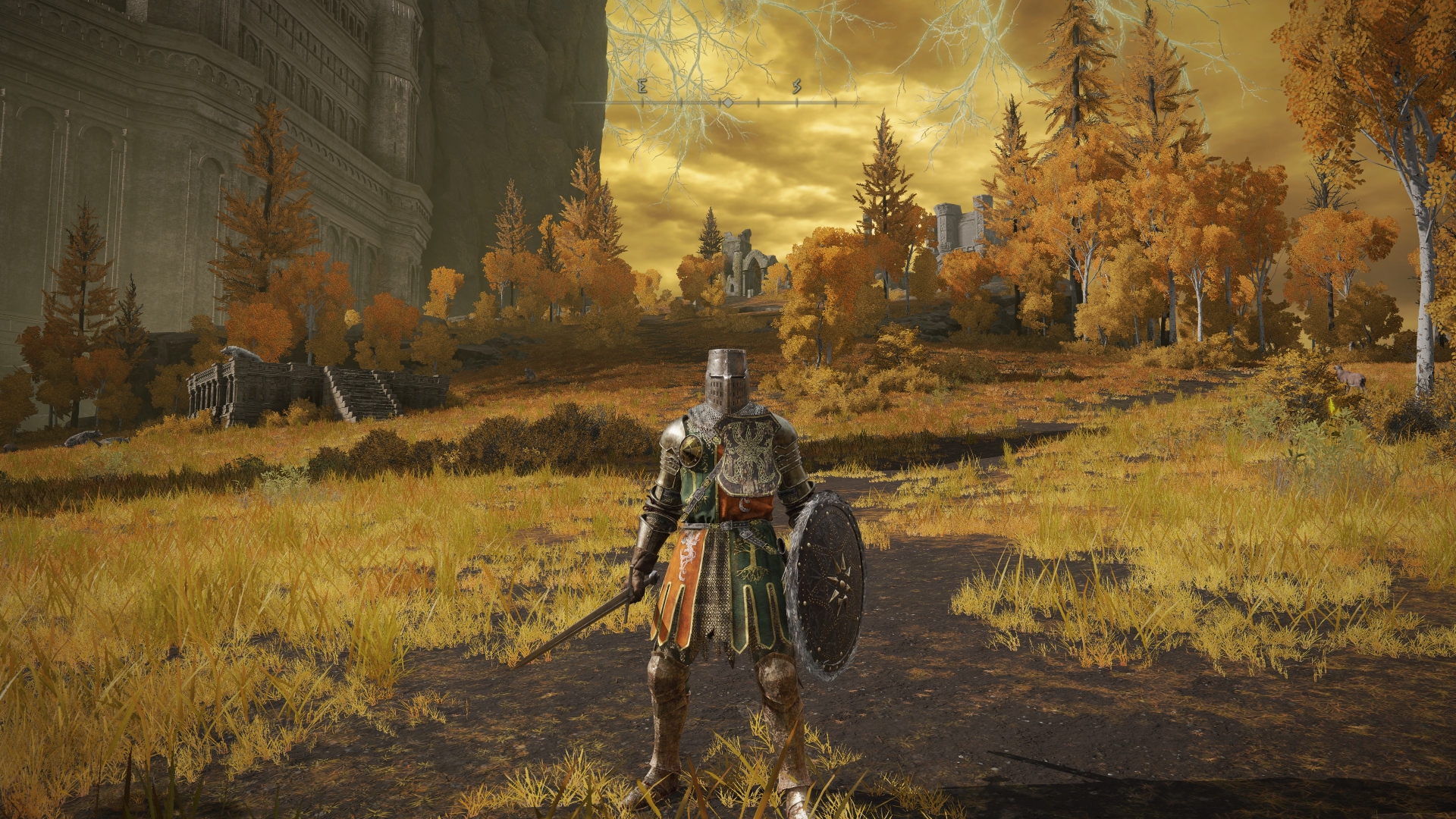 I spent more time planning my Solaire cosplay build - perfect armor, stats, even gestures - than I spent actually playing it. That probably should have been my first clue.
Real play requires boredom. It does. The slow bits of a game - the travel time, the resource gathering, moments of respite - those are what make the high moments earn their keep. The reason it feels incredible to finally breach the Chaos Wastes in Total Warhammer III is because you spent 80 turns doing infrastructure work to get there. The reason the final act of Baldur’s Gate III hits as hard as it does is because you spent hours managing your camp, sorting your inventory, talking to companions who are acting like a bunch of spoiled toddlers (with knives).
But when my free time is this scarce - genuinely scarce, not “I should be more productive” scarce but “my toddler wakes up in 45 minutes and this is all I get” scarce - the slow bits feel like a cost I can’t pay. I want the emotional payoff without the investment. I want the highs without the lows. And the start screen offers exactly that: a concentrated hit of possibility and anticipation with zero boredom attached.
The problem is that’s not how any of this works. The highs are only high because the lows are low. The payoff only means something because of the investment. I know this. I’ve written about this. And yet here I am, clicking through faction screens, getting my little dopamine hit of “what if,” and calling it a night.
There’s a part of me that is terrified this is just what gaming looks like now that I’m in my mid-thirties (you can laugh at my naivete if you’re past your 50s, or think I’m an old fart if you’re in your early 20s). Having real strong opinions on what experiences I want to have, living those out in my head from the main menu, and deciding that’s enough. Treating games like a gallery of ideas rather than things to actually be played. And look, maybe that’s fine. If I enjoy the ten minutes of browsing factions more than the ten minutes of playing, who’s to say I’m doing it wrong? I am engaging with the game. I’m appreciating the world-building, the faction design, the what-ifs. That’s not nothing.
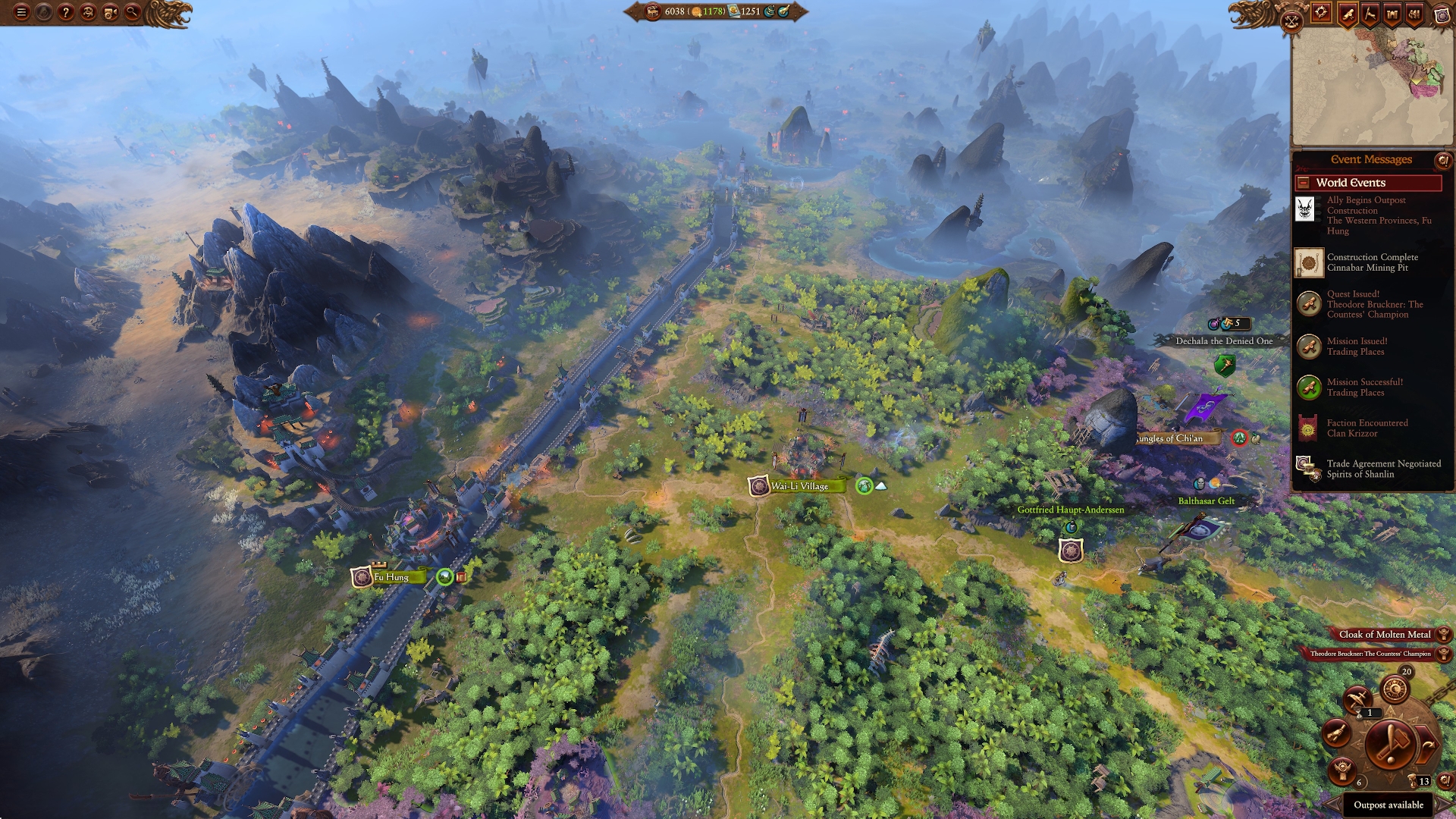 I chose to play through yet again as Balthasar Gelt - the Empire’s chief Golden Wizard. I imagined all the chaos and destruction his spells would cause, had a great time mopping up the initial few provinces, and abandoned a playthrough to write this piece.
But I don’t fully believe myself when I say that. Because I remember what it felt like to actually play. To be 40 turns deep into a campaign, exhausted, with half my empire on fire, making desperate decisions that mattered because I’d earned my way into them. The start screen can’t give me that. It can only give me the fantasy of that. And the fantasy, however pleasant, is getting thinner every time I go back to it.
I left Costco today with a much smaller haul than my imagination promised. I didn’t get the brisket. I didn’t get the 48-pack of artisan water. I bought some eggs, a few snacks for my toddler, and a rotisserie chicken - the comfort titles of the grocery world.
I got home and booted up Total Warhammer III. Clicked on Karl Franz. Watched the intro cinematic. Hovered over the “start” button for a while.
I picked Balthasar Gelt instead. Fresh start. New possibilities. I made it to Turn 13 this time, and I’m real proud.
If you enjoyed this piece, also consider reading Becoming a game critic who doesn’t play games. It’s kind of relevant.