 Rooslawn's Unmapped Worlds
I one-shot everything in Tainted Grail and kept playing
I was playing through Tainted Grail: Fall of Avalon as a nimble archer. For the most part, the combat felt fair - I’d grow in power, mow down previously impossible to defeat enemies, get hit by a new wall of difficulty as I progress. And then I stumbled upon a Deadeye Bow: a bow with ridiculously high damage. The downside: it only deals the damage if you score a critical hit - or hit an enemy’s weakspot, like their head. Oh, and it looked cool - with eyes all around it.
Testing it out yielded mixed results - I practically exploded every enemy with a single well-placed headshot, but if I missed and hit any other part of their body - I’d deal no damage whatsoever. So I had an idea: can I increase my critical chance enough to have some reliable way of dealing damage? A respec potion, some carefully selected armor and amulet (I felt vindicated for hoarding all the unique armors throughout the run), and proper relics on my weapons - boom, ranged critical chance > 100%.
Yup, from now on, every shot that I make would be considered a critical shot - dealing massive damage, and triggering all the bonuses from the Deadeye Bow. This build was unstoppable enough to let me breathe through the remainder of the game hardly breaking a sweat.
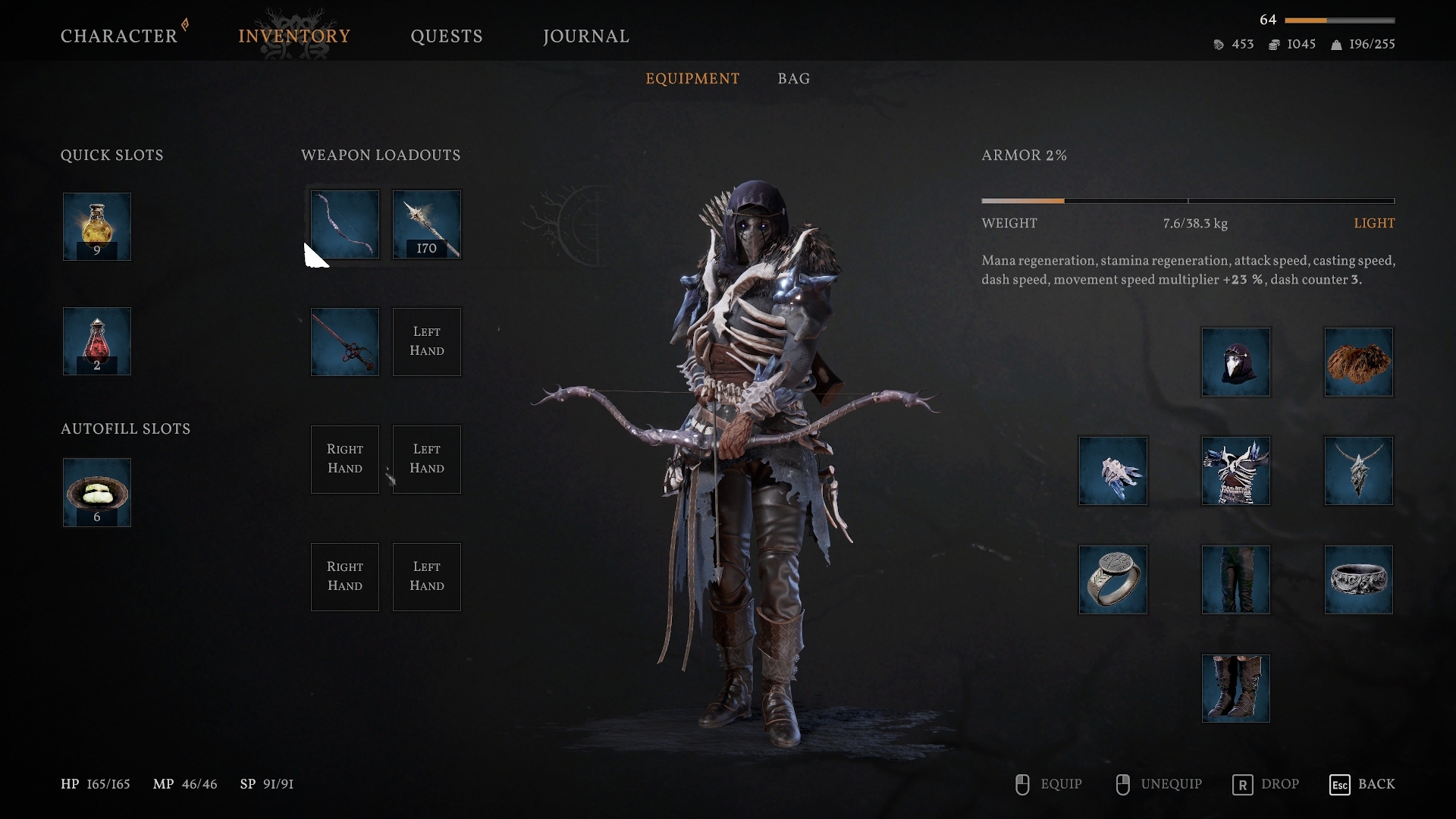 Here’s my avatar: Aela the Huntress (yup), sporting the Deadeye Bow and various gear to improve her critical chance and critical damage.
Normally, I hate overpowered or exploitative builds in games. I have much appreciation for a game’s mechanics, and I often focus on “developer intended experience”. But the Deadeye Bow build didn’t feel like an exploit - it felt like I solved something. I respecced, I dug through my hoard of unique armors, I figured out how relics interacted with critical chance. I had to engage with multiple systems to get there, and the game rewarded me for paying attention to all of them.
You see, this build was possible because I paid attention. I found the Deadeye Bow in a hidden spot within an already secret area because I noticed an outline of a chest up high, and the game taught me that chests could contain game-changing items. And I found said secret location because I paid attention to the game’s lore. I had the right armor because when exploring an unmarked location I stumbled upon a secret questline about a shadowy assassin’s guild, and made a set of decisions which led me to join.
I noticed how many of Tainted Grail’s systems - exploration, quests, itemization, lore, combat - fed into each other in ways I didn’t expect.
Items changed how I played
The Deadeye Bow wasn’t an anomaly. Tainted Grail is full of items that don’t just bump a number up - they change how you approach the game. Early on, I found a sword that dealt bonus damage to bleeding enemies but had no way to cause bleeding on its own. Useless, right? Until I paired it with a dagger that applied bleed on nearly every hit. Suddenly I had a combat loop that felt intentional, like the developers had left puzzle pieces scattered across Avalon for me to assemble.
Items interact with other items, skills, spells and effects, enemy stamina - the list of interactions is vast. There are armor sets which quadruple your damage for going under 20% health. There are weapons which reward you for burning through all your mana, or maybe having full stamina - or maybe not having any at all. Most items feel like a meaningful and interesting choice to be made.
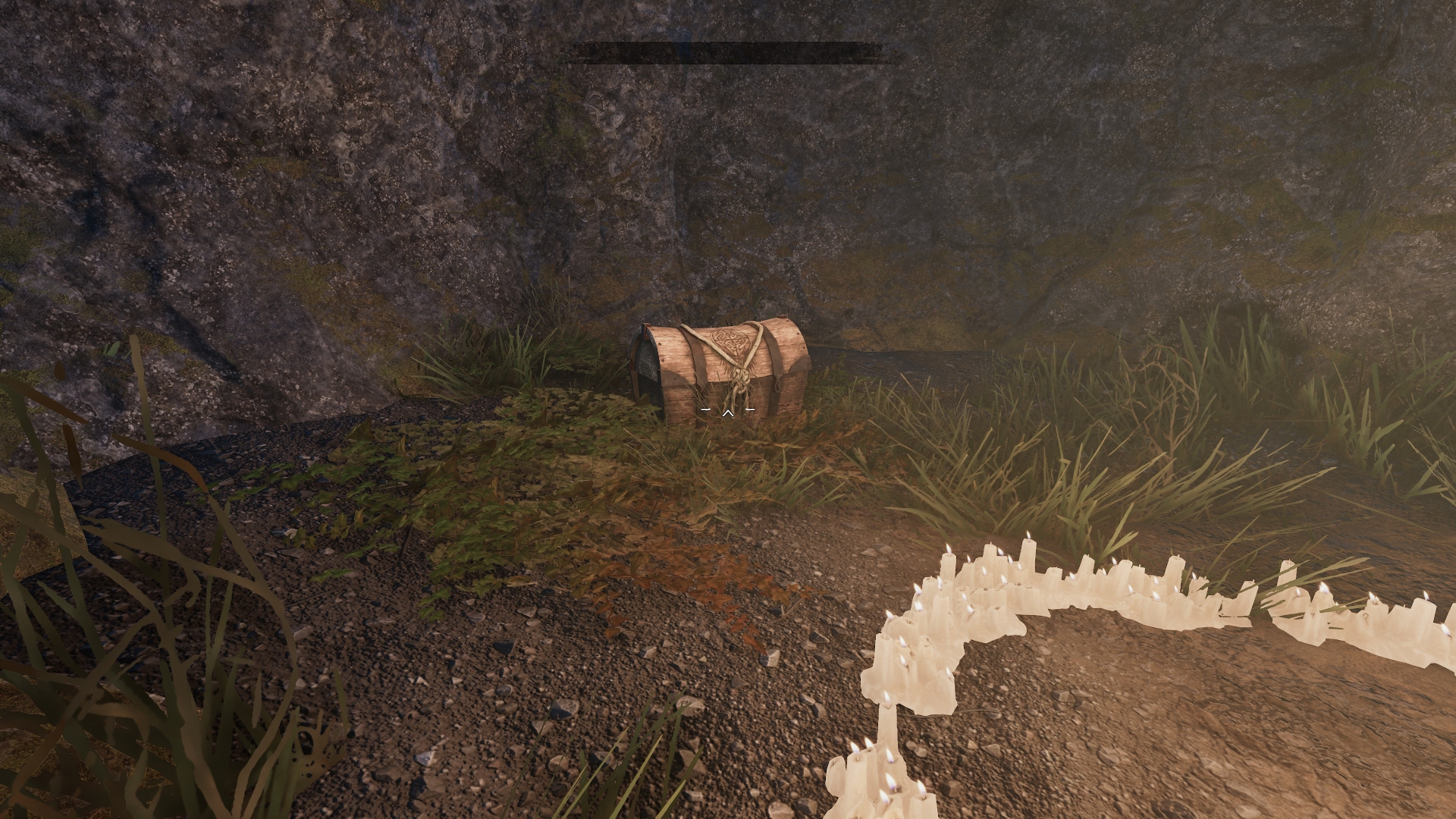 I get excited every time I find a chest. That’s pretty hard to pull off in any RPG, let alone one that showers you in the loot as liberally as Tainted Grail: Fall of Avalon does.
This is the difference between “I got a bigger number” and “I figured something out.” In Kingdom Come: Deliverance, I had a similar feeling with archery - the game doesn’t give you a crosshair, arrows drop over distance, and fly in weird arcs. Early on, you miss everything. By the end, you’re sniping bandits off horses because you, the player, developed a gut feeling for trajectory. Your skill and Henry’s skill grew together. Tainted Grail does something similar with itemization - you and your character both get smarter about how the world’s tools fit together.
Dark Souls or Elden Ring players know this feeling. The community celebrates absurd builds that trivialize bosses, and FromSoft clearly designs with that possibility in mind. Divinity: Original Sin 2’s entire combat system feels like a dare - can you find the interaction we left for you? Baldur’s Gate III’s honor mode practically requires you to cheese encounters. Breaking the game isn’t a failure state in these games. It’s the metagame. Tainted Grail plays in this space at a smaller, AA scale - fewer systems, less polish - but the same core satisfaction.
You become overpowered by paying attention.
Lore didn’t lecture me
Tainted Grail’s world is heavy metal Arthurian mythology - dark, layered, grim. But it’s not pompous about it. There’s a sense of humor running through the whole thing, a groundedness that I think comes from the game understanding how people actually talk. War or not, King Arthur or not, magical end of the world or not - people still need to eat, joke with their friends, grab a drink at the tavern. I like to think that’s how people who actually lived inside a myth would behave. Not every conversation is about the fate of the realm. Sometimes it’s about the weather, or a neighbor they can’t stand.
Dread Delusion, another one of my personal favorites, did this well too - dark and whimsical without disappearing up its own lore-hole. Tainted Grail is in that same space - it respects the myth and its own world building, but it doesn’t demand you do. I like when games trust me to get interested.
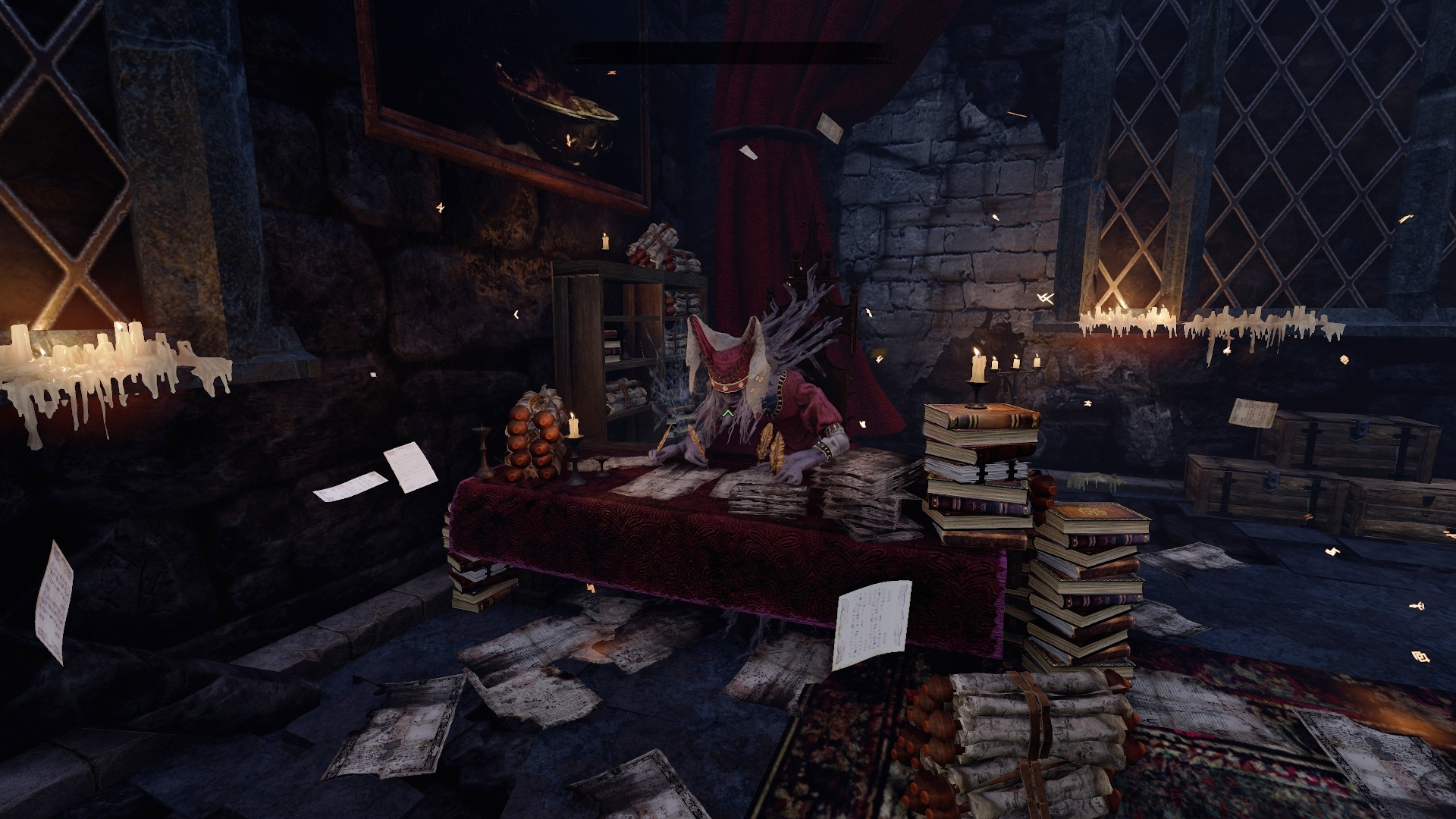 This is Claire. In a different game she might be a loremaster, dumping the history of the world on you. Here, Claire has her own problems- she is writing letters to her beloved.
And if you want to go deep, the game lets you. Lore isn’t delivered in cutscenes or forced dialogue - it’s mentioned casually in conversation, often through optional topics, picked up from context, found in books scattered throughout the world. You get more context, more connections between quests and events, for paying attention and exploring. The game doesn’t mind if you skip it.
But it does reward you. At its clumsiest, the game literally quizzes you (I’m looking at you, Elaine - the audacity to quiz a fully grown adventurer). In its more subtle moments, you notice something out of the ordinary because of what you already know, investigate, and get rewarded with gear, new lore, a quest, or a fight you weren’t ready for.
Lunacid, which I played recently, does something I love - it has so many secrets that you just expect to miss some. That’s freeing. When a game has more hidden content than any single playthrough can uncover, missing things stops feeling like failure and starts feeling like discovery still waiting. Tainted Grail has some of that energy. I know I didn’t find everything. I know there are questlines I locked myself out of. And that’s fine.
Oh no, the (quest) consequences
Many of Tainted Grail’s quests are blatant fetch quests. Go here, grab this, bring it back. But the journey elevates the errand. You’re walking through a world that rewards attention - lore fills out the context, exploration turns up meaningful items, and the characters you’re running errands for have enough personality to make the trip feel worthwhile.
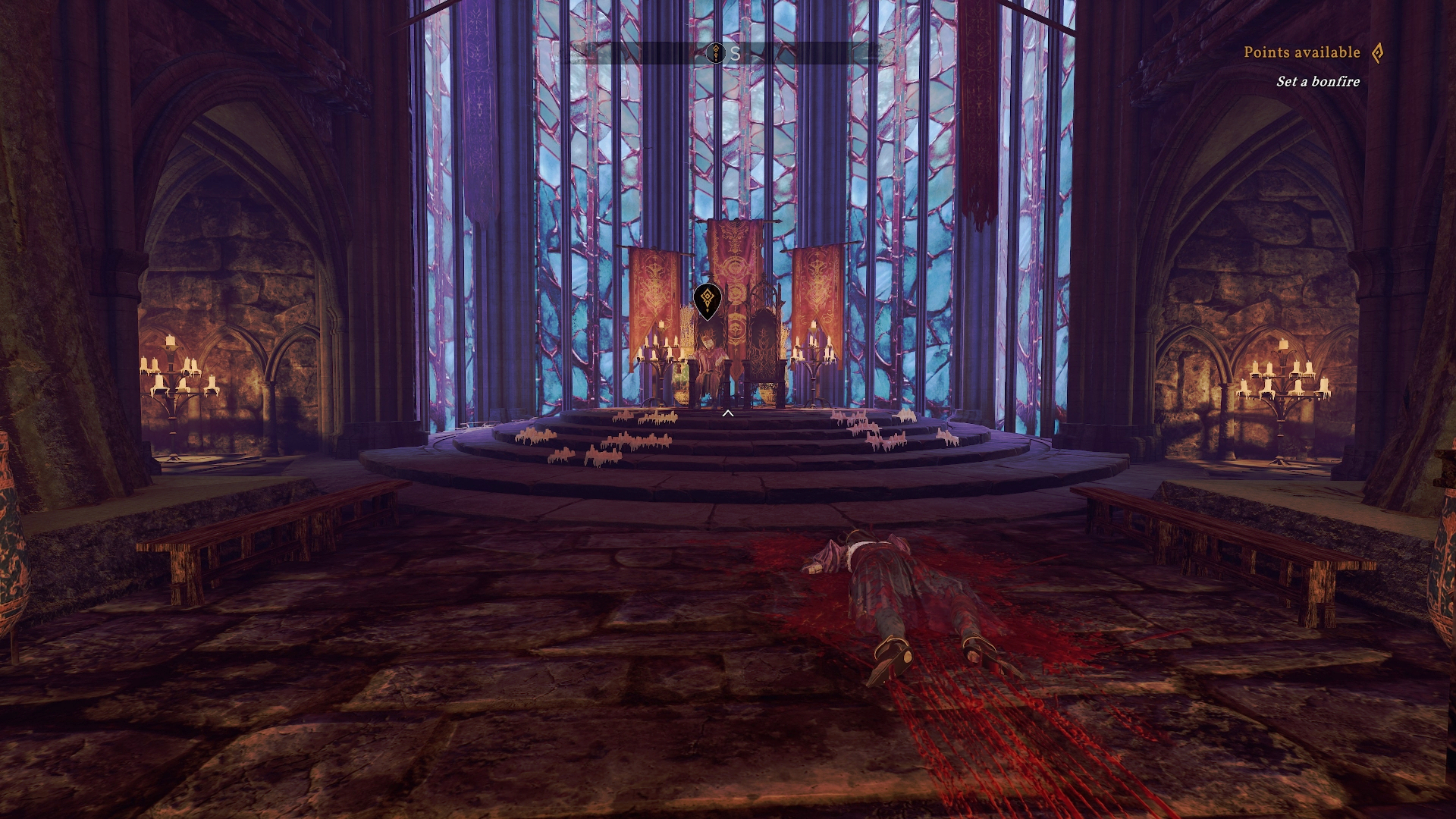 Lots of different people end up being dead as you play through the quests. By your hand, more often than not.
I already wrote about this once - the blacksmith I didn’t mean to befriend. A questline that snuck up on me and landed harder than I expected, not because the quest structure was revolutionary, but because the writing, the living world, and my choices made it personal.
What surprised me more was how willing the game is to cut you off. You make a decision that goes against a faction? They stop talking to you. Not in a “we’re disappointed but here’s another quest” way - in a “this door is closed now, deal with it” way. There are Dal Riata tribes that attack me on sight, just because of what I felt was the right moral decision. Right decision or not, it went against their beliefs.
Tyranny is still the gold standard for this. That game will lock entire regions behind your early choices - sometimes before the game properly begins - and it never flinches about it. After my playthrough, during which I felt like I secured the future for the region with sacrifices along the way, I learned that there are whole areas I didn’t see, what I thought were combat-only areas were that way because of my choices, and some folks I’d burnt at the stake or locked up could’ve been long-term companions with their own complex arcs. Way to go, Tyranny - you locked me out of half the game, and it’s still among my favorite RPGs.
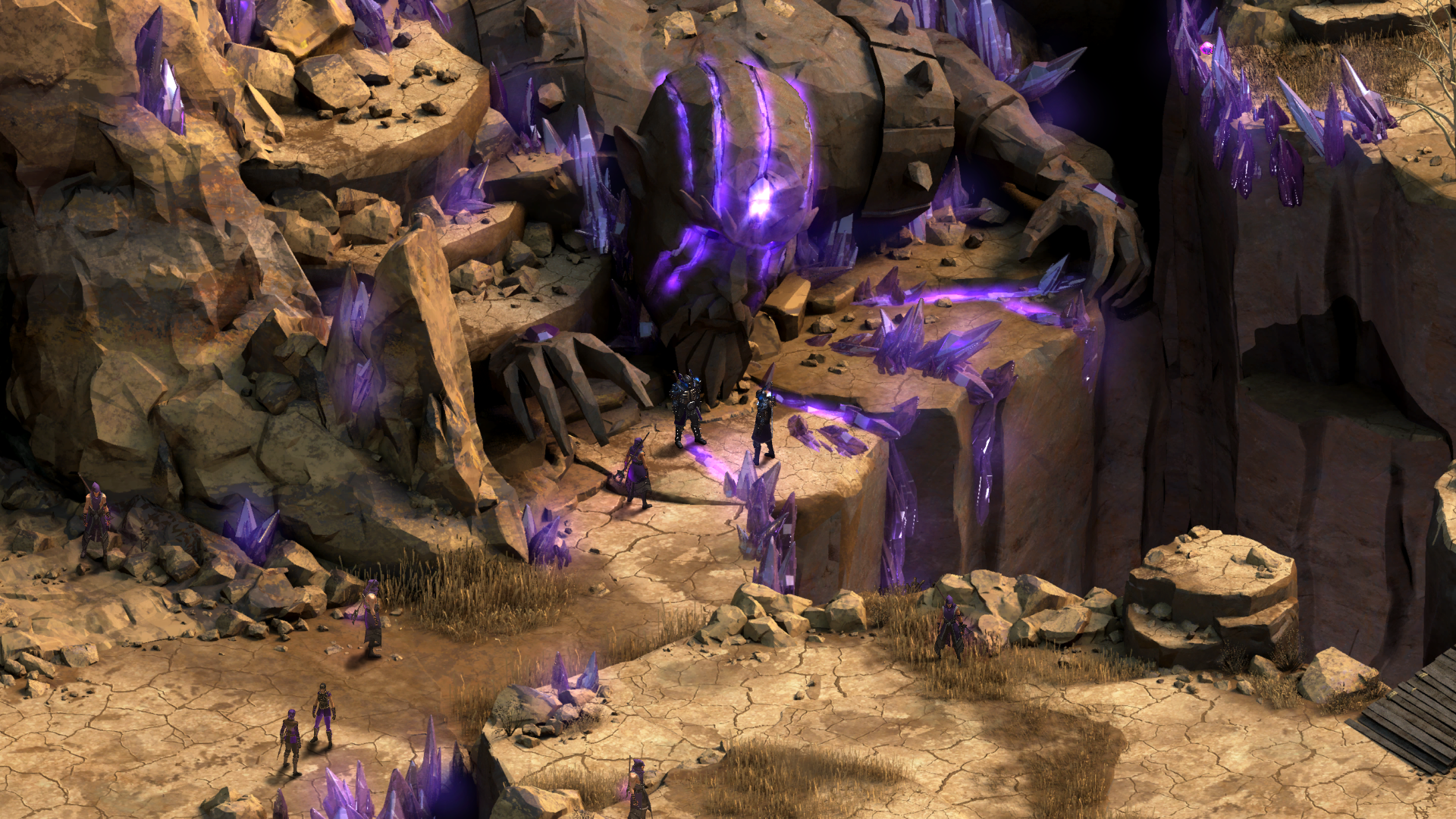 I’ve just looked it up, and it’s actually practically impossible to visit all of the game’s major regions during each playthrough. So a good portion of players who completed the game haven’t seen this big guy, for example.
Tainted Grail isn’t as aggressive, but it’s in that lineage. It trusts you to live with what you chose. Quest chains get locked out, regional politics change, NPCs stop talking to you or die.
One of my favorite moments was a certain farming quest. This angry gardener sends you off after some seeds to get you off his back, and eventually sends you after pumpkin seeds. Well, pumpkins in Tainted Grail are uniquely susceptible to Wyrdness - the game’s antagonist force. Everyone tells you about it, you warn the guy, he doesn’t listen, and a few days later you find a pumpkin gnawing on his corpse. End of quest chain, no reward, no payback. You killed a guy because you really wanted to go on a quest or something.
There’s a specific satisfaction in knowing that your playthrough is genuinely different from someone else’s - not because of a branching cutscene at the end, but because entire chunks of content simply don’t exist for you anymore. You earned your version of the story.
Combat was good enough
I want to be honest here: Tainted Grail’s combat isn’t its strongest feature. It’s a AA RPG, and it can be janky. Animations clip, enemy AI occasionally loses track of you, and once your build clicks the difficulty drops off a cliff.
But the feel is solid enough. Sword swings have weight. Magic feels oomphy - casting something big feels like casting something big. And archery - archery was a real highlight for me. There’s no aim assist, arrows have genuine drop-off, and learning to compensate for distance was its own form of progression. Being able to snipe an enemy on the horizon because I’d built up a gut feeling for how much higher to aim felt like an achievement. Not a game achievement - a me achievement.
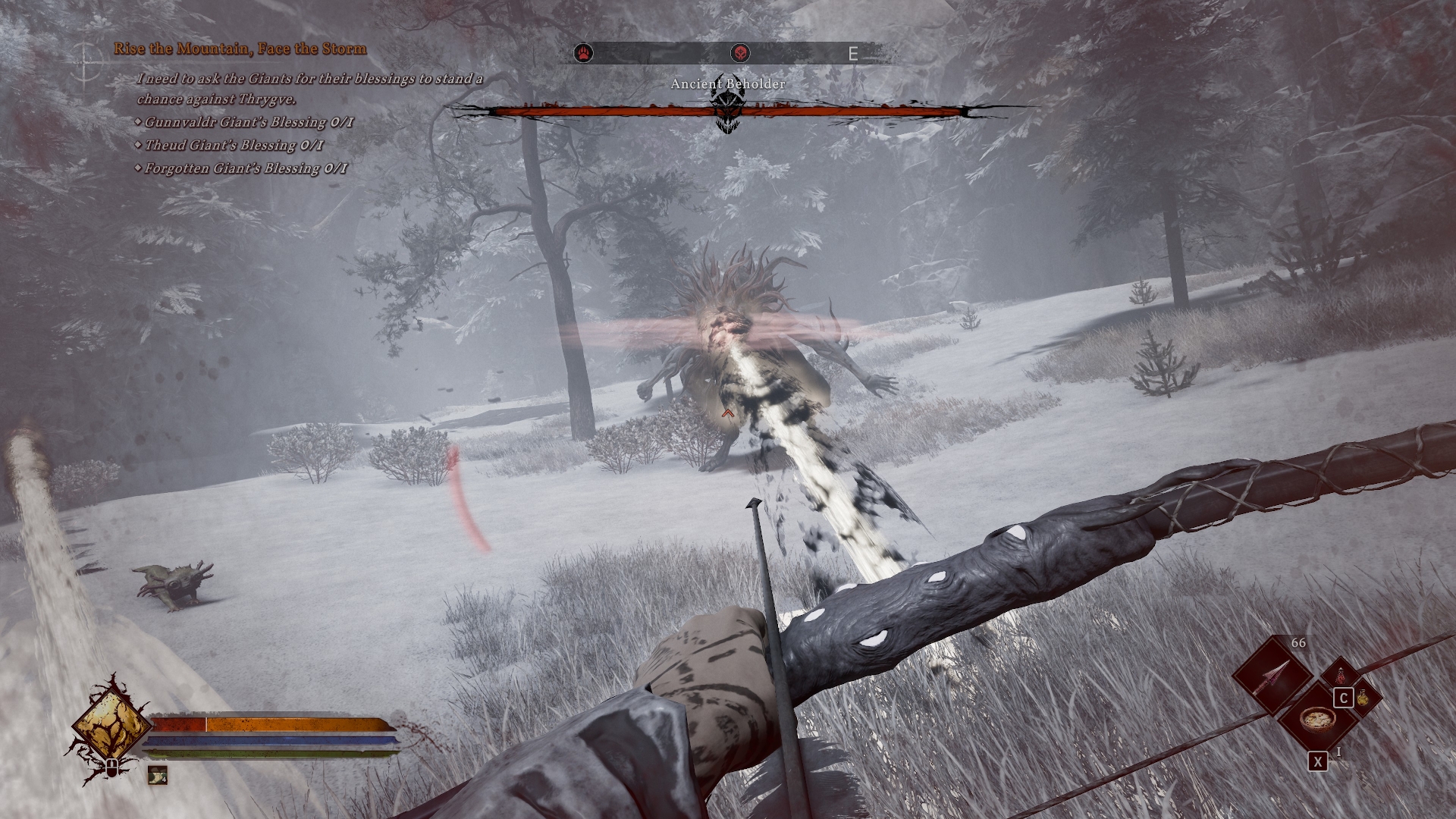 Even with a bow that can one-or-two-shot everything around me, I’m actually quite a glass cannon: you can see that getting hit took away three quarters of my health bar. Dodges, parries, and stealth are still critical to stay alive.
I did eventually switch to my dueling sword here and there, just for variety. One-shotting everything from across the map was fun, but sometimes you want to hit something up close. And by that point in the game, I mostly wanted to see where the story was going anyway. The bow let me do that without friction, and I didn’t mind. That’s maybe the best compliment I can give the combat - it trivialized itself, and I still wanted to keep playing because everything around it had already earned my investment.
Outward comes to mind as a sibling here. Similar AA budget, similarly deliberate combat, similarly clunky around the edges. Both games ask you to engage with their systems honestly rather than polishing the action until it’s frictionless. The roughness is part of the identity.
Combat in Tainted Grail isn’t the star. It’s the thing that happens between discoveries, between lore, between quests. But it’s good enough for itemization to matter and be exciting, to increase narrative tension, or to characterize an antagonist through their level of power.
Exploration tied it all together
Every system I’ve talked about meets at exploration. You wander into an unmarked ruin and find a book that recontextualizes a quest you finished hours ago. You stumble into a cave and find an item that reshapes your build. You follow a road you haven’t taken and trigger a questline that locks you out of another one. You take a turn, and find a fight against an enemy you’ve yet to defeat.
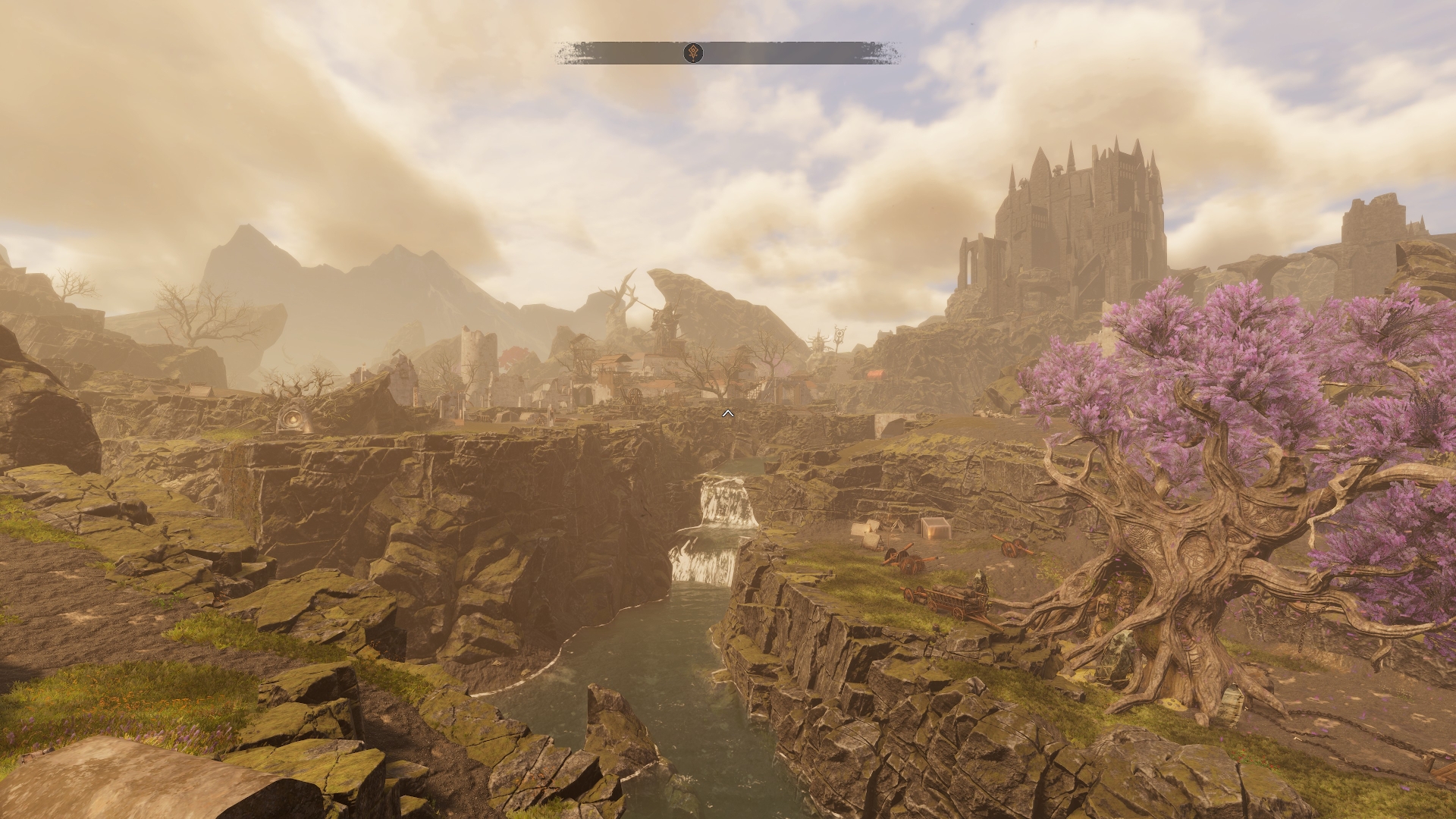 This is what the majority of Tainted Grail: Fall of Avalon looks like: many interesting landmarks and fantastical landscapes accompanied by a feeling of wanderlust.
Tainted Grail’s map isn’t large, but it’s dense. Locations feel hand-placed, not procedurally scattered (I’ve written about my dislike of procedural world generation), and the game trusts you to find them without drowning the compass in markers. The map has points of interest, sure, but plenty of its best content is off the beaten path, unmarked, waiting for someone curious enough to check behind the waterfall (as is tradition) or climb the ridge that doesn’t look climbable.
Exploration isn’t a separate activity from questing or looting or learning the lore. It’s the medium through which all of it happens. The build that trivialized my combat? Found through exploration. The questline that cut me off from a faction? Stumbled into through exploration. The lore that made the world feel lived-in? Picked up while exploring places I had no quest marker pointing me toward.
I don’t know if every player will have the same experience. Someone who fast-travels constantly and follows only the main quest might find Tainted Grail thin - it can be rather bare bones if you only engage with some of the systems. But if you’re the kind of player who obsessively checks behind waterfalls - and you probably are, if you’re reading this - there’s a chest up high with a bow covered in eyes, and it’s waiting for you.
Comments
Respond directly on Bluesky (threads shown below) or Medium (view comments there).