 Rooslawn's Unmapped Worlds
I fucking love dwarves
Here’s the thing. I fucking love dwarves. Or dwarfs, if you’re Games Workshop who doesn’t subscribe to Tolkien’s contributions to English language.
It was my wife who first pointed out my love of dwarves. “Can you play as dwarves in your game?” - “Yes, why do you ask?” - “You’re playing as dwarves, aren’t you?” - “Yes, how did you know?”.
My favorite faction in Total Warhammer? Dwarfs. My character in World of Warcraft? A dwarf, naturally. Dragon Age: Origins? A dwarf, of course. And can’t even begin to estimate the number of hours I sunk into Dwarf Fortress in the past twenty years.
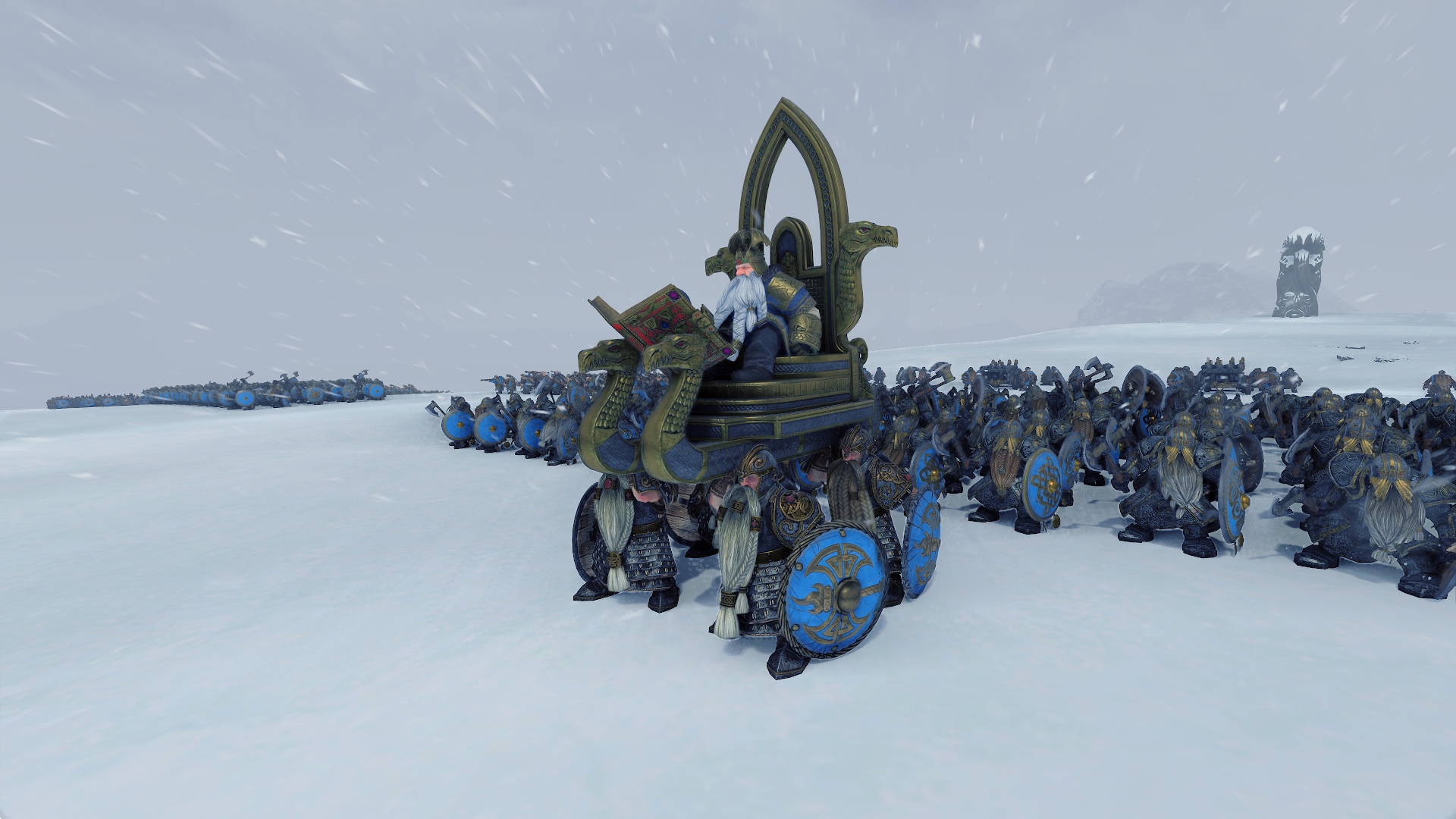 Meet Thorgrim Grudgebearer, the most dwarfen dwarf to ever dwarf in Total War: Warhammer III. He’s the current high king, and he carries the great book of grudges with him to make sure no slight gets unpunished.
Well, a few dwarf-themed gifts from a thoughtful partner, and a whole lot of reflecting later I have a better handle on why I fantasize of being a short, stout, beer loving bearded old man.
Dwarves are manly men
I’m a man. Growing up, I never particularly considered myself very “manly”. I liked Dungeons and Dragons and computer games. I grew up around lots of female cousins, and I was pulled into more dress-up games than I’d like to admit. I didn’t get in any semblance of physical shape until my mid-twenties.
All that to say, that as a young adult, I didn’t feel that brand of “manliness” on me, and maybe that contributes to a deep desire to roleplay as a dwarf. Dwarves are all muscle, arguably even dwarven women and children have beards, and they can drink a full keg without buckling. As I got older, I moved past insecurities around masculinity I’ve had growing up, but the attraction to the dwarven archetype remained.
Speaking of alcohol - I like drinking - beer, wine, and liquors taste good, and they do wonders as self-medication for anxiety, ADHD, mild OCD - and anything else that might come up. But drinking isn’t good for you, and as I’m getting older, I don’t like how even a single drink makes me feel these days. And the fantasy of a dwarf drinking beer over water with no consequences does make its way into my head sometimes.
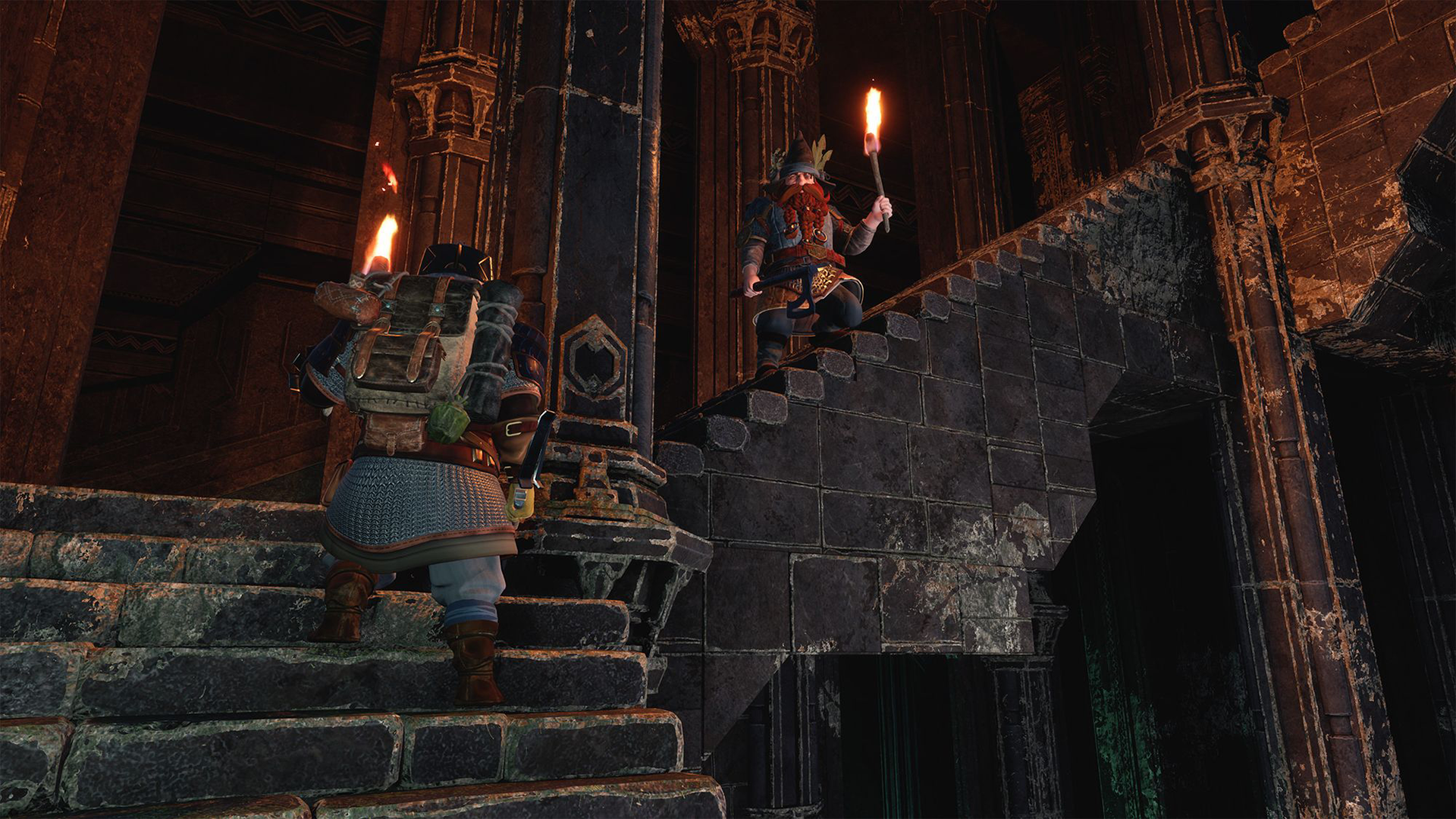 I enjoyed the way Return to Moria portrayed dwarves. They sing, drink beer, and dig through the earth. If only it didn’t try to melt my computer down when running.
You see a dwarf - and you know exactly what to expect.
They’re not elves
Elves are graceful. Elves are wise. Elves live for thousands of years and spend them writing poetry and being insufferably sad about the passage of time. Elves are the protagonist’s best friend, or the protagonist themselves, or the ancient mentor who speaks in riddles. Elves are special, and think they’re better than you.
Pointy eared bastards.
There’s something about the elven fantasy that feels like a trap to me. You’re beautiful, immortal, magically gifted - and what do you do with it? You sit in a forest and feel melancholy. You look down on everyone else’s short lives and crude craftsmanship. Elves are the kid in class who got straight A’s without studying and made sure everyone knew it.
Dwarves are the opposite of that. Dwarves work hard. A dwarven kingdom exists because someone carved it out of solid rock with their hands. Dwarven armor is good because a smith spent eighty years getting better at making it. There’s no magical shortcut, no birthright elegance. Just work, and the pride that comes with work.
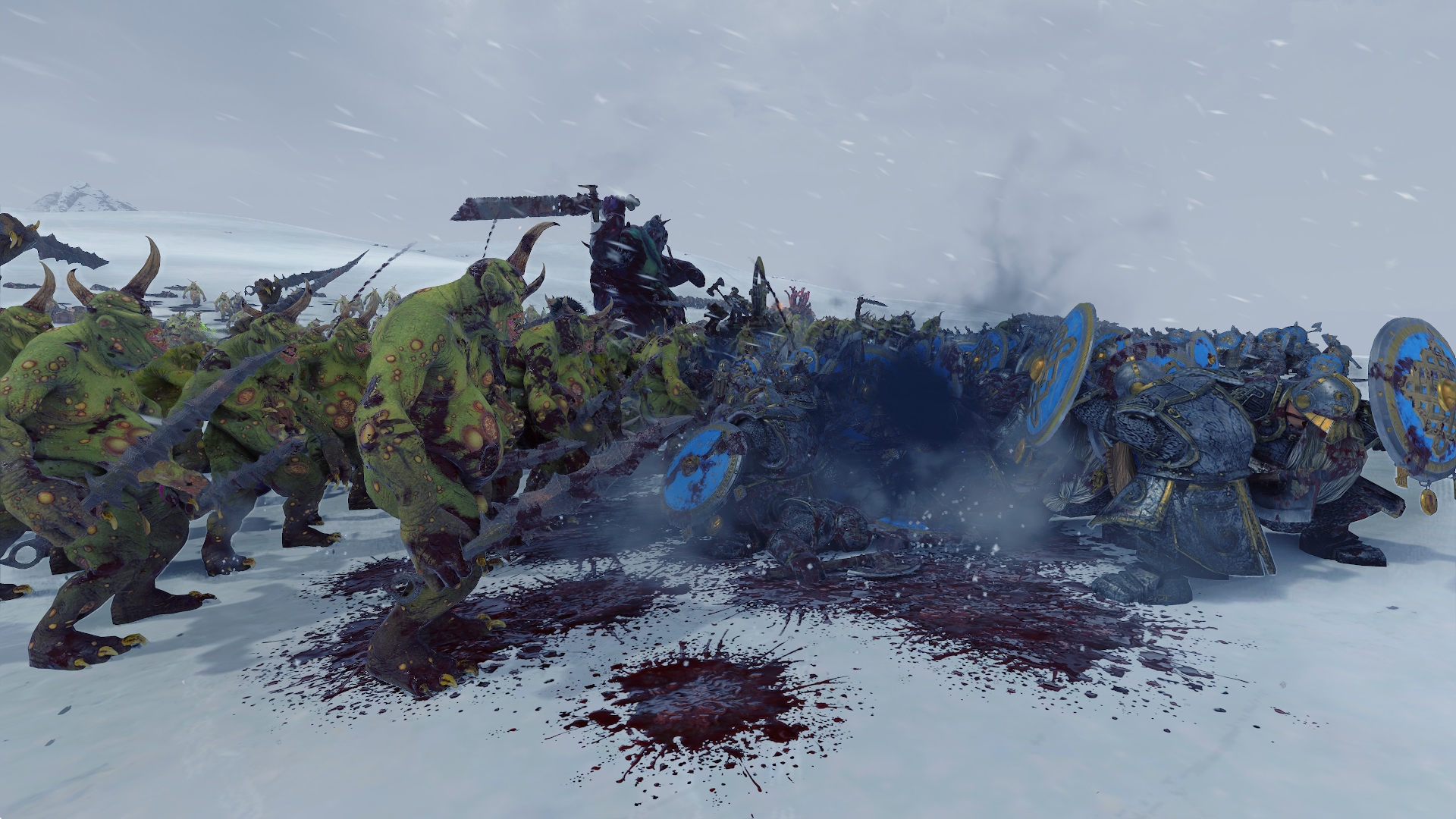 A line of dwarfs can withstand just about anything. And definitely they could withstand anything better than elves, who aren’t very good at withstanding things.
Games encode this divide right into the stats. In Dragon Age: Origins or World of Warcraft, dwarves can’t be mages - not as flavor text, as a hard mechanical lock. You pick a dwarf and an entire class is off the table. In World of Warcraft, dwarven racials are Stoneform and Might of the Mountain - toughness, endurance, raw physical resilience. Meanwhile elven racials tend to be about agility, perception, magical affinity. Before you even start playing, the character sheet is telling you what kind of fantasy you’re signing up for.
When I pick a dwarf in Dragon Age: Origins, I’m choosing to start in Orzammar - underground, politically tangled, cut off from the surface world. It’s a harder, stranger, less glamorous starting point than the Dalish elf prancing through mystical forests. And that’s exactly why I like it. The dwarf noble origin is messy. You’re betrayed by your own brother, stripped of your caste, left for dead.
When I play tabletop RPGs, I pick a dwarf as a declaration: I’m not here to be the chosen one, I’m here to hold the line.
Holes are cozy
I’ve written before about games you can nest in - stockpiling larders in Vintage Story, building a base in Subnautica, that impulse to dig in and make a space yours. Dwarves are the racial embodiment of that impulse.
And there’s something about underground spaces in games that just works for me. When I’m playing Dwarf Fortress and I carve out a dining hall three z-levels down, smooth the stone walls, place tables and chairs and a nice statue, I feel a specific kind of satisfaction that surface building never quite matches. It’s enclosed. It’s protected. The mountain is above me, around me, and nothing can get in unless I forget to raise the bridge over the lava moat again. I think about the first time I dug into a hillside in Minecraft and sealed the entrance behind me with a piece of dirt while zombies groaned outside, and how that felt safer than any castle I ever built above ground.
This maps onto real life more than I’d like to admit. I like small rooms. My desk is in a corner, looking out onto the rest of the room. When I was a kid I used to make pillow forts out of couch cushions, or as my grandpa called those - “the cities of Shaitan” - and would sit inside reading with a flashlight. If that isn’t dwarven behavior in miniature, I don’t know what is.
Dwarves are engineers
The other thing about dwarves - they make stuff. Not with magic (okay, we’re going to ignore dwarven runes for a moment here). With materials, with process, with expertise.
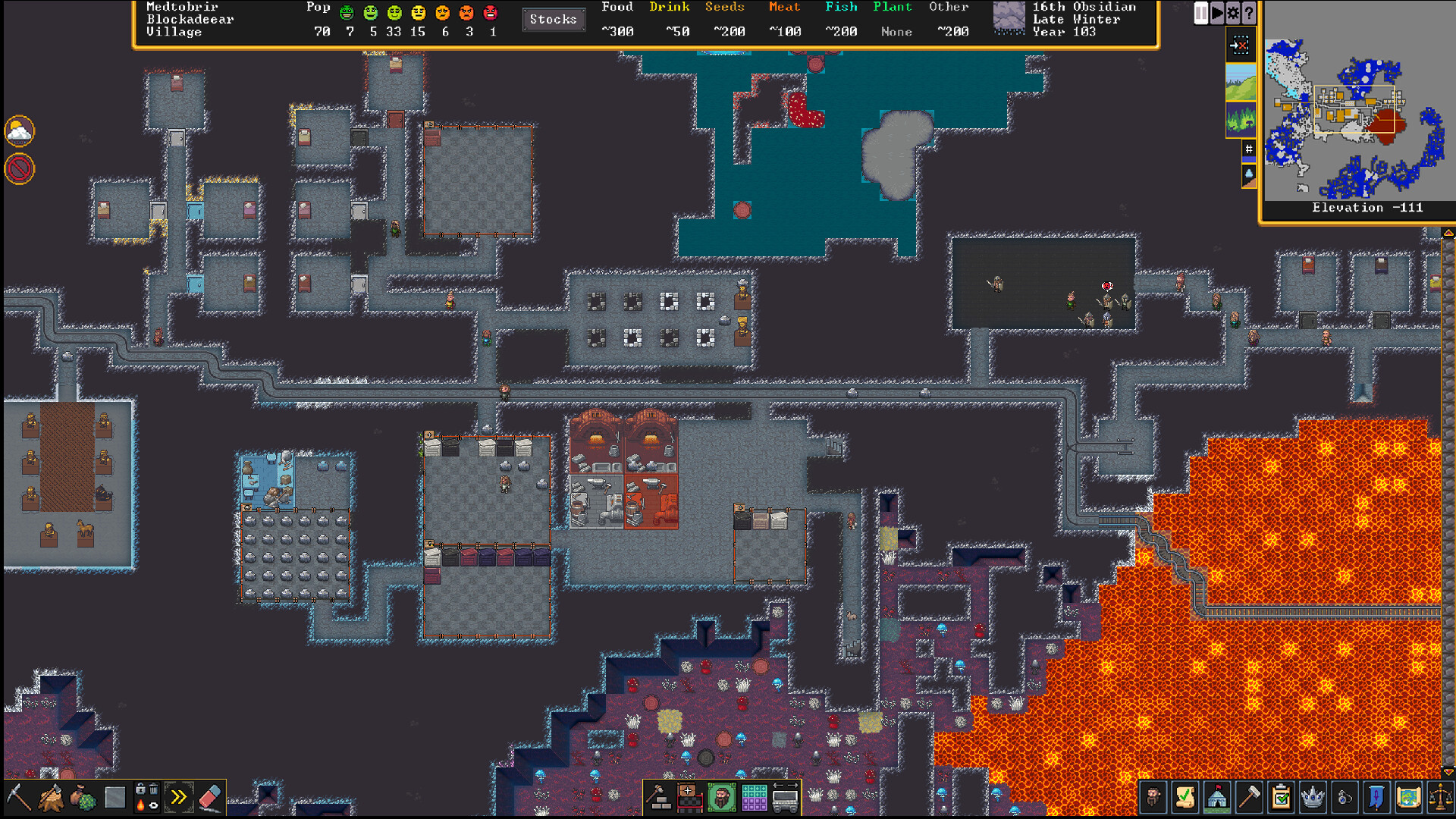 This dwarf fortress has everything a dwarf needs, especially lava for the lava moat. That never ends well.
I think this is why Dwarf Fortress grabbed me so completely and never let go. The game is essentially a giant systems engineering project disguised as a fantasy settlement sim. You’re managing water pressure, ventilation, traffic flow, material logistics. Your dwarves aren’t casting spells. They’re smelting ore and building pumps and, if you’re ambitious and slightly unhinged, flooding goblin sieges through elaborate flow and drainage systems you spent two in-game years constructing.
That same satisfaction shows up in Factorio, in Satisfactory, in Vintage Story’s metalworking chain - games where progress means understanding and mastering a process, not leveling up a skill tree. These aren’t dwarf games, obviously, but they scratch the same itch. The dwarf fantasy isn’t “I am powerful.” It’s “I built this, and it works, and I understand why it works.”
There’s a reason dwarves in most settings don’t use magic, barely tolerate it, or, in Warhammer lore, sap the magic out of the world. Magic is a shortcut. Magic says the rules don’t apply to you. Engineering says the rules are the whole point - you just need to be clever enough to work within them.
Loyalty and stubbornness
Dwarves hold grudges. This is, depending on the setting, either a character flaw or an entire system of governance. In Warhammer, the Dammaz Kron - the Great Book of Grudges - is a literal ledger of every wrong ever done to the dwarfen people, and grudges can only be settled through repayment or blood. It’s written in blood, too. It’s absurd.
You know how absurd it is? In Warhammer lore, dwarf master craftsmen were hired to build a fortress. Upon receiving the payment, they found that they were shorted two and a half pennies. A reasonable person would clearly consider this an honest mistake. The dwarfs razed the fortress to the ground to settle the debt.
I’m stubborn. I know this about myself. I hold onto things longer than I should - opinions, frustrations, loyalties.
But the flip side of stubbornness is loyalty, and dwarves have that in spades. When a dwarf says they’ll stand with you, they mean it. Not because it’s strategically smart, not because they expect something in return, but because they said they would and that’s the end of it. In Total Warhammer, the reliability of dwarfen alliances is almost a meme - they’re one of the few factions that won’t backstab you in diplomacy. And I love that. In a game full of scheming vampires and treacherous rats, the dwarfs just… keep their word.
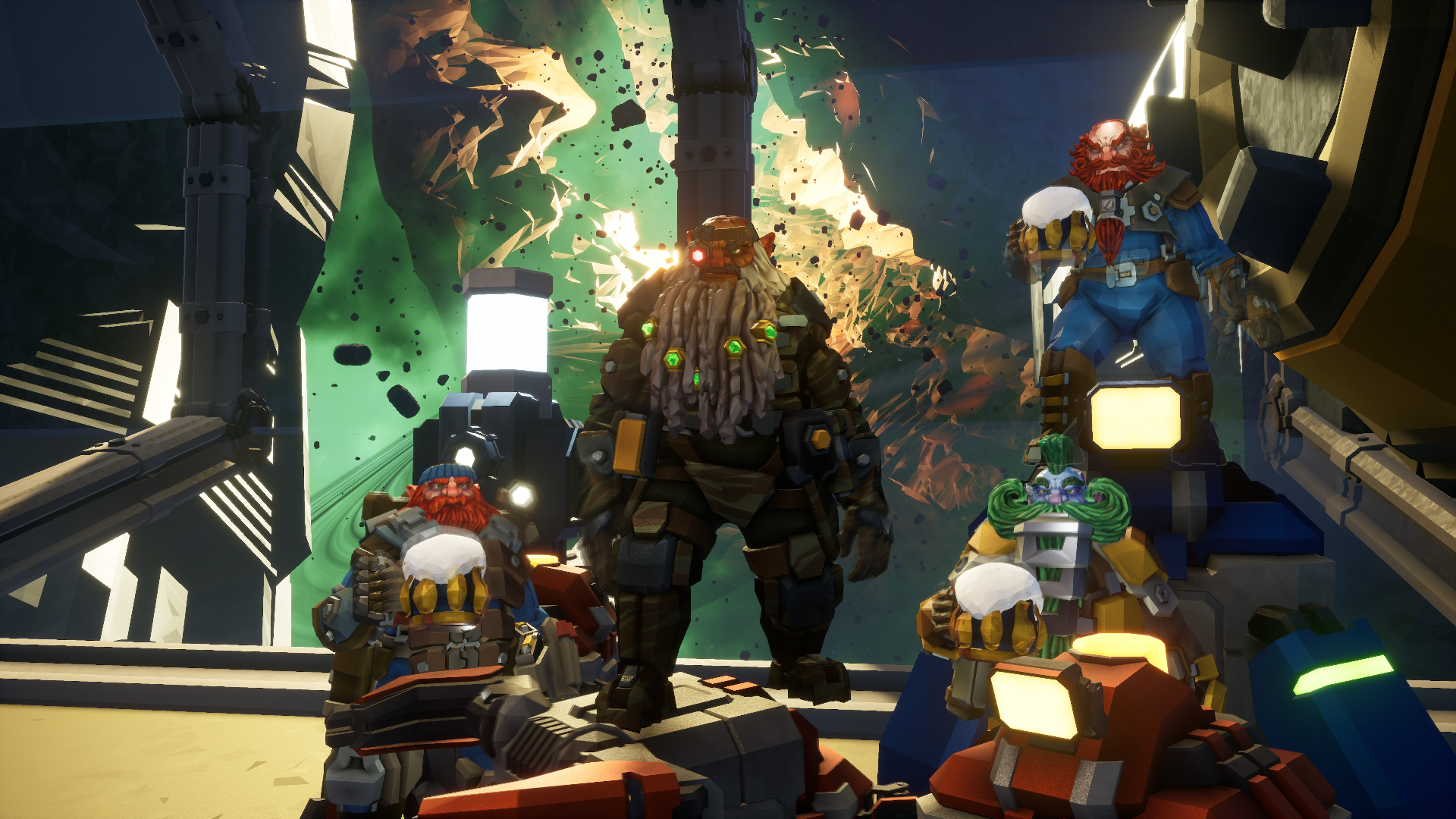 I have to at least include a screenshot from Deep Rock Galactic. Many consider it to be the ultimate dwarf game. I don’t have a good reason to disagree, but I don’t play many multiplayer games these days.
Total Warhammer actually makes this a mechanic, not just flavor. The Grudge system gives your faction real debuffs - public order penalties, diplomatic hits - until you settle outstanding grudges. You can’t be pragmatic about it. An ork warlord bested you in battle? That’s a grudge. Humans settled in what you consider dwarfen land by right? In the grudge book it goes. Someone dares to share a border with you? They have wronged us!
Dwarfs in Total Warhammer are always upset at everyone for the stupidest reasons, and you can’t let a slight go because the timing is bad or because you need that alliance right now. The game forces you to play like a dwarf: stubborn, comically vindictive, bound by principle even when it’s strategically stupid. I like that when most strategy games reward flexibility, Total Warhammer’s dwarfs punish it.
Dwarf Fortress models the other side of this - loyalty that spirals out of control. When a dwarf dies, the dwarves who loved them grieve. If enough grief accumulates, a dwarf throws a tantrum. If a tantruming dwarf hurts someone, that causes more grief, more tantrums, more destruction. These are the loyalty cascades - your fortress falls to dwarven drama. Because your dwarves loved each other too much and couldn’t let go.
I’ve lost fortresses this way. Not to sieges, not to forgotten beasts, but to one dwarf’s death unraveling the entire social fabric of a community because every other dwarf cared too deeply to keep functioning. It’s devastating, and very thematic.
Games that fail dwarves
Not every game earns the archetype. In a lot of RPGs, picking a dwarf means you’re slightly shorter, you get a strength or constitution bonus, and that’s it. The world doesn’t change. The caves don’t feel different. You don’t interact with stone or metal or craft any differently than anyone else. “Dwarf” is just a skin stretched over a shorter and thicker model, with all of the systems unchanged.
Skyrim’s Dwemer ruins are visually impressive but they’re corridors - you pass through them, fight things, and leave. No one ever lived there, and you can tell. There’s no sense of habitation, no warmth, no trace of the daily routines of a real civilization. And yeah, don’t even tell me that the Dwemer aren’t exactly dwarves, I know my Elder Scrolls lore. I’m still salty, even if they aren’t short and stout. Compare that to Dwarf Fortress, where every room has a purpose, where your dwarves have preferences about what stone their bedroom floor is made of.
The difference comes down to whether the game’s systems actually care about what makes dwarves dwarves. Dwarf Fortress works because the entire simulation is built around dwarven priorities - craft, infrastructure, social bonds, grudges, alcohol. The game doesn’t have a dwarf mode and a non-dwarf mode. Every system exists because that’s what a dwarven society would need. When a game just gives you +2 Constitution and calls it a day, it’s telling you that dwarves are just short humans who can survive an extra hit. And that’s a waste.
Never the protagonist
Here’s something that’s been sitting with me: dwarves almost never get to be the main character. Gimli is comic relief. The Hobbit dwarves are Bilbo’s entourage. In Dragon Age, dwarves are a playable origin, sure, but the game’s lore clearly cares more about elves and mages and the big human political drama. In most D&D campaigns, the dwarf fighter is the backbone of the party, but the story belongs to whoever has the most complicated backstory and the biggest destiny.
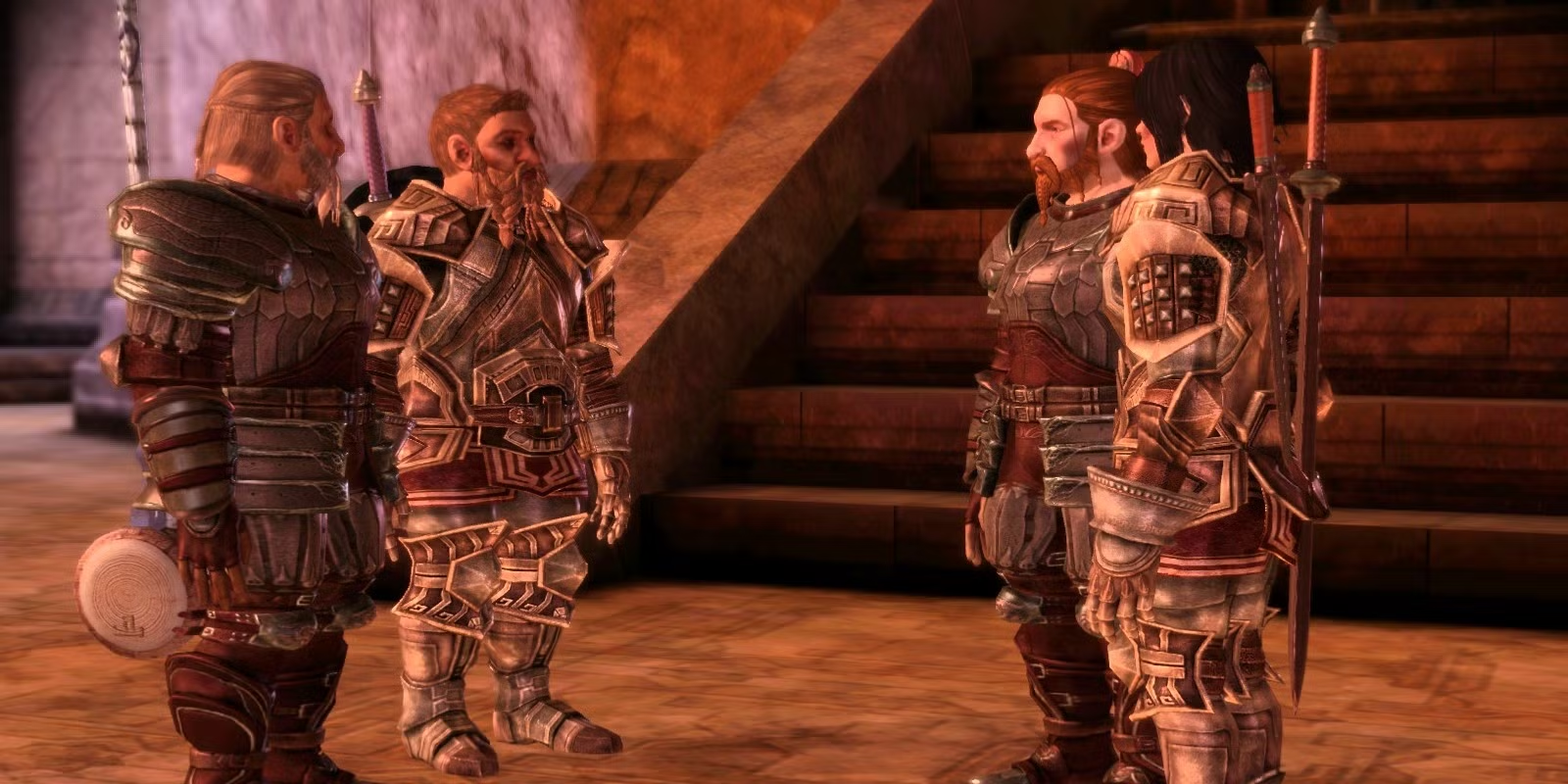 Dwarf noble is arguably the best origin start in Dragon Age: Origins. Yet, their story fades after the prologue to make way for human centric drama.
Dwarves support. They hold the line so someone else can be the hero.
I think there’s a structural reason for this, and it goes beyond narrative bias. Dwarves, as an archetype, don’t change. That’s the whole point of them - they’re steadfast, traditional, immovable. But stories need characters who grow, who transform, who are different at the end than they were at the beginning. A dwarf who has a dramatic arc and learns to see the world differently and abandons old traditions - that’s not really a dwarf anymore. That’s just a short human.
This is why dwarves tend to work best in games where the story is emergent rather than authored. Dwarf Fortress doesn’t need its dwarves to have character arcs, because the story comes from the systems interacting - from loyalty cascades and flooded mines and a mason who insists on making artifacts out of cat bone. Total Warhammer doesn’t need Thorgrim Grudgebearer to grow as a person. He needs to settle grudges. The game gives him exactly the tools to do that and nothing else. Narrative RPGs struggle with dwarves because the form demands transformation, and transformation is the one thing the archetype resists.
And I keep choosing them anyway. There’s probably something in that. I mentioned earlier that I gravitate toward tanks and healers in multiplayer games - the roles that exist to make everyone else’s job possible. I don’t need the killing blow. I need to know the group survived because I was there.
P.S. - I can’t write about dwarves without mentioning the elephant in the mine. The dwarven archetype has uncomfortable roots. Tolkien acknowledged his dwarves were “reminiscent of Jews” - a displaced people with a secret language, driven from their homeland, defined by their relationship to gold and craft. The gold-hoarding, the clannishness, the long memory for slights - these overlap with old antisemitic stereotypes, and that overlap isn’t accidental. It’s baked into the fantasy lineage that every dwarf in every game since has inherited. If you want to read more about this, Rebecca Brackmann’s essay “Dwarves are not heroes” is a good starting point. I love this archetype. I’m also not going to pretend it arrived clean.