 Rooslawn's Unmapped Worlds
2025 in gaming, contact naps, and diaper changes
My daughter is asleep on my chest. I have maybe twenty minutes before she stirs, and my Anbernic is in my hoodie pocket. I’m playing Harvest Moon: Back to Nature, a game from 1999, on a handheld the size of my phone. This is what gaming looked like for me in 2025.
I love retrospectives, and every year I’d write up my reflections on the prior year in gaming. Usually these stay as private notes, but since I have an audience this year - you get to enjoy this with me!
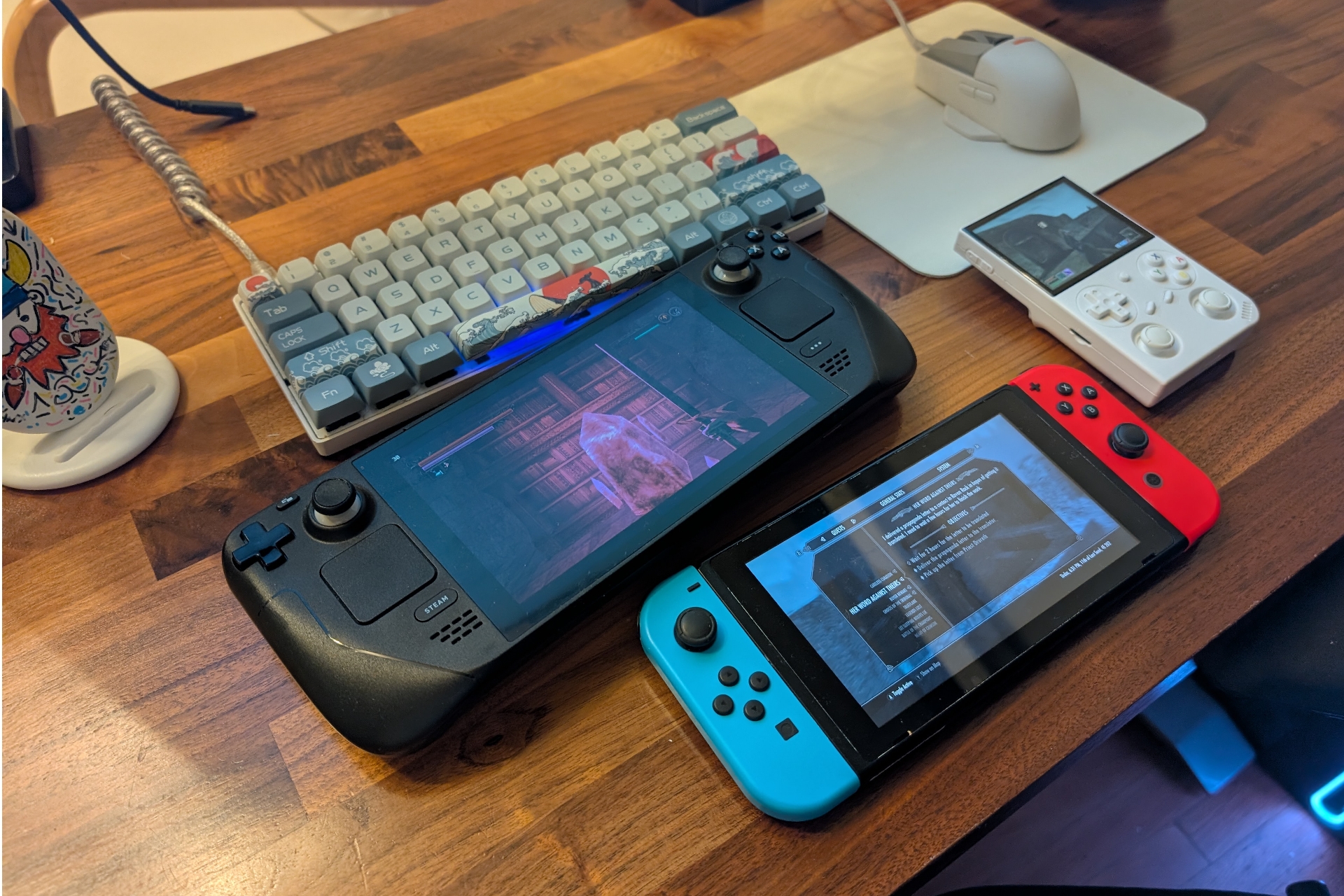 My PC, SteamDeck, Nintendo Switch, and an Anbernic handheld. Amazing partners to a hectic, messy, beautiful 2025.
For me, 2025 wasn’t a year of flashy titles or groundbreaking game mechanics. It was a year my daughter was born, and my gaming habits reflected that. Less gaming time, more fragmented gaming time, different types of games I get to enjoy. And despite so many incredible and innovative titles which came out this year - I’ve focused a lot on comfort games. Replaying retro titles, exploring familiar genres, or booting up yet another Total Warhammer campaign.
This was a wild year, marked up by distinct phases - there was the time before the baby arrived, the potato phase, and now a curious, energetic, and extremely active near-toddler experience.
The land before time
My gaming year started with a bang. My kid wasn’t yet here, and I had the time to immerse myself in a few incredible titles.
Dread Delusion
Dread Delusion, a small RPG about exploring a decaying world oozing with personality, quickly became one of my favorite games of all time (here’s my review, which is also the first article I published on this blog). Dread Delusion expertly captured that sense of wonder, that drive to explore that I look for in games. It’s a true unmapped world.
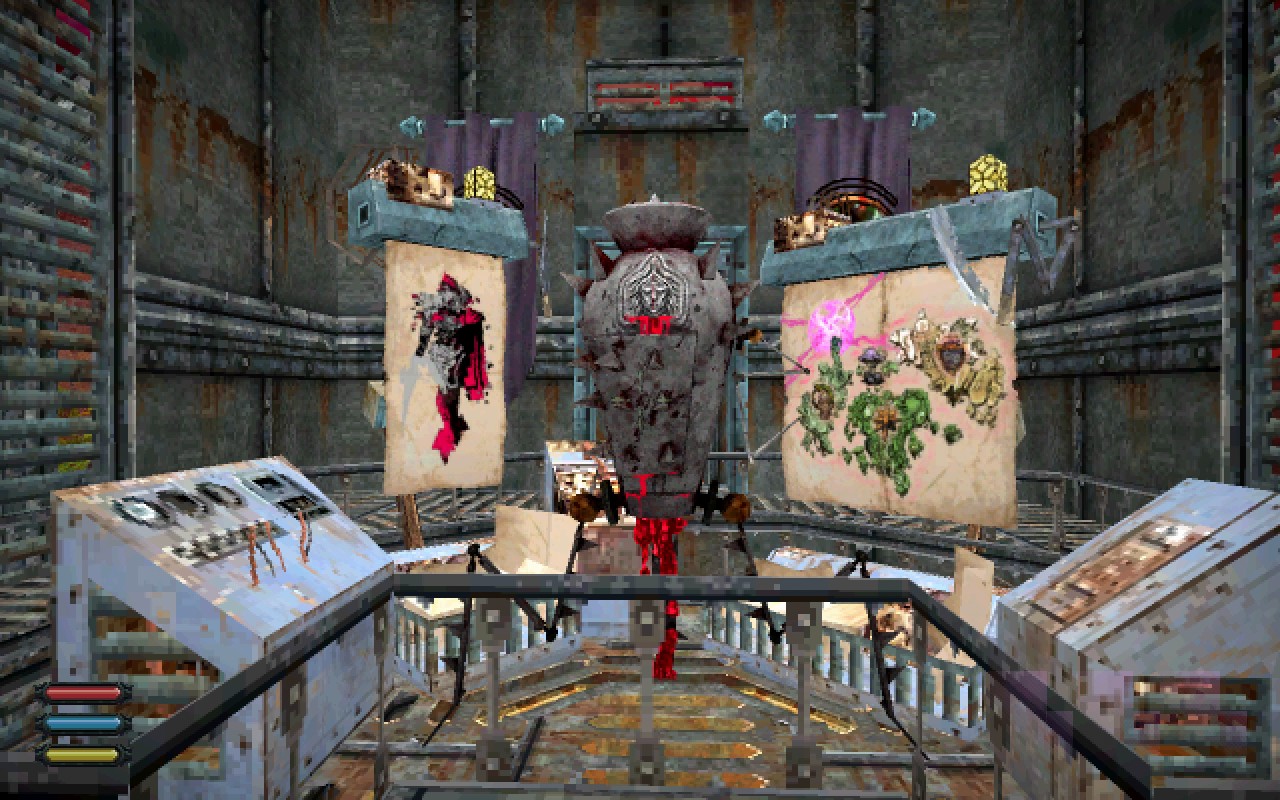 Dread Delusion is so delightfully weird, and just a little disturbing.
I could immerse myself into the game’s mysteries, dig through the lore, and check every nook and cranny for secrets. Something not really possible now - at the end of the year - gaming is mostly done in hectic 20 minute chunks, with rising anxiety that my kiddo will wake up. Don’t get me wrong, nothing beats spending time with the little one, but I do miss my peaceful gaming time.
Lasting impact of short horror titles
I also played two very short and very different horror titles - the psychologically unsettling Mouthwashing (my review) and criminally underrated Kiosk (my review). Both of these titles can be finished in about 2 hours - and given that almost a year later I still occasionally think about these titles speaks volumes about the value of short games.
Mouthwashing was disturbing in the best way possible. PlayStation 1 era graphics (spoiler alert - this is going to be a recurring theme) fit the game atmosphere perfectly, and the story is delivered in uneven layers, like chunks of a rotten onion. It’s a little gross, but you can’t help but be curious.
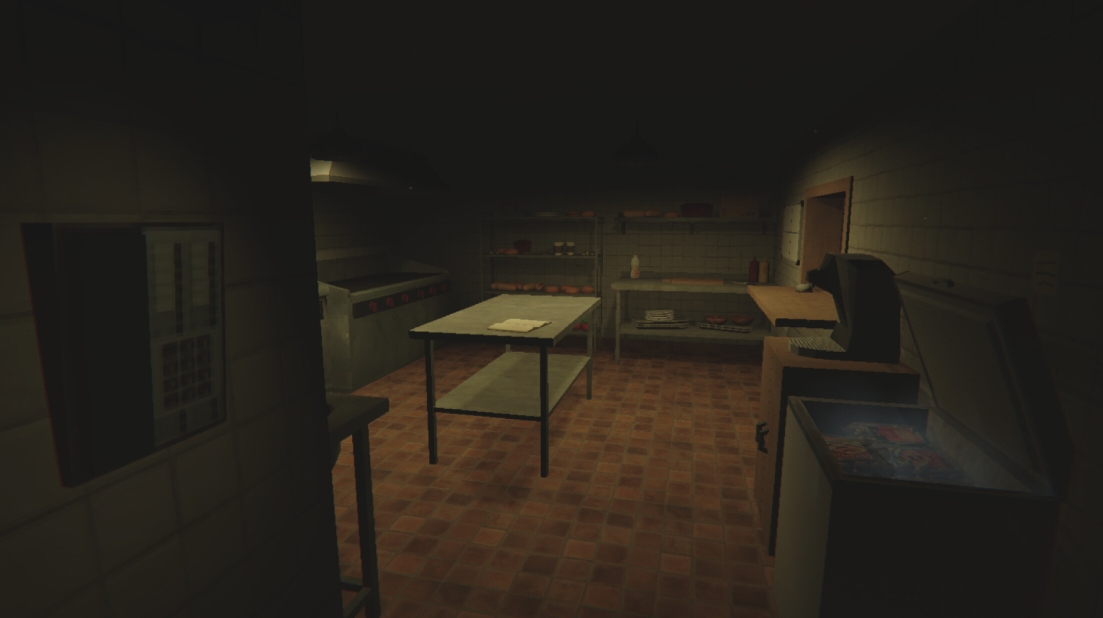 The kiosk feels strangely familiar, unsettling, and cozy at the same time.
Then there’s Kiosk, an even shorter indie horror title. I love how the game uses job simulator gameplay to get you concentrated on a task only to throw a cheap jump scare your way. And the jump scares work every single time, because even though I know the jump scare will come, I get way too preoccupied frying some eggs while making a salad, assembling a burger, and trying to brew a cup of coffee.
Turns out Kiosk was excellent training for toddlerhood. They also sneak up behind you while you’re trying to cook.
The older I get and the more complicated life gets, the more I enjoy shorter contained experiences. This has been true across mediums - games, movies, TV shows, books. Younger me would be thrilled to get myself immersed in a 14-books-strong fantasy epic, but now I just want a short story with an ending in sight.
Hope that’s a reflection of my desire to experience different types of things, rather than my reduced attention span. Time will tell.
The city builders
I played three city builders early in 2025, back when I still had the luxury of caring about incremental resource management. Foundation, Becastled, Farthest Frontier - each one scratching a different itch.
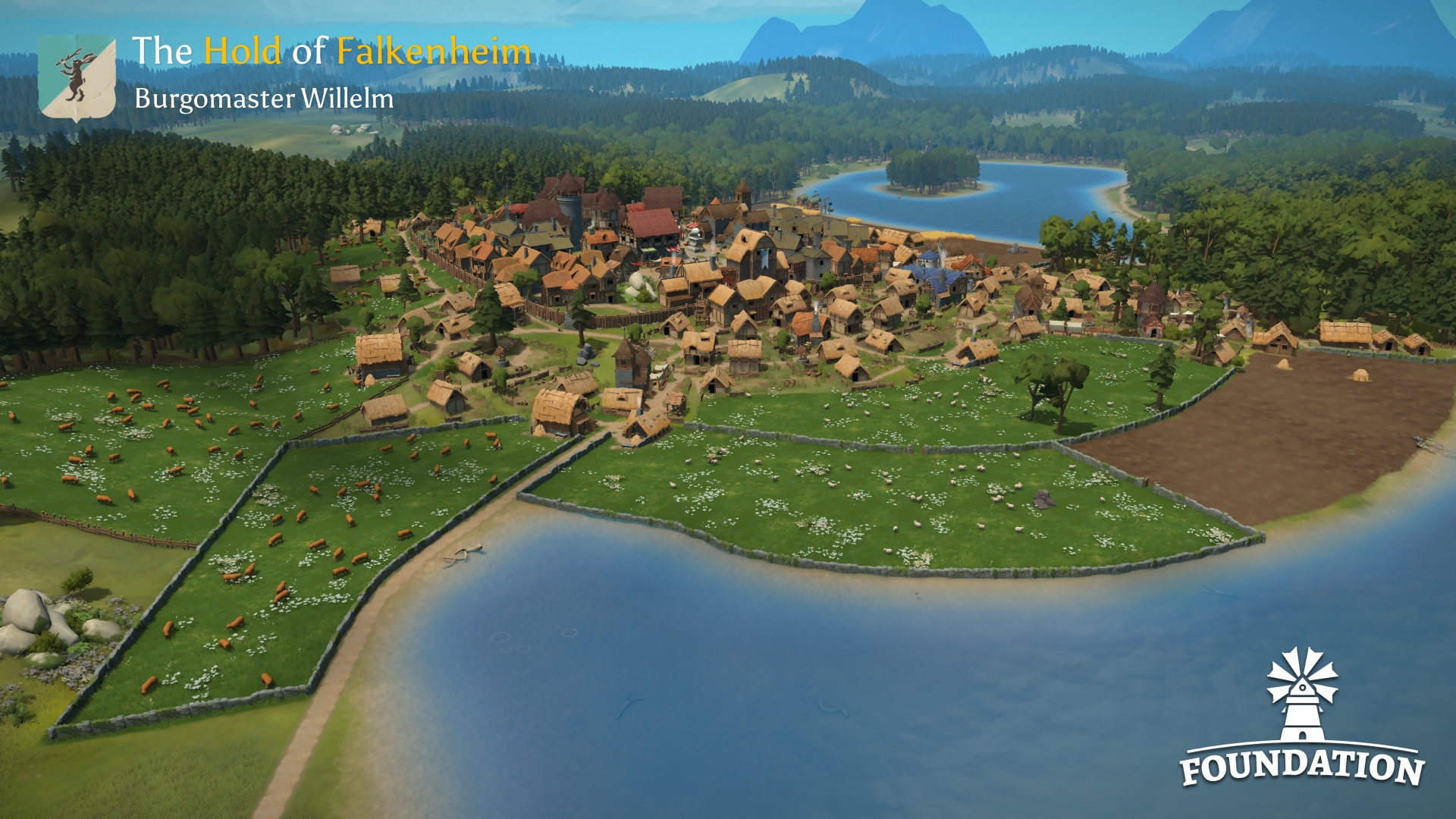 Look at the city I built in Foundation! That’s one medieval city looking medieval city!
Foundation (my review) expanded the play area in small, irregularly shaped tiles, which created natural curves and odd visual artifacts in the city layout. There’s no building grid, and if you can see a space for a building - you can place it. Yes, I’ve placed a guard tower in some poor sod’s backyard, but I’ve also lined market stalls with lights and benches, and decorated workshops with wheelbarrows and other junk. Because of these mechanics, the cities feel organic and alive.
Becastled, a much simpler hybrid of city builder and tower defense genres, also did not disappoint. You won’t really get more than a single short playthrough out of this one, but what’s there is solid. There’s a day and night cycle, where you have the day to prepare for the night’s attack.
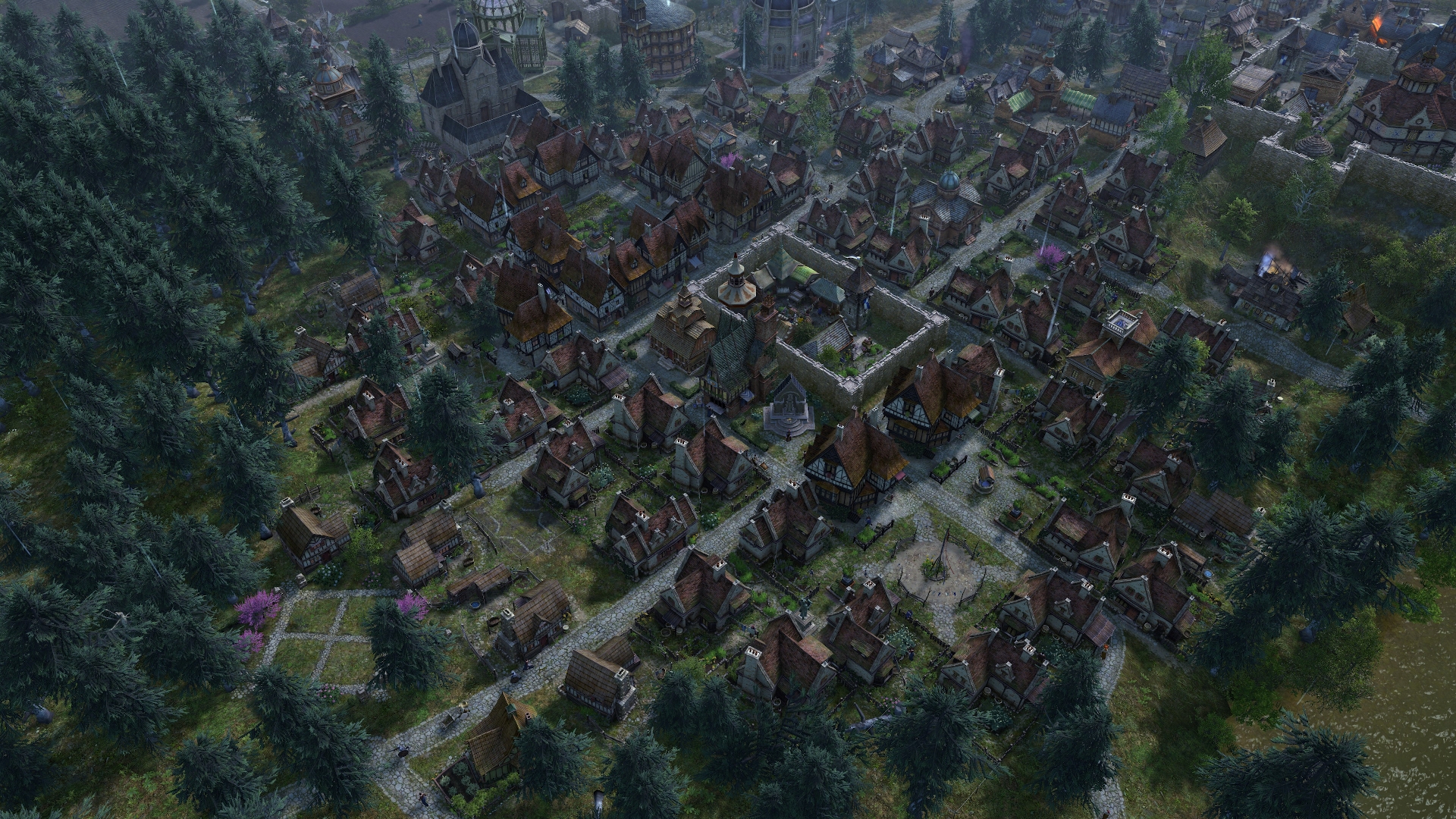 Farthest Frontier: I need those forests for my hunters and herb gatherers. I think this makes cities look more natural.
And then there’s Farthest Frontier, a game which does a fantastic job managing natural resources. You can overhunt, overfish, and overfarm: if you want your colony to thrive, you have to manage your crop and livestock rotations, strategically cut down forests (leaving pristine areas for hunting), and avoid getting too greedy.
These were some of the last games I played before my baby came. Keeping production chains in my head, remembering things, having the attention span, and being able to play for hours on end. ‘Twas a different, but also beautiful time.
Games I couldn’t finish anymore
In the first half of the year, my kiddo was born. I started having less time for games, and even when I had the time, I couldn’t give games my 100%. And then, of course, this blog has been siphoning away my gaming time.
Rogue Trader
Speaking of longer epics - I continued investing my time into Warhammer 40,000: Rogue Trader. Far into my chaos-aligned playthrough I realized that I missed a crucial item from act one - which would have locked me into a sub-par ending. And this far into the playthrough I realized that the chaos-aligned side of the game wasn’t really as well thought out. Disappointed, I abandoned the game. I have yet to see a worthwhile evil playthrough since Tyranny.
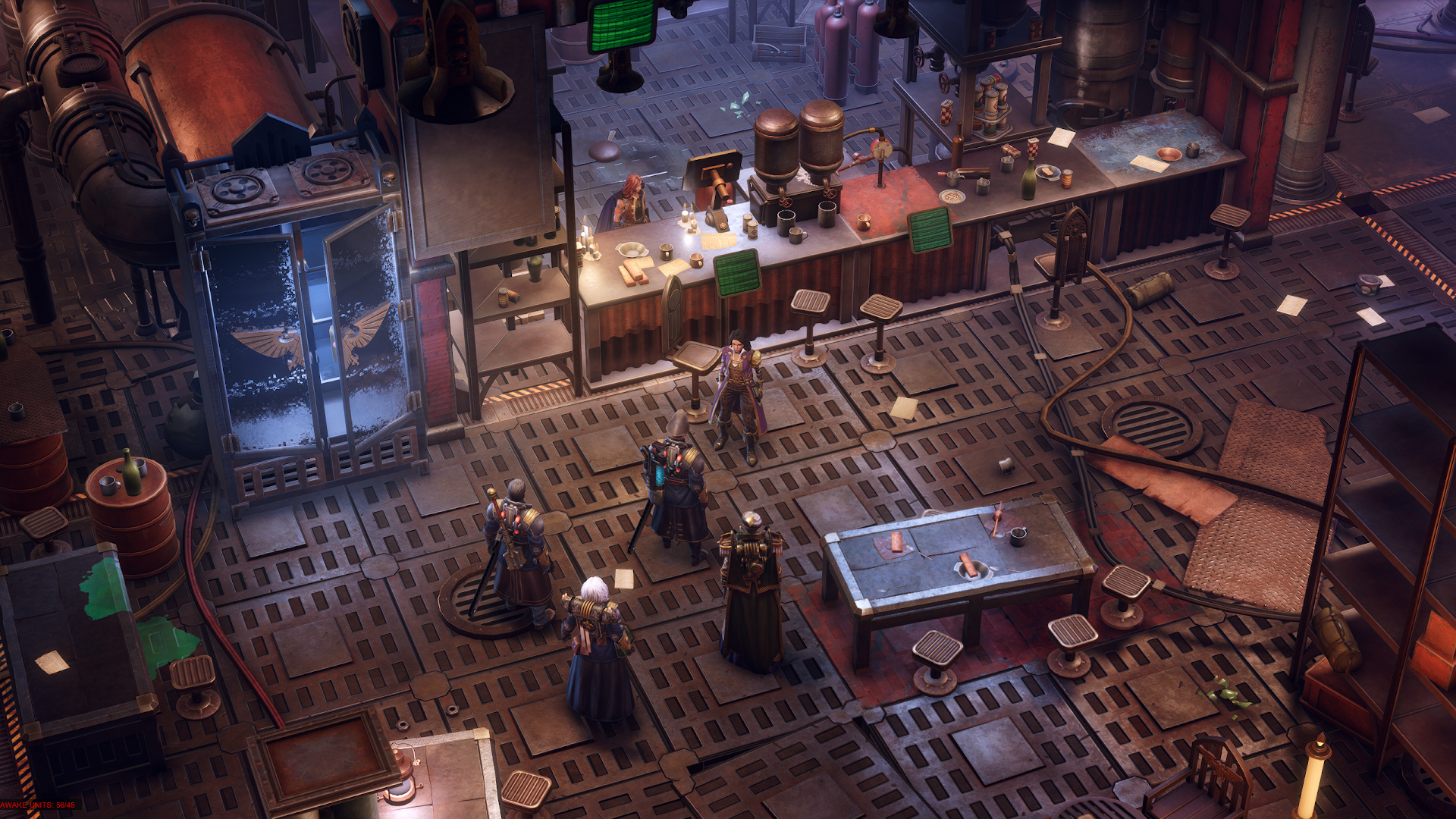 Warhammer 40k: Rogue Trader - as a Warhammer fan, I loved the game, but it was oh-so-long, and the chaos playthrough I chose was one of the least polished and thought through routes through the game.
This is a pattern I’ve noticed with Owlcat games - including the prior Pathfinder titles. These are long games, and eventually something about those games frustrates me enough to quit. I’ve never actually finished one. The baby’s not to blame for this one, although I now have even less emotional bandwidth to invest.
The big 2025 releases I bounced off
I’ve only tried out a few of this year’s major releases: S.T.A.L.K.E.R. 2: Heart of Chernobyl, Avowed, and the Oblivion Remake.
S.T.A.L.K.E.R. 2 should have been right up my alley - growing up in post-Soviet space, reading Strugatsky brothers novels (with Roadside Picnic being a direct inspiration for the series), and I’m a huge fan of the first three games. The game felt perfectly adequate, but at some point I just stopped playing. I’m not quite sure why, and I’d like to go back at some point and understand that more. Something’s clearly not right in Pripyat this time around.
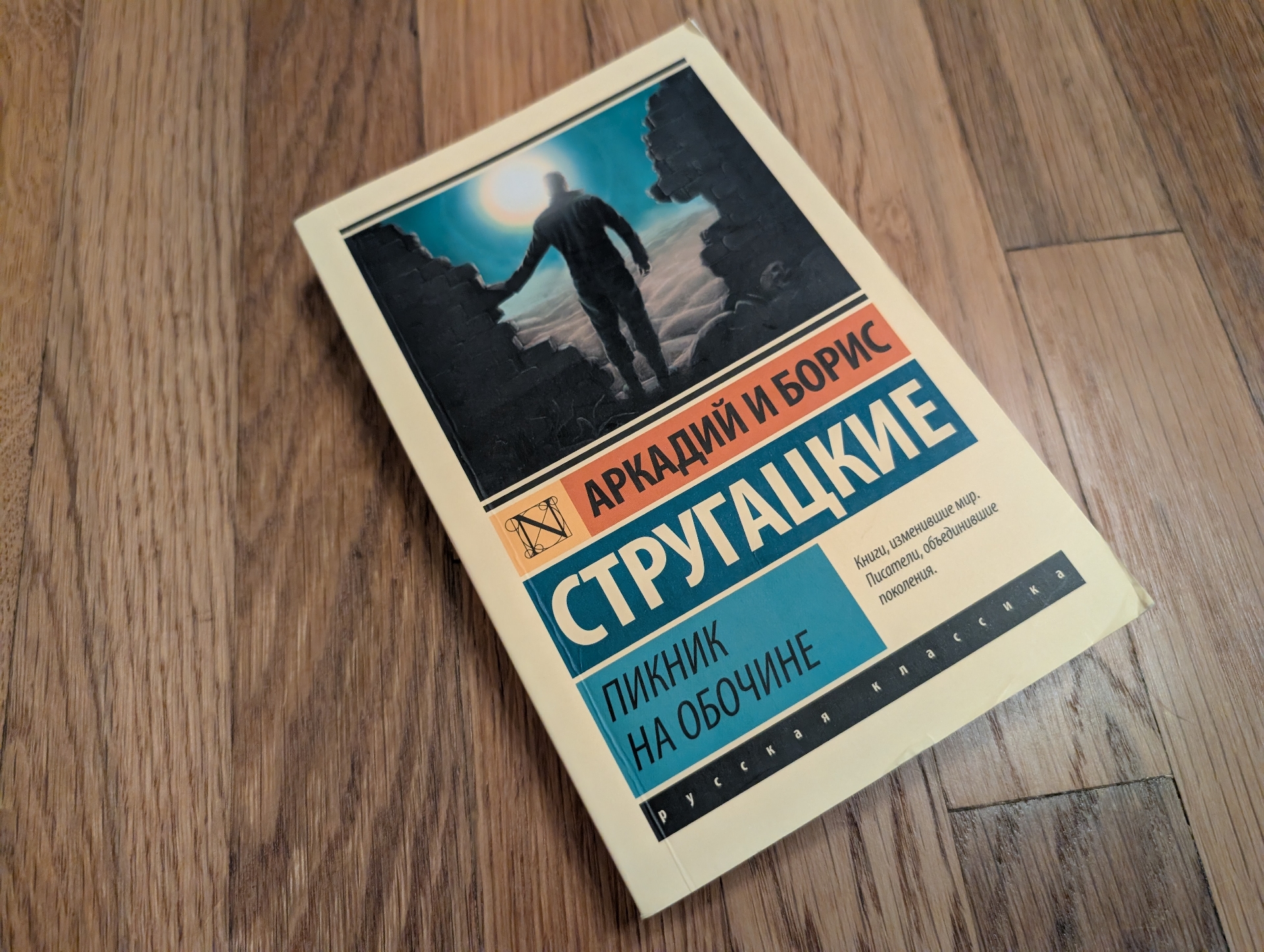 Here are my nerd credentials: a copy of Roadside Picnic, in original Russian. I’ve reread this book more than once.
Avowed didn’t wow me (my thoughts on why I bounced off Avowed). There was something still, artificial, cold in this game - the world is frozen, waiting for you to come, pick up the quests, defeat your enemies, and collect all the loot.
The Oblivion remaster wasn’t anything particularly special, but it was a lovely push to replay the game I loved. Most of my concerns were with the performance, which I hear has gotten somewhat better. Still, you can read my thoughts on return to Oblivion.
It all comes back to emotional bandwidth. These games all required me to put in work - to care about a 100-hour chaos playthrough, to sink into the Zone’s bleakness, to engage with Avowed’s lore. And I just… couldn’t. Not this year.
And then everything changed
My kiddo was born early, and we spent some time in NICU. It was rough, having your little one hooked up to beeping machinery, but she was alive and was getting better.
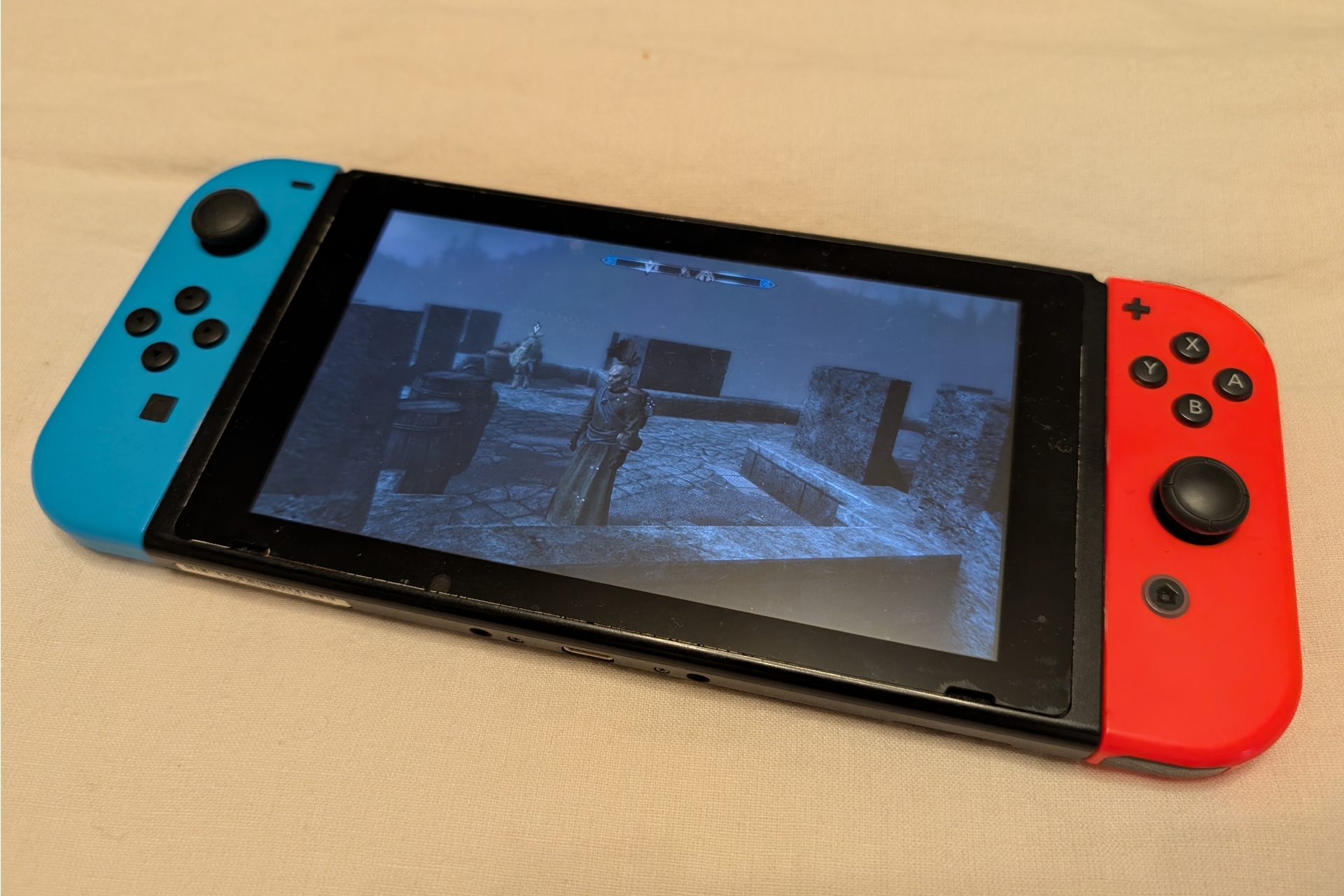 Sitting in NICU was a great excuse to boot up yet another Skyrim playthrough. There’s probably over a thousand hours invested into this title across all of my devices.
Skyrim was there for me in the NICU. There wasn’t much I could do except sit next to my daughter and the machines, hold her when I could, and wait. So I played Skyrim on the Switch - not really because I needed distraction, but because I needed something familiar. Something that would still be there when I looked up.
We got discharged, and my wife and I were allowed to take our little one home. Not sure we were qualified, but sure.
Games in the palm of my hand
Life with a newborn required adapting everything, including how I played games.
I bought my Anbernic RG35XX Pro on impulse, shortly after nearly dropping my Switch on my daughter’s head. Turns out a full-sized console is not ideal for contact nap gaming. I needed something smaller, lighter, and - critically - something I wouldn’t feel terrible about if it slipped.
As a father to an infant, I rarely have time to boot up a meaningful game, or something that I can’t turn off at a moment’s notice. I also find myself stuck managing a nap in an unexpected place, so a handheld that fits in my pocket and is always with me is a fantastic choice. I’ve gotten lots of mileage out of my Anbernic RG35XX Pro - 2025 is definitely the year of the handheld retro device for me.
Harvest Moon: Back to Nature
I spent lots of time in Harvest Moon: Back to Nature for PlayStation 1. I’ve never played Harvest Moon games, but it felt like exactly the kind of game that the retro handheld is made for. Pick up and play, bite sized, low key.
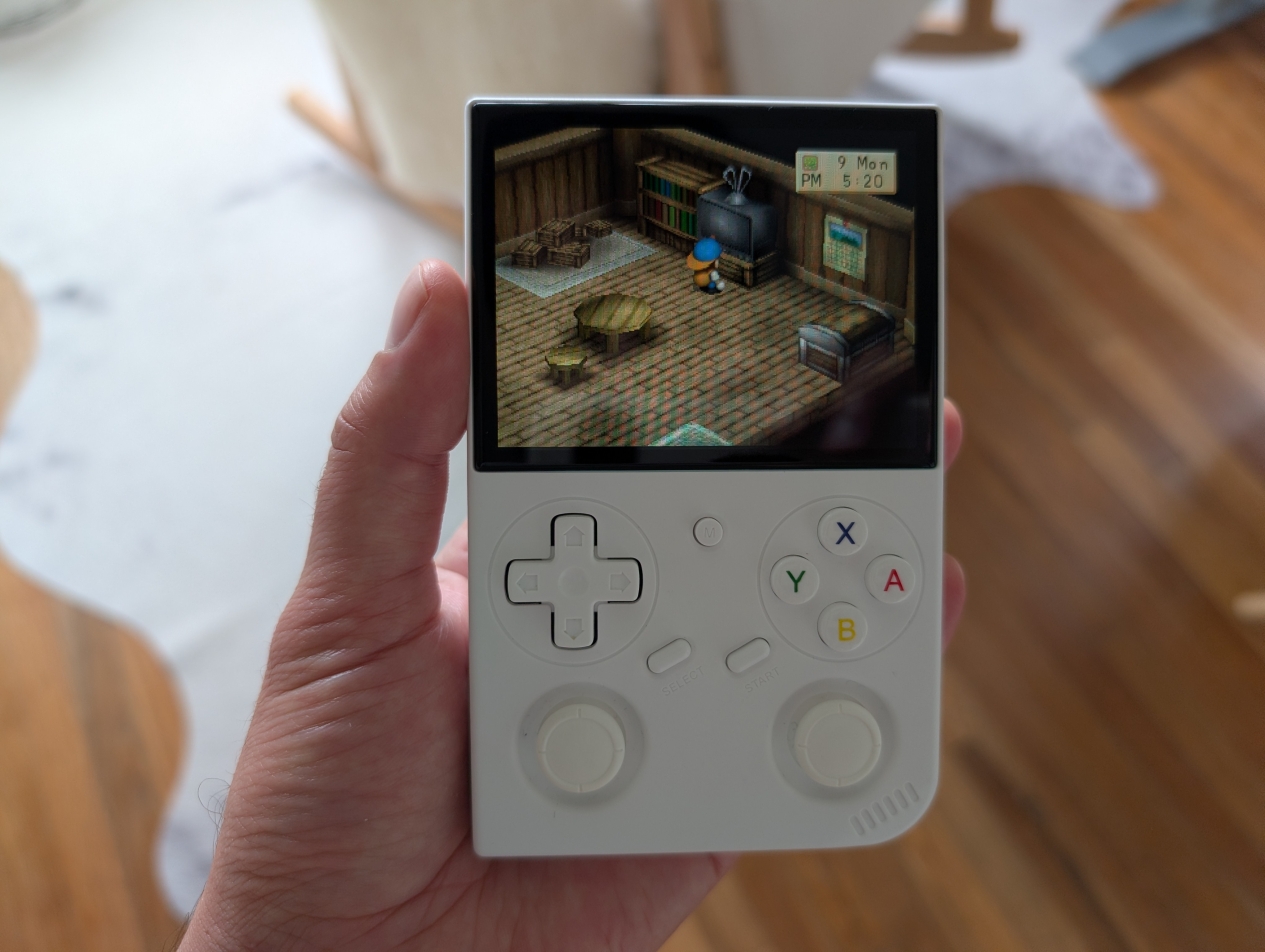 Harvest Moon: Back to Nature - a 26 year old game which holds up incredible well on a handheld.
I enjoyed it more than I have Animal Crossing or Stardew Valley, in big part due to the form factor. It was more akin to having a Tamagotchi I check back in on once in a while rather than a full fledged game. In 2025 I played for an in-game year, which is about 120 in-game days. In a fitting turn of events, in-game New Year celebrations lined up with real life ones.
It’s a simple game, and there are days when I’m frantically watering and harvesting my garden, managing the dwindling energy levels, and optimizing my routes through the town. There are chill days too though, and it became a comfort game for when my daughter’s napping. She’s a contact napper, so it’s not like there’s much else I can do.
What was interesting about experiencing older games is the manuals. Specifically, Harvest Moon: Back to Nature expected you to read the manual. That’s where villager’s birthdays are, descriptions of various gameplay mechanics and key events, optimal planting patterns - it’s really a bit of a walkthrough for the game. A manual is an experience of its own, but yeah - the games weren’t made to be played without one.
Childhood revisited
I grew up with a PlayStation 1, and I tried many of my childhood favorites once more. They were much easier to play, now that I have a few decades of gaming experience behind me. I barely died in Spyro, 120%’d the game in a few days. When I was a kid, I had to ask my older cousins to get past the frogs at the first Crash Bandicoot 3 level. Now - the game was trivial to get through - except for that second racing level, the one you’re already thinking of if you’ve played it.
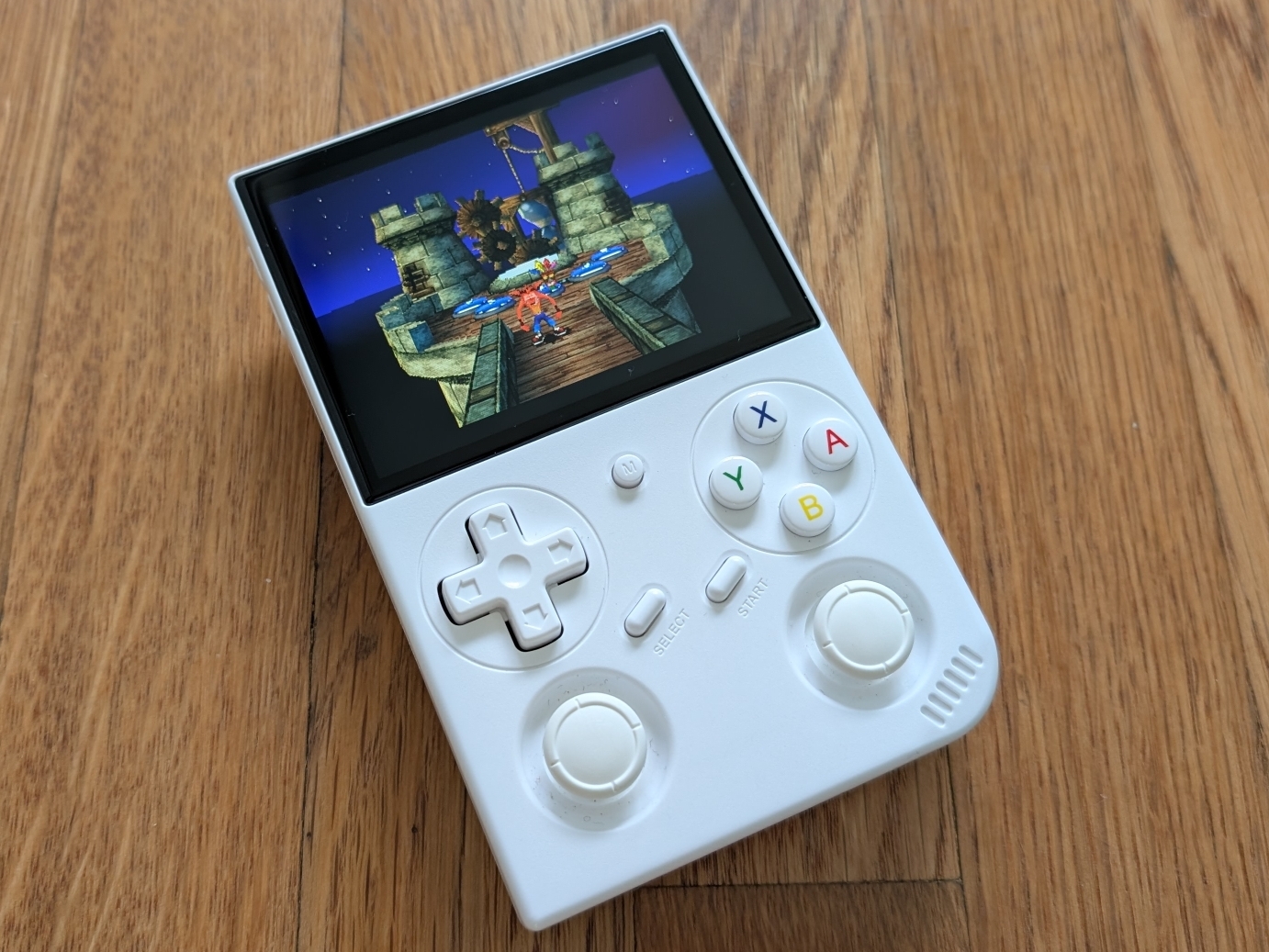 Crash Bandicoot 3: Warped. I think it’s one of the best platformers ever made - although playing it as a kid might have something to do with it.
I spent time with some less popular titles too - like the Army Men franchise, a game series about little toy soldiers waging warfare in your backyard. Simpler than I remember. Smaller, too.
Many of the quirks of the older games are helped by retro emulation. You can fast forward through slower parts of the games, which is especially helpful in something like Final Fantasy Tactics, where you could spend what feels like 10 minutes waiting between your turns as your allies and enemies take their sweet time. Save states are really helpful too. I don’t have the energy to replay difficult sections hundreds of times, so creating a save point to progress from really helps increase the accessibility. It’s cheating, true - but we’re talking about single player games, and often notoriously difficult or finicky ones. Some jumps in the original Spyro and Crash Bandicoot games are way too precise.
Comfort food gaming
Sometimes my kid sleeps in bed or with mom, and I get to boot up the “big computer”.
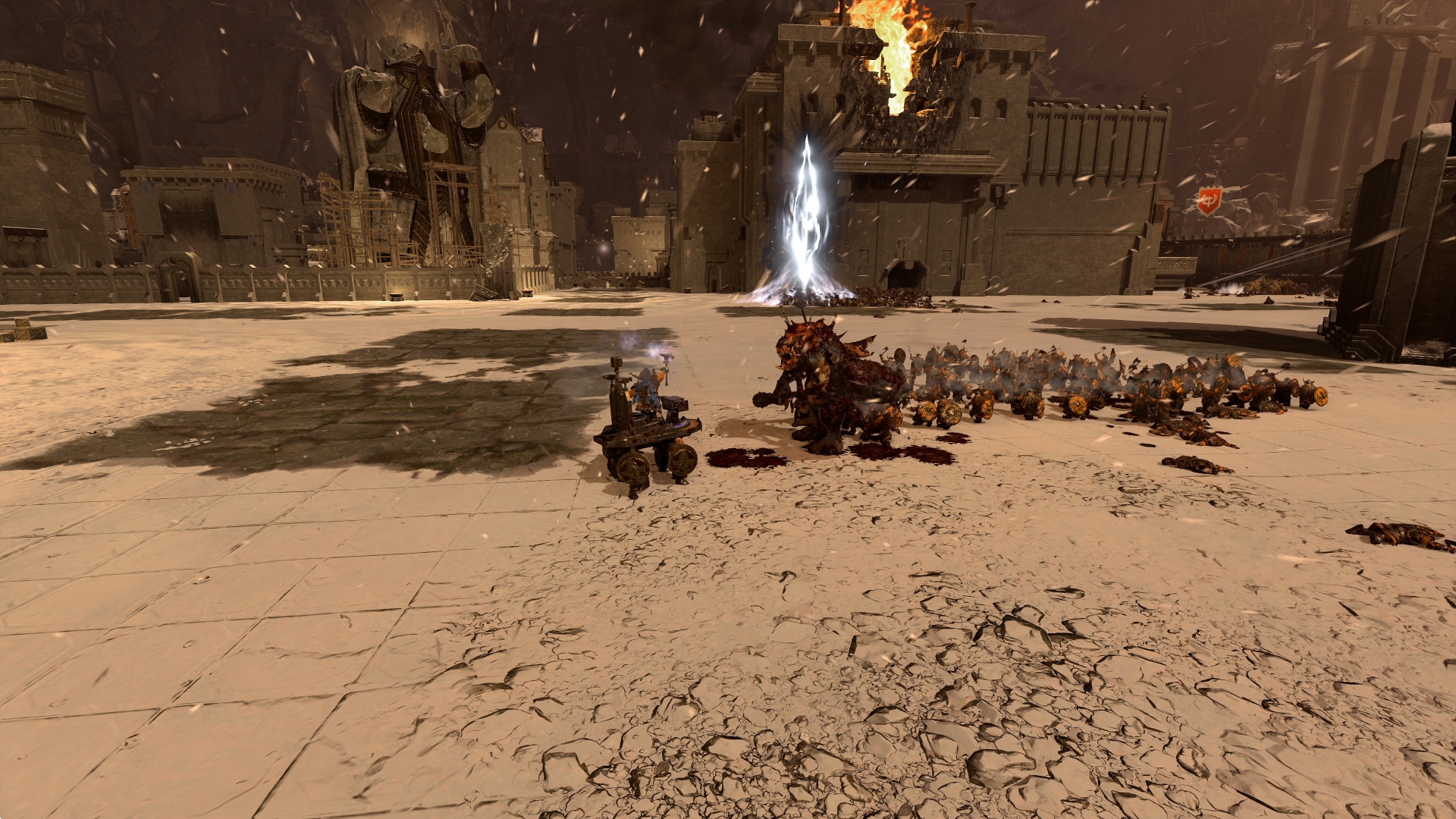 This is Throgg the Troll King, about to kill the last dwarf lord in the known world. If you like Total Warhammer, I can’t recommend his campaign enough - especially after the Tides of Torment rework.
Total Warhammer is my ultimate comfort game. I’ve been playing these games since the first one released in 2016, and at this point the world is familiar enough that I don’t need to think - I just get to watch skaven swarm across a battlefield, or send a dragon into a line of infantry, or spend twenty minutes agonizing over which building to construct in a minor settlement (for what it’s worth the order is almost always growth → income → military).
I boot up a campaign, pair it with a lore YouTube video about whoever I’m conquering this time. When my daughter’s contact napping, I’ll have some guy explaining the deep history of the Vampire Counts while I’m half-watching, half-dozing myself. When she’s down for the night, I’ll play for real - though “for the night” is generous. Sleep isn’t great right now, so I save often.
Morrowind in my pocket
Finally, my retro device can emulate PC titles - and after about a week of tinkering with resolution scaling, fonts, and various quality of life mods - I was able to play Morrowind on my handheld. I have to say, being able to boot up one of my all-time favorites on the go (or specifically, sitting down when my infant naps) has been an amazing experience.
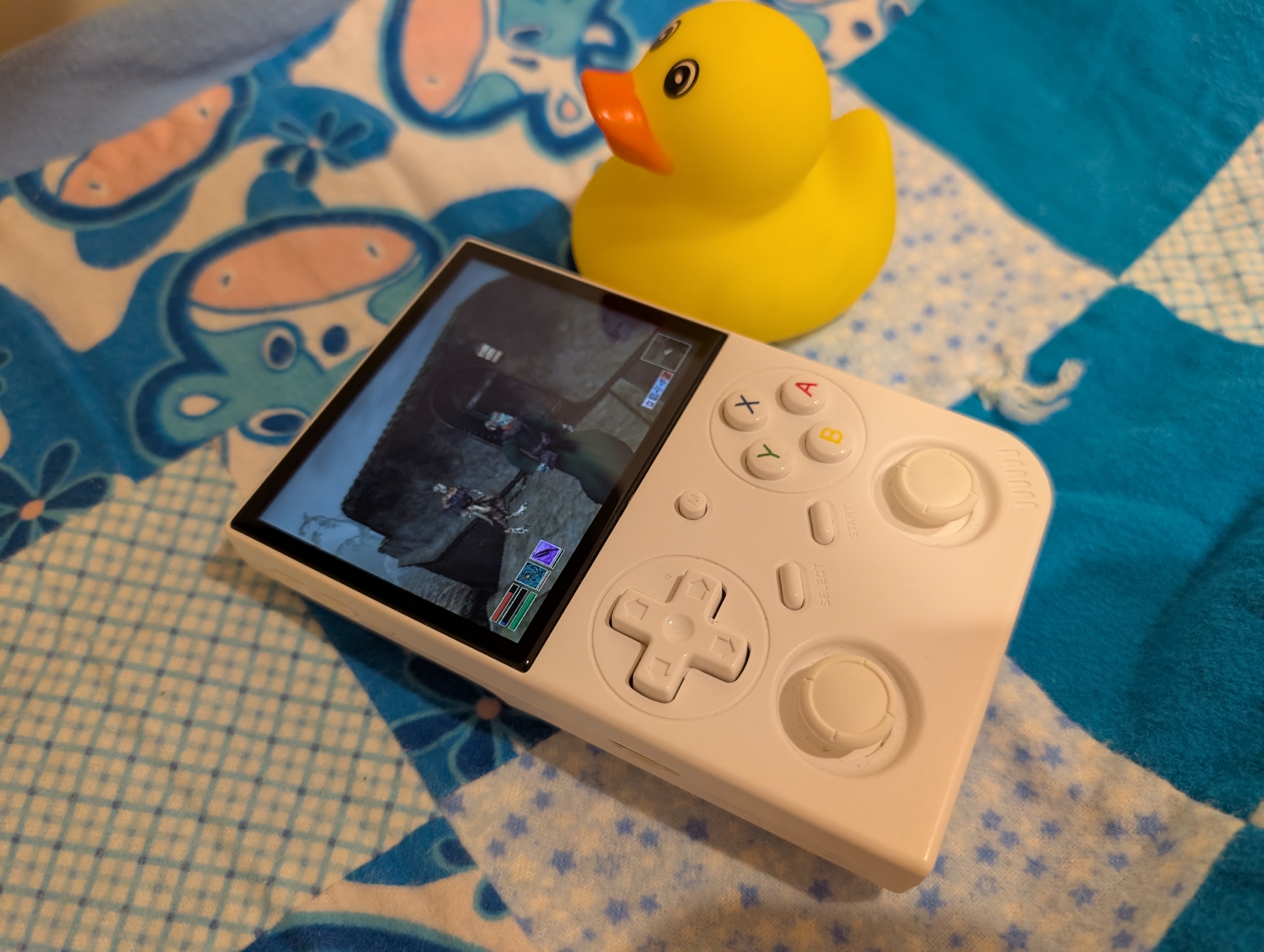 That’s what the majority of my year looked like. Yeah, the scaled resolution isn’t great, and the sharpness isn’t really there, but the fonts and UI are sharp, I remember every nook and cranny of this world.
I’m currently on a playthrough as Breaks Chains, an Argonian slave liberator. It’s a surprisingly well-working setup - helped by the fact that the game was already designed to run on a 640x480 monitor to begin with. And now that’s what I have in my pocket, which is super cool.
It’s been a frantic, weird, amazing year - both in my life as a parent, but also in the way I engage with this hobby. I started this blog, and I spent more time thinking and writing about games.
Here’s to an even more weird and amazing 2026!
P.S: Huge thank you to Patrick who responded to each article with an even longer email, and David who has read every single article from day one.
Comments
Respond directly on Bluesky (threads shown below) or Medium (view comments there).